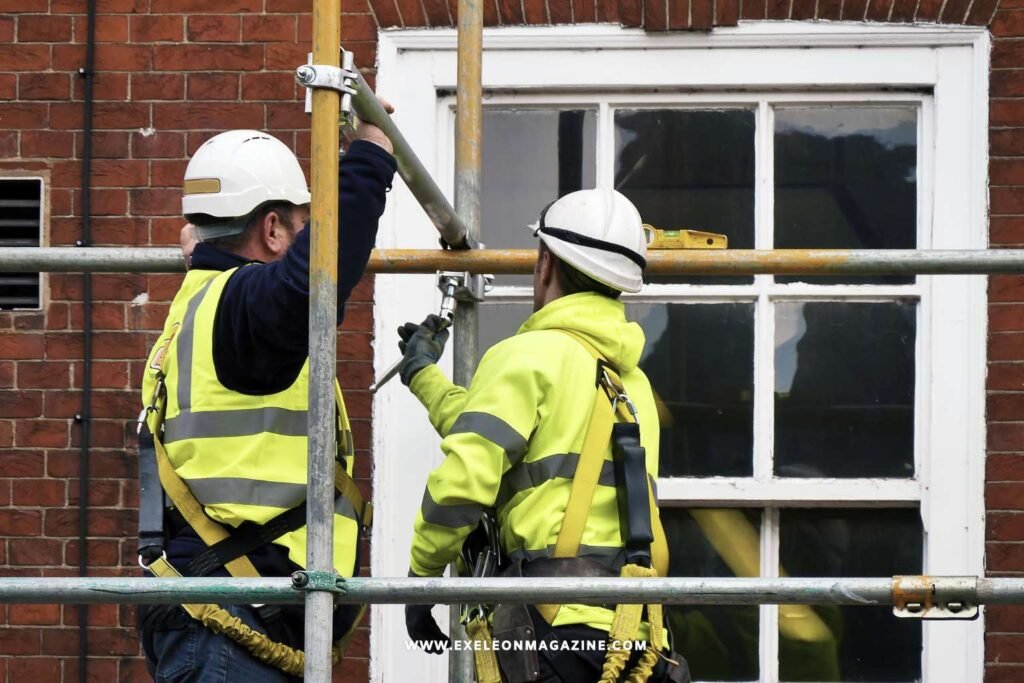
A platform shifting or a tool dropping from a height can result in messy consequences, both in terms of potential injuries and from a legal standpoint. The scaffold may belong to a rental firm, or the property owner may have handed daily operations to a general contractor.
The company signing a worker’s paycheck is therefore not always the only party that matters. A scaffold accident can involve multiple parties, making it important to determine who had responsibility for workplace safety. An injured worker may have a workers’ compensation claim through the employer and a separate personal injury claim against another business or property owner.
When an accident happens, finding out who supplied the equipment or ignored a hazard can be as important as determining how the fall occurred.
Responsibility Starts With Control
The useful first question is: Who had the authority to prevent the accident?
Investigators may look at who set site safety rules, approved the scaffold, conducted inspections, supervised the work, and had the power to stop a dangerous task. A company does not necessarily escape responsibility because its own employees did not assemble the structure.
This is why injured workers sometimes speak with scaffold accident lawyers before assuming the incident is only a workers’ compensation matter. Inspection records and the chain of command may show that another party had a duty to act.
The Employer and Workers’ Compensation
Workers’ compensation is usually the first source of benefits after an on-the-job injury. It may cover medical treatment and part of the worker’s lost wages without requiring proof that the employer was careless.
In return for that no-fault system, workers are generally restricted from filing an ordinary negligence lawsuit against their direct employer. State-specific exceptions exist, but they tend to be narrow.
The employer’s conduct can still matter. Poor training, missing fall protection, rushed work, or ignored complaints may explain the accident and support a separate claim against an owner, contractor, equipment company, or other outside party.
Safety Failures That Commonly Appear in Claims
In 2024, construction and extraction workers suffered 1,032 fatal occupational injuries, including 370 deaths from slips and trips, but a scaffold case can involve all kinds of failures:
- Missing toeboards or personal fall protection
- Incomplete, overloaded, slippery, or unsecured platforms
- Damaged parts or improper bracing
- Unsafe access by ladder or cross braces
- Missed inspections after severe weather
- Inadequate training for the scaffold being used
- Unsecured tools and materials above other workers
Evidence That Can Decide the Case
Strong cases are built from evidence created near the time of the accident. That may include photos, video, scaffold tags, inspection sheets, training records, safety meeting notes, contracts, text messages, prior complaints, and witness names.
Medical records connect the event to the injury and document its effect on work and daily life. Workers should not guess at what they don’t know, particularly if they have not personally witnessed the exact failure.
Some cases also require the expert opinions of scaffold engineers, safety professionals, doctors or vocational specialists. They may explain load limits, anchoring, fall protection, future treatment, or reduced earning capacity.
Workers’ Compensation and Third-Party Claims Can Overlap
A worker may receive workers’ compensation while bringing a third-party claim against an owner, contractor, supplier, manufacturer, or subcontractor.
The two systems cover different losses. Workers’ compensation generally pays defined benefits. A successful third-party case may also address pain and suffering, full lost earning capacity, future care, and other damages allowed by state law.
What to Do After an Accident
Medical care comes first. Falls can cause head, spinal, internal, and soft-tissue injuries that are not always obvious at the scene.
Report the scaffold accident immediately, and keep your report to the facts. If it is safe to do so, take photos of the scaffold, the area around it, any safety equipment, and any visible injuries. Get witness contact information before crews move on.
Save medical paperwork, work restrictions, wage records, and messages from employers or insurers. Avoid signing a release or final settlement without understanding which rights it closes.
Deadlines vary by state and claim type, and claims involving public entities may have especially short notice periods.
The Worksite Tells the Story
There is no single answer to who is responsible for a scaffold accident. The employer may provide workers’ compensation, while an owner, contractor, subcontractor, scaffold company, or manufacturer faces a separate claim. Responsibility can also be divided among several parties.
The smart approach is to trace the decisions behind the accident: who supplied the equipment, who inspected it, who controlled the work, who knew about the danger, and who could have fixed it. Those facts usually matter more than the company name printed on a worker’s vest.
This article provides general information, not legal advice. Scaffold laws and filing deadlines differ by state, and each case should be reviewed on its own facts.