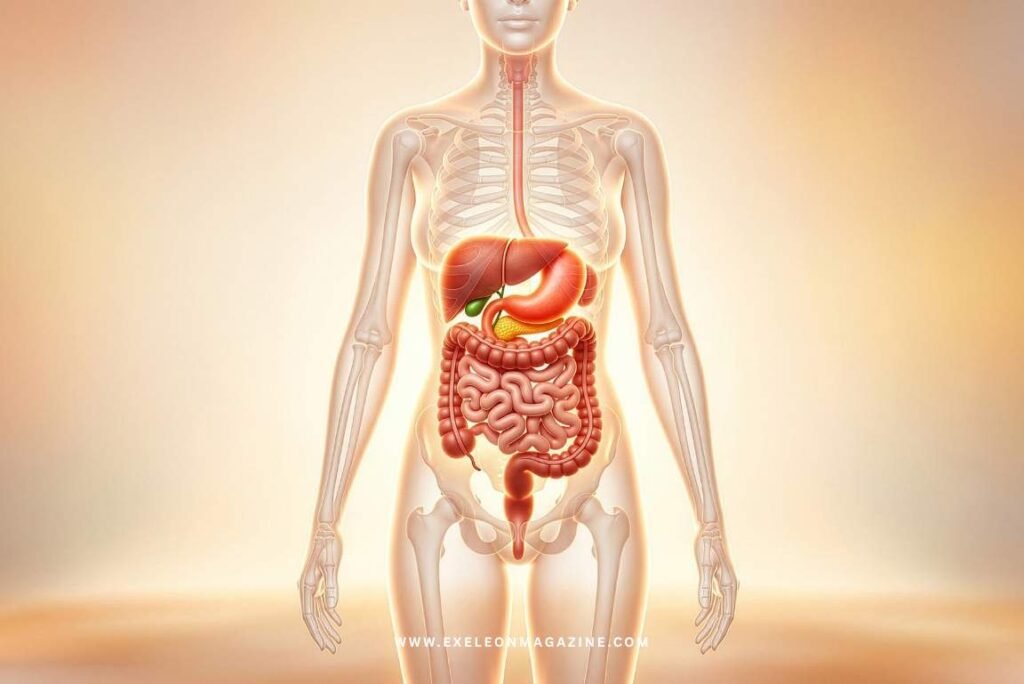
Today, realistic human visuals rule digital design in media industries. AI-generated images need to be more realistic, expressive, and dynamic. Creators expect outputs to be in the correct proportions with convincing movements and a uniform facial structure. Today’s workflows require advanced models, with the ability to interpret human detail with great accuracy. These systems can be accessed easily through platforms like Pippit, which enable rapid and convenient creation and editing of human-centric visuals with professional quality for use in a range of creative applications.
Understanding Seedream 4.5’s Enhanced Human Anatomy Intelligence
The new generation of image models has greatly advanced the understanding of human structure and realism. Seedream 4.5 has enhanced understanding of complex anatomical relationships over previous versions. It enhances the accuracy of body proportions, the stability of the posture, and the consistency of the face over several generations. The model can better grasp the detailed prompt, especially the description of human movements or expressions. There are less common cases of distortion, like unnatural limbs or misaligned features. Improved positioning of the eyes, jaw lines, and expressions gives facial symmetry—better overall coherence in whole body rendering – especially in dynamic scenes. Integration through Pippit also adds to the ease of creating advanced human visuals for creators without too many technical difficulties.
Key Human Detail Improvements That Make Seedream 4.5 Stand Out
It’s an advanced model with some great enhancements in digital image rendering and refining human features. It focuses on realism, balance, and expressive detail in all of the visual elements.
- Facial proportions and expression are improved
- Less distortion and greater articulation of hands and fingers
- The compositions based on action are more natural in terms of body movement.
- Skin textures are realistic, with not too many smoothing effects on the skin texture
- Three-dimensional around objects, adding depth perception, adding spatial realism, and layering
These improvements allow creators to create more consistent characters for work design projects. The system helps to minimize common AI artifacts while offering flexibility in artistic style.
Prompt Engineering Techniques for Accurate Human-Centered Visuals
Structured prompt design is crucial to good human imagery—accurate output descriptions of pose, posture, and camera perspective. The definition of body language guides the natural movement expression in the images generated. The inclusion of characteristics such as age, clothing, and physical characteristics contributes to identity consistency. Lighting conditions and the environmental context further enhance realism. Balanced prompts make sure that creativity does not compromise anatomical accuracy. The consistent detailing across prompts also adds to the repeatability of the visuals related to character. This systematic method helps to avoid unpredictable and amateurish outcomes.
Steps to Achieve Better Anatomy and Human Details With Seedream 4.5
How to improve anatomy and human details with Seedream 4.5 in Pippit
Getting access to advanced image-generation models through Pippit makes it simple to create characters with realistic anatomy and refined human details. Click the button below to create your Pippit account and follow this guide:
Step 1: Open the AI character creation workspace
- From the main interface, click on the “Image studio” button to enter the image creation workspace powered by AI.
- Next, select the “AI design” feature to begin creating realistic human-focused visuals.
- The AI-powered models, including Seedream 4.0, Seedream 4.5, Seedream 5.0 lite, as well as GPT Image 2, are already integrated for image creation in this editor.
Step 2: Create lifelike human images
- Type in your prompt to describe the character or person you want to generate.
- Include specific details about facial features, body proportions, clothing, pose, style, and color.
- Select the preferred resolution and aspect ratio for your image.
- Once everything is ready, click on the “Generate” button.
Step 3: Refine details and save your work
- Preview all AI-powered photos that Pippit has created for you.
- Choose the version with the most accurate anatomy and appearance.
- Feel free to use AI-powered editing tools, such as “Regenerate” and “Upscale image”.
- You can also choose the “Convert to video” feature for diverse types of content formats.
- Finally, click on the “Download” button to save your design.
Advanced Anatomy Elements Seedream 4.5 Handles Effectively
More complex visual elements are processed correctly, and the detail generation of humans is improved. The use of motion, structure, and expression brings out realistic output quality. Seedance capabilities provide an understanding of motion and how movement transitions look from frame to frame and pose. Changes in angles are more stable, and changes in facial alignment are more stable. Eye direction is congruent with emotional storytelling. Skin rendering automatically adjusts to light changes. Such enhancement allows more expressive and realistic visualization of human beings for various creative applications.
Optimizing Human Portraits and Character Designs Using Pippit
Pippit provides editing features to make some final adjustments to the AI-generated portraits. Increasing consistency when making changes to multiple outputs. Repeated designs: retouches characteristics to keep the identity stable. When it comes to fashion, an accurate representation of fabric and pose is helpful. Artistic portraits are enhanced with controlled lighting and compositional variations. The platform allows for progressive improvements, allowing the visual details to be developed gradually while maintaining the overall harmony. This is a good way of creating characters that can be developed in a campaign.
Common Factors That Influence Human Detail Quality
There are a number of elements that have a direct impact on the quality of a human-centric AI output. One of the important factors of anatomical accuracy and realism is prompt clarity. It is the camera angle that determines the way the body is seen proportionately and in terms of space. The lighting instructions determine the visibility of the texture and the strength of the facial detail. Resolution settings determine how sharp the images are and how much fine-structure details can be rendered. The environmental context will give realism to the composition of a scene. Irregularities are worked out, and the quality of the finished product is improved using regeneration techniques. This will give a more stable and professional appearance when all of this is put together.
Conclusion
Advanced generation of human images continues to evolve and is becoming increasingly anatomically intelligent and consistent with visuals. Today’s systems offer more realistic facial expressions, figures, and motion. Integrated workflows and editing tools in platforms such as Pippit make these capabilities easily accessible. Humans are still playing a crucial role in the creation of digital content. The developments enable more reliable, expressive, and compelling results for the creative industries in a visual way.