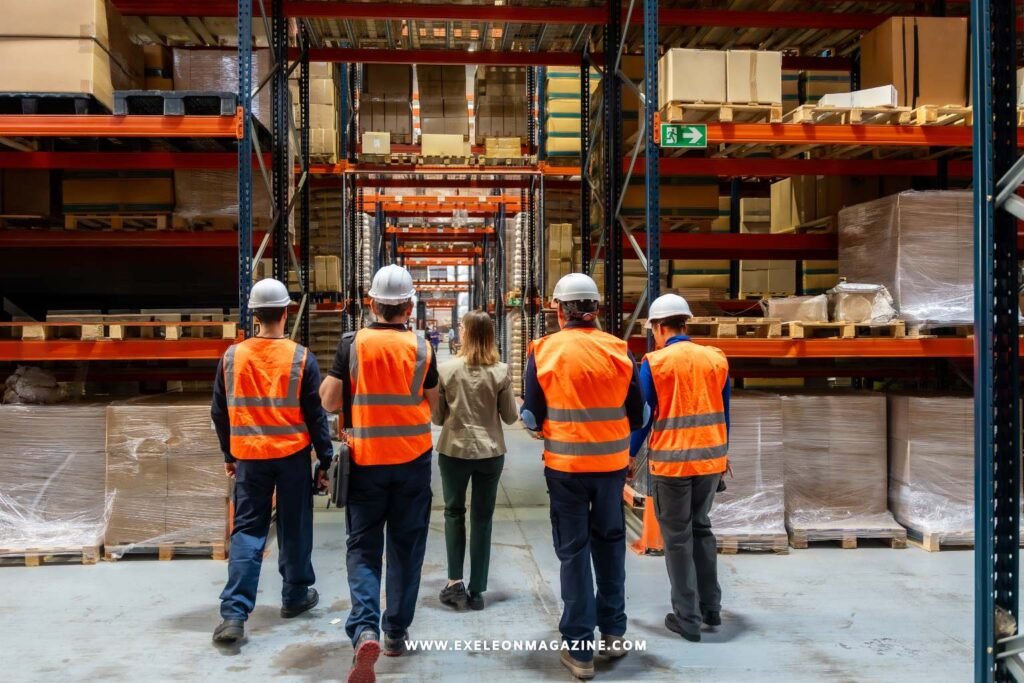
Think about the last time a service partner let you down. A pickup that never arrived. A racking dismantle that came in short on bolts. A floor patch that failed inspection two weeks after the crew left. None of these problems are dramatic on their own, but each one stalls a shift, ties up a manager, and quietly eats into the week.
The outside teams you bring in have a real effect on whether your operation keeps moving. Get the choice right, and you barely notice them. Get it wrong, and you spend more time firefighting than running the plant. This guide offers a plain-language way to pick industrial service partners with more confidence and fewer surprises.
What good looks like in an industrial service partner
Capability and capacity you can verify
Ask for specifics, not slogans. What materials and sizes can they handle? What tolerances do they hold? How many people can they put on the job, and what lead times are realistic during a busy stretch? A short checklist keeps this honest: process capability, material and size limits, staffing coverage, and typical turnaround. For regional fabrication, a workshop such as McLeod Fabrications may also need to show whether it can support onsite welding as well as scheduled build work. If a provider avoids these details, treat that as useful information. When businesses choose specialized partners, they often reduce downtime and improve the quality of outsourced work by finding providers who understand their exact operational context.
Quality systems and certifications
Certifications are a shortcut for trust, not a replacement for evidence. ISO 9001 points to a maintained quality system. ISO 14001 covers environmental management. ISO 45001 covers occupational health and safety. As one illustration, Laser Blade lists ISO 9001, ISO 14001, and ISO 45001 on its site. That tells you a framework exists. You still want to see recent inspection reports, sample documentation, and real examples of similar work.
Safety and compliance culture
Regulators keep sharpening their focus, and that shapes how careful providers behave. In the United States, OSHA runs national emphasis programs on hazards such as heat exposure, machine guarding, and amputations. In Australia, WorkSafe Victoria directs that pallet racking be set up, operated, and maintained according to manufacturer instructions and AS 4084.2:2023. A warehouse provider such as Tyquin Industrial should be able to explain how it approaches dismantling, floor repair, and documentation against the relevant standard; for lease handovers, pallet removal in Melbourne also needs clear scope notes around bolt extraction, patching, and clean-up. These are regional examples, so check the rules that apply where you operate.
A simple selection framework that actually works
Define the job
Write down the outcome you want, the constraints you are working within, and where the service starts and stops. A clear scope prevents the most common dispute of all: two parties who each assumed the other owned a task.
Score what matters
Use a light scoring matrix with six to eight criteria: capability, quality and certifications, schedule reliability, safety record, total cost, references, and communication. Quality bodies such as ASQ recommend setting supplier criteria across purchasing, quality, engineering, production, and the team that will use the service. Common checks include prior performance, ISO 9001 maturity, delivery capacity, financial stability, and technical support. For a worked example of scoring by criteria, these supplier selection steps show a similar method in another industry.
Total cost over sticker price
The cheapest quote is rarely the cheapest outcome. Add in the hidden costs: rework when tolerances slip, delays that idle your own crew, extra training, floor remediation, and travel time. A slightly higher price with fewer surprises usually wins over a low bid that turns into a series of small invoices.
Regional compliance snapshot to read before you sign
Rules are shifting, and larger customers often pass those expectations down the chain. A quick scan here can save an awkward conversation later.
Real-world options, examples not endorsements
If your shortlist includes outsourced cutting in Queensland, compare providers against their stated material range, tube and sheet capability, and certification evidence. Laser Blade lists flatbed cutting up to 30 mm and tube cutting up to 150 mm in diameter and 4.5 m in length, along with ISO 9001, ISO 14001, and ISO 45001 certifications on its page. Read those figures as the provider’s own stated scope rather than an independent test result, then compare professional laser cutting services against the same checks.
Warehouse changes bring a different set of risks. For Melbourne businesses planning a lease handover, a racking removal scope that includes safe dismantling, bolt extraction, floor patching, documentation, and site clean-up can de-risk timelines. Tyquin Industrial’s racking removal page lists those inclusions along with line-marking removal, and states that work is completed in accordance with Australian Standards. The service focus described there is Melbourne, so plan around that rather than assuming wider coverage. Tyquin Industrial services is also a useful example of the level of scope detail to look for before you approve make-good work.
Rural and agricultural operations lean on partners who can build and repair close to the work. In North-West NSW, an agricultural machinery fabricator offering custom and onsite welding alongside grader boards, prickle chains, and chaser bins can keep harvest operations moving. McLeod Fabrications is based in Walgett, NSW, and lists products such as chaser bins, prickle chains, grader boards, drag buckets, and trailers, plus custom and onsite welding. For seasonal operations, the onsite capability is the important detail, since a breakdown at harvest is measured in lost hours.
Pulling it together
When you strip it back, a good decision usually rests on a handful of must-ask questions. Can the provider show capability and capacity for this exact job? What certifications and inspection evidence back its quality claims? How does it handle safety and the standards that apply here? What is the total cost once rework and delays are counted? Who has it done similar work for recently? For rural work, ask whether an agricultural machine manufacturer can support onsite repairs as well as scheduled builds. Score each provider across those questions, add communication and continuity, and let the matrix guide the choice.
Conclusion
Choosing an outside team is really about buying fewer headaches and more uptime. Define the job clearly, compare on more than price, check the rules that apply where you operate, and reward the partners who make their work easy to verify. Do that and the crews you bring in become the quiet reason things keep running, not the reason your week goes sideways.