Small brands often make one of two packaging mistakes. They either overpay to ship empty space, or they cut so much from presentation that the parcel feels forgettable when it arrives. You can avoid both with a simple decision path. Start with how your product travels and what it costs to send, then work through structure, board, and appearance. This guide explains that path in plain language, with Australian shipping and recycling guidance in mind.
What a Die-Cut Box Is and Why Brands Use It
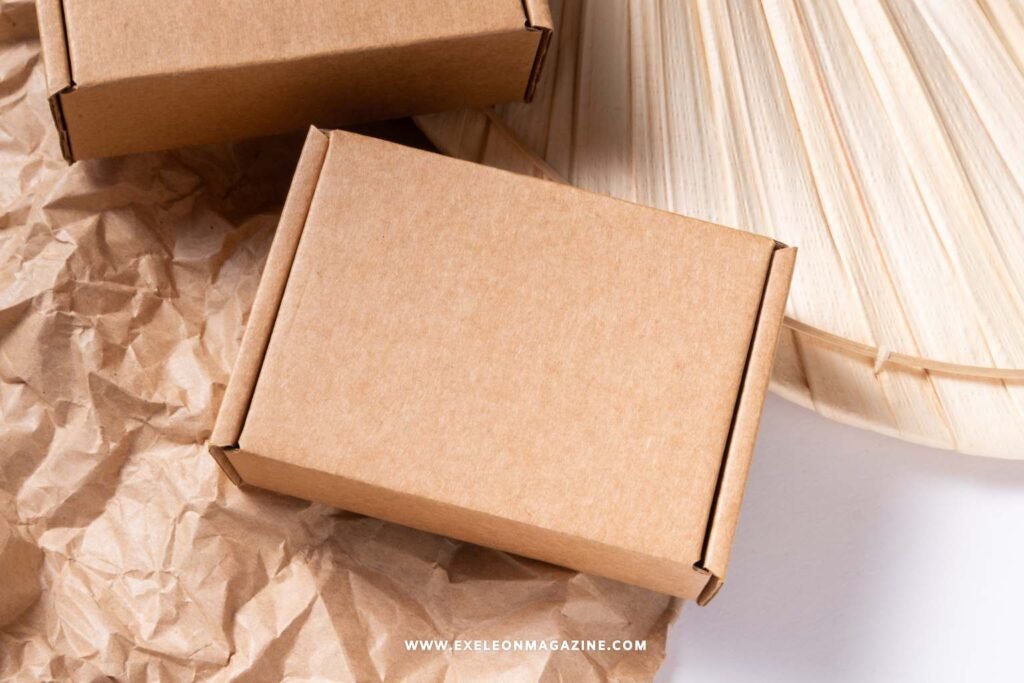
A die-cut box is cut and creased from a single sheet of corrugated cardboard using a shaped cutting tool. It folds into place with built-in tabs, so it needs little or no tape to hold its form. Because the design is one piece, it assembles quickly and gives you a clean surface for print.
In packaging terms, the roll end tuck front style (FEFCO code 0427) is what most people mean when they refer to a corrugated mailer box. It has a lid that folds over the front and locks in, which creates a tidy opening experience. A regular slotted carton, or RSC, is the classic four-flap shipping box that you tape at the top and bottom. Both are useful, but they solve different problems.
Fit and Protection: Size, Board and Flute
Boxes are usually specified by their internal dimensions, so measure the product first, then add a small allowance for any protective insert. Getting the internal size right reduces movement, one of the main causes of transit damage.
Board strength is often described with two measures. ECT, or edge crush test, shows how well a box resists stacking pressure. Burst test shows how well the board resists puncture or impact. For light, non-fragile items, a standard single-wall board is often enough. Step up in strength when the item is heavy, dense, or fragile. Rather than chase exact numbers, use weight, fragility, and the shipping route as your first decision cues.
Flute is the wavy layer inside corrugated board. E-flute is thin, roughly 1.0 to 1.5 mm, and gives a fine, smooth print surface, which is why it is common for branded mailers. B-flute is thicker and stiffer, so it offers more wall protection. EB-flute is double wall and combines both profiles for heavier or more delicate products, with higher cost and weight.
Keep Shipping Costs in Check in Australia
Carriers often charge by cubic weight, not just the parcel’s actual weight. Australia Post calculates cubic weight by multiplying parcel volume by a conversion factor of 250 kg per cubic metre. For parcels sent in your own packaging, Australia Post charges by actual weight or cubic weight, whichever is greater. In practice, an oversized box with too much empty space can cost more to send than a snug one. Learning to streamline the delivery process helps keep these costs manageable.
Keep domestic parcel limits in mind before you commit to a size. Australia Post lists limits of up to 22 kg, 105 cm in length, and 0.25 cubic metres in volume for standard domestic sending. Check current limits and run your dimensions through the official Australia Post postage calculator before ordering a large quantity.
A few simple choices help control cost. Reduce dead space so you are not paying to ship air. Use a light insert to hold the product still instead of moving to a larger, heavier box. Reserve double wall for products that genuinely need it. Avoid oversizing as a default, because size often triggers a higher cubic charge.
Make It Feel On-Brand Without Overspending
You do not need full-coverage print for packaging to feel considered. The panels that matter most are the ones a customer sees first: the outer lid and the front face. Spend your print budget there. For everything else, a branded sticker, printed tape, or simple internal message can carry your identity at a lower cost.
When you do print, prepare artwork at final size and high enough resolution so text and logos stay crisp on corrugated board. Before you finalise a design, list the practical steps you would use to customise your shipping boxes for better branding, such as choosing one hero panel, limiting colours, and checking legibility on a sample.
Sustainability and Compliance in Australia
Australian buyers often care about disposal, and vague terms like eco-friendly can mislead. A clearer approach is to use specific instructions. The Australasian Recycling Label (ARL), which the Department of Climate Change, Energy, the Environment and Water describes as a way to give consumers clear on-pack recycling guidance, can help reduce confusion at disposal.
National packaging reforms are also moving toward clearer design standards and requirements, so check DCCEEW updates before making broad environmental claims on your packaging. Keep claims specific and supportable. For example, say which component is recyclable, recycled, or reusable instead of relying on general green language.
Test Before You Commit
Order samples first. A physical box lets you check fit, closure, and how the print looks under normal light. If you request samples from Packee or another supplier, test them with the same product, insert, and label setup you plan to use in real orders.
Pack a real product and do a simple drop test at home. If your product carries higher transit risk, consider a lab test aligned with the ISTA 3-Series, which simulates common transport conditions such as vibration and drops. ISTA 3A, for example, applies to packaged products weighing 70 kg or less moving through parcel delivery systems.
Once samples check out, run a small pilot batch before a full order. Watch returns and damage feedback, adjust the spec if needed, then scale with more confidence.
Where to Source Die-Cut Mailers
When comparing suppliers, look at the size range, available colours such as kraft, white, and black, sample options, lead times, price breaks at higher volumes, and delivery coverage across Australia. A supplier that lets you test before a bulk run can help you avoid ordering the wrong size or board grade.
Packee describes its die-cut boxes as one-piece designs that fold into shape without excessive tape and offers samples for sizing checks, which is useful when you are weighing options. If you want to compare in-stock sizes and colours locally, you can browse die-cut cardboard boxes Australia to view options and order samples before a bulk run. Treat Packee and any other supplier page as a starting point for comparison, then validate fit with your own product.
Bringing It Together
The simplest way to choose well is to follow the order that matters. Start with fit, then board and flute, then shipping cost, then branding, and finish with a test. Each step narrows your options, so the final box protects the product, ships at a fair price, and still looks like your brand. Before placing a large order, run a small pilot so you can catch surprises while they are still cheap to fix.
FAQs
What should I measure before ordering mailer boxes?
Measure the product, any insert, and the space needed for labels or padding. Use internal box dimensions when comparing sizes.
Is E-flute or B-flute better for shipping?
E-flute suits lighter branded mailers with cleaner print. B-flute offers more stiffness and wall protection for tougher shipping needs.
How can I reduce parcel costs in Australia?
Keep boxes snug, reduce empty space, and check Australia Post limits and cubic weight before ordering a large batch.
Can cardboard mailers be recycled?
Many can be recycled if clean and accepted locally. Follow ARL guidance and check DCCEEW or NSW EPA advice for current rules.