For years, social media promised creators direct access to their audiences. In theory, it gave comedians, musicians, and entertainers the ability to build communities without relying on traditional gatekeepers. But over time, many creators realized something uncomfortable.
The audience they worked so hard to build did not truly belong to them.
Algorithms determined visibility. Platforms controlled reach. Creators were often forced to pay simply to reconnect with followers who had already chosen to follow them in the first place. What looked like ownership was, in reality, dependence.
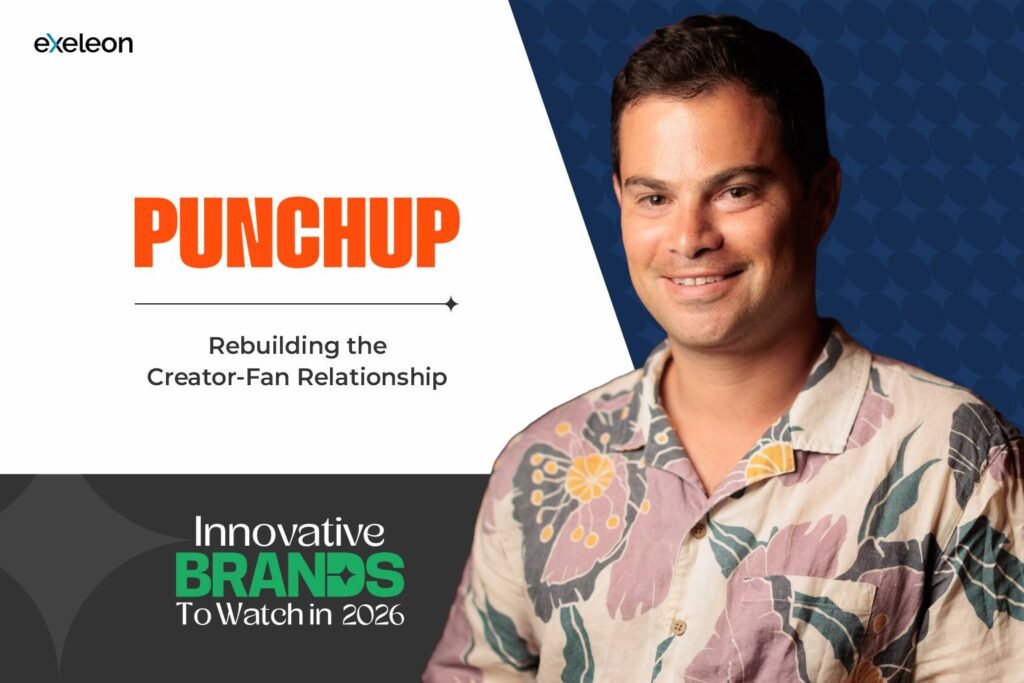
Punchup Live was built to change that dynamic.
Created by Danny Frenkel, the platform is centered around a simple but increasingly important idea: the relationship between a creator and their fan should belong to them, not to a platform.
While Punchup began in comedy, its broader ambition reaches far beyond a single category. It is building infrastructure for live entertainment that prioritizes direct connection, audience ownership, and real-world engagement over endless scrolling and algorithmic control.
A Front-Row Seat to the Problem
Before launching Punchup Live, Frenkel spent 13 years at Facebook, primarily working in advertising measurement. That experience gave him a deep understanding of how major social platforms operate and, more importantly, what they optimize for.
“Ad-driven platforms are optimized for time on platform, full stop,” Frenkel explains.
The consequences of that model became increasingly visible when he began spending time with comedians in New York.
Despite building large online followings, many entertainers struggled to reliably reach their own audiences. Organic reach declined, algorithms shifted unpredictably, and creators often had to pay for ads simply to communicate with followers who had already expressed interest in their work.
At the same time, social platforms actively discouraged users from leaving their ecosystems. Linking externally to ticket sales or mailing lists often reduced visibility, forcing creators to work around platform behavior just to promote their own events.
“That’s when I knew there had to be a better structure,” Frenkel says.
The Problem with Platform Dependency
The challenge extends beyond visibility. It fundamentally changes how creators interact with audiences and even how they create content.
On many platforms, entertainers feel pressured to “feed the algorithm,” prioritizing content formats and posting behavior designed to maximize engagement rather than authenticity. For comedians in particular, this creates tension between performing for audiences and performing for machine-driven systems.
Content moderation adds another layer of complexity. AI-driven moderation tools often struggle to interpret humor, satire, or nuance, leading to demonetization or suppression of material that is misunderstood by automated systems.
Beyond the operational frustrations, many creators have grown increasingly uncomfortable participating in systems they view as unhealthy or manipulative.
Punchup Live positions itself as an alternative.
Rather than optimizing for screen time, the platform is designed to move people toward real-world experiences, live shows, shared spaces, and communal energy.
Rebuilding Direct Fan Relationships
At the core of Punchup’s model is audience ownership.
When fans follow a comedian or entertainer on Punchup, that relationship becomes direct and portable. Creators can communicate with fans through email or text, without relying on algorithmic distribution.
“Email converts at over 20 times the rate of an Instagram post,” Frenkel notes. “More than 100 times the rate of TikTok.”
The significance of this shift is practical as much as philosophical.
A comedian announcing a local show no longer needs to hope an algorithm surfaces the post. They can directly notify fans in that city and drive ticket sales immediately. More importantly, creators maintain ownership of those relationships rather than surrendering them to a platform.
Punchup also provides artists with business-focused analytics rather than vanity metrics. Instead of emphasizing follower counts, the platform focuses on outcomes that actually matter, ticket demand, audience engagement, and conversion behavior.
This changes how success is measured.
From Discovery to Live Experience
Punchup’s experience is intentionally streamlined for fans as well.
Users can discover entertainers through shared content or features like Nearby Shows, which surfaces local live events. Once a fan follows a creator, they receive direct updates about performances, specials, and new content.
The path from discovery to attendance is designed to be frictionless.
“There’s no confusion about pricing or mixed resale inventory,” Frenkel explains. “The goal is simple: get fans off their phones and into a room full of people laughing together.”
That focus reflects a broader belief underlying the platform, that live entertainment offers something technology cannot replicate.
In an era increasingly shaped by AI-generated content and digital interaction, communal experiences become more valuable, not less.
Innovation Beyond the Algorithm
Punchup’s innovation does not come from reinventing the concept of direct communication. Instead, it comes from applying established principles, like audience ownership and portability, to live entertainment at scale.
“What’s different is applying that logic to live entertainment in a way that actually works,” Frenkel says.
The platform combines audience discovery with direct communication tools and machine learning systems designed to improve real-world outcomes for entertainers.
Punchup’s data science infrastructure helps predict ticket demand, optimize posting times, and identify which marketing channels actually drive attendance. According to Frenkel, the company can even anticipate which content is likely to generate ticket sales before it is posted.
This matters because traditional assumptions about social media influence do not always translate into real-world audience behavior.
“Our data shows social reach largely doesn’t correlate with ticket sales the way people think it does,” he explains.
Architecturally, Punchup was also built differently from traditional social networks. Rather than focusing primarily on peer-to-peer interaction, the platform is optimized for one-to-many creator relationships, allowing it to scale tools effectively across entertainers of different audience sizes.
Expanding Beyond Comedy
Although comedy remains the platform’s foundation, Punchup’s long-term vision extends across live entertainment.
The same mechanics that work for comedians, discovery, direct relationships, and audience portability, apply equally to musicians, podcasters, magicians, and other live performers.
The platform recently surpassed 1.5 million monthly active users without paid marketing, a milestone driven entirely by organic creator promotion.
As new entertainment categories join the ecosystem, Punchup expects cross-genre data patterns to create stronger recommendations and smarter audience insights.
Comedy fans may discover musicians through overlapping interests. Music audiences may engage with live podcasts. The system becomes increasingly intelligent as participation grows.
The Future of Live Entertainment
For Frenkel, the future of entertainment is deeply tied to human connection.
He believes that as AI becomes more integrated into digital life, authentic live experiences will grow even more valuable. Technology may replicate content, but it cannot recreate the energy of people sharing a room, reacting together in real time.
“AI will never replicate communal energy at a live show,” he says.
Punchup Live is positioning itself around that reality.
Rather than trapping users inside feeds, the platform is designed to facilitate what happens beyond the screen, the live experience itself.
And in a digital landscape increasingly defined by platform control, algorithm fatigue, and artificial engagement, that shift feels increasingly significant.
Because at its core, entertainment has never just been about content.
It has always been about connection.