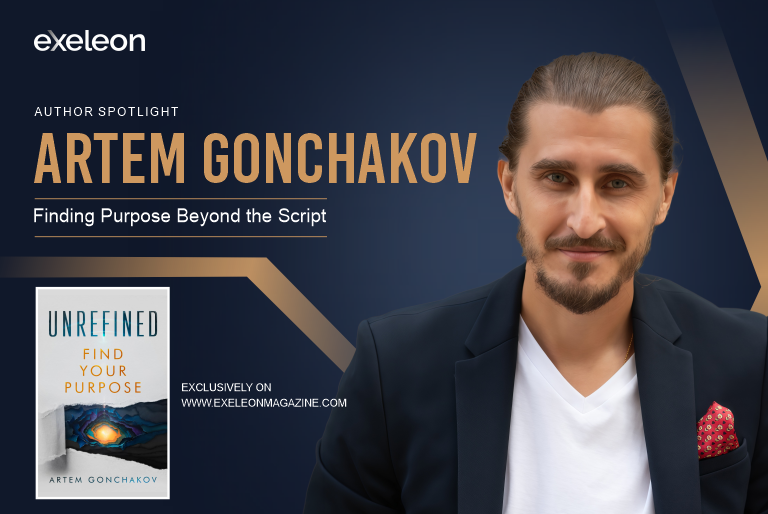
For many professionals, success is measured through promotions, prestigious titles, financial milestones, and external recognition. Artem Gonchakov achieved all of those things. From growing up in a small Ukrainian city to holding leadership positions at some of the world’s most recognized financial and technology companies, including Deutsche Bank, Bank of America, ServiceNow, Twitter, and now serving as CEO of Simplifai, his career reflects what many would describe as the American Dream.
Yet behind the accomplishments was a persistent question that success alone could not answer: Why did these achievements feel so empty?
That question set Artem on a years-long journey into psychology, philosophy, self-discovery, and personal transformation. The result is Unrefined: Find Your Purpose, a book that challenges conventional definitions of success and introduces readers to a practical framework for building a life aligned with their own values rather than society’s expectations.
In this exclusive Author Spotlight Interview with Exeleon Magazine, Artem shares the experiences that shaped his philosophy, the dangers of the “Follower’s Mindset,” the importance of personal accountability, and why finding purpose is less about waiting for inspiration and more about learning to think for yourself.
Artem, before becoming an author, you spent years pursuing what many would consider a successful life. Can you briefly take us through your journey?
I grew up in a small city in Ukraine, spending most of my time alone, without the social playbook most people take for granted. That isolation forced me to rely on myself, and it taught me one skill I’ve used my whole life: finding my own way through difficult situations.
From there, I followed the script. University, a first job in software testing, then a climb through some of the biggest names in finance and tech: Deutsche Bank, Bank of America, a VP role on Wall Street, ServiceNow, Twitter during the Elon Musk transition. Today I’m the CEO of Simplifai, an AI company automating insurance claims.
On paper, it was the American Dream. But here’s the strange part. Every milestone left me cold. I’d close a multi-million-dollar deal, share the news, watch everyone celebrate, and feel nothing. A brief high, then numbness. The gap between what I achieved and what I actually wanted kept widening. That gap is what eventually became the book.
Your book discusses the idea of building a life that genuinely feels like your own. How did your personal journey shape the philosophy behind Unrefined: Find Your Purpose?
Everything in the book was lived first. I spent about 17 years digging into psychology and philosophy, trying to understand why a “successful” life felt so empty. It was messy. I bounced from one personal issue to another while climbing the career ladder, including an early divorce I now see was the result of following society’s timeline instead of my own.
Along the way, I noticed something. Every time I changed in a meaningful way, it came through a kind of reset: a moment when, almost instantly, you become a different person and there’s no going back. I started documenting these resets and the conditions that produced them. Those notes eventually became the system in the book, which I call Personal Maturity.
So, the philosophy isn’t theory I researched. It’s a map of the terrain I crossed, organized so that someone else doesn’t have to spend 17 years wandering it alone.
Many leaders and professionals struggle with balancing external expectations and internal fulfillment. How can individuals recognize when they are living according to someone else’s definition of success?
The clearest signal is your emotional reaction to your own wins. When I bought my first apartment, everyone congratulated me on becoming a property owner. I felt absolutely nothing. Same with promotions, deals, titles. If your achievements consistently produce a shrug instead of meaning, that’s your evidence. You’re collecting what I call Borrowed Success: repeating success stories already written and validated by other people, instead of creating your own.
There’s a simple test. Take your current goals and ask of each one: where did this come from? Some will trace back to genuine desire. Many will trace back to parents, peers, employers, or advertising. You don’t have to drop the borrowed ones immediately. Just label them honestly. Awareness alone changes how you spend your energy.
The other signal is fear. If your big decisions are driven mainly by fear of losing something, acceptance, stability, status, you’re probably running someone else’s program. I let that fear steer me for years, even when the path felt wrong.
You introduce the concept of the “follower’s mindset” in your book. Could you explain what this means and how it quietly influences people’s decisions, careers, and relationships?
The Follower’s Mindset is what happens when we stop thinking critically and outsource our direction to others. It starts innocently. As children we follow our parents. Then school, then university, then a career, each stage rewarding compliance and punishing deviation. By adulthood, many of us have never actually practiced deciding for ourselves. Following along feels safer, so we wait for instructions and try not to stand out.
It shows up everywhere. We follow gurus and influencers who promise answers. We take jobs because they’re “stable,” marry on society’s timeline, buy things to avoid “losing money.” I did all of it. Society said get a stable job, so I did, even though what I really wanted was to play soccer. Society said start a family, so I married at 25, clearly not ready.
To be fair, rules and structure matter. Society would collapse without them. The problem isn’t following per se. It’s following without ever questioning. A lack of critical thinking is what creates the Follower’s Mindset, and it quietly costs people their careers, relationships, and sense of self. The antidote is exactly what Socrates said: to find yourself, think for yourself.
Throughout your own transformation, what was the most difficult belief, habit, or mindset that you had to challenge?
The belief that safety equals staying in line. Underneath every struggle I had, I eventually found one root cause: fear. Fear of losing acceptance, stability, status. That fear made me hand my decisions to other people, because transferring responsibility felt like relief.
Changing that core belief was harder than any promotion I ever earned. Some changes took me years. One of the hardest practical steps was rebuilding my social environment. I once realized I’d built a circle of people who never reached out unless I contacted them first. So I stopped contacting them. Almost no one called. I effectively removed 90 percent of the people from my life, and I never regretted it. The space that opened up is where the real work happened.
The lesson I’d pass on: the fears guiding your biggest decisions rarely materialize. Mine almost never did. I stayed paralyzed for years over outcomes that never arrived.
What message do you hope readers carry with them long after they finish reading Unrefined: Find Your Purpose?
That finding your purpose doesn’t have to be monumental, and you can begin at any stage of life. People imagine purpose arrives as a lightning bolt. In reality it’s built, piece by piece, through self-discovery and honest reflection. The system in the book exists to make that process practical: a dream worth chasing, a vision, a mission, values, and the identity to carry it all.
If readers keep only one thing, I’d want it to be extreme accountability. You are the architect of your life. The moment you take complete responsibility for your existence, even for the negative events and difficult people, everything starts to move. That single shift is the most powerful antidote to the Follower’s Mindset I know.
And underneath it all: it’s never too late. Your past isn’t baggage. It’s data. You already know which achievements left you cold and which moments made you feel alive. That’s the raw material for designing what comes next.
Looking ahead, what is your broader vision and mission? How do you hope your work, ideas, and future projects will impact people around the world?
My own Life Purpose is what I call Absolute Freedom, and my broader vision flows from it: a world where far more people find the courage to pursue their own purpose instead of borrowing someone else’s. Most of what exists today came from people who imagined something bigger and dared to challenge established wisdom. We need more of them, and I believe society should make that path less punishing.
My mission runs on two tracks. With Simplifai, I’m proving that AI can take over tedious, repetitive work, starting with insurance claims, and free human time for things that matter. With my writing and the Arty Finch platform, I’m building practical tools that help people move from awareness to transformation in their daily lives, not just on the page.
The book was step one. If it sparks even one reset in a reader, one of those moments where you become a different person and there’s no going back, then it has done its job. Everything I build from here is designed to multiply those moments.