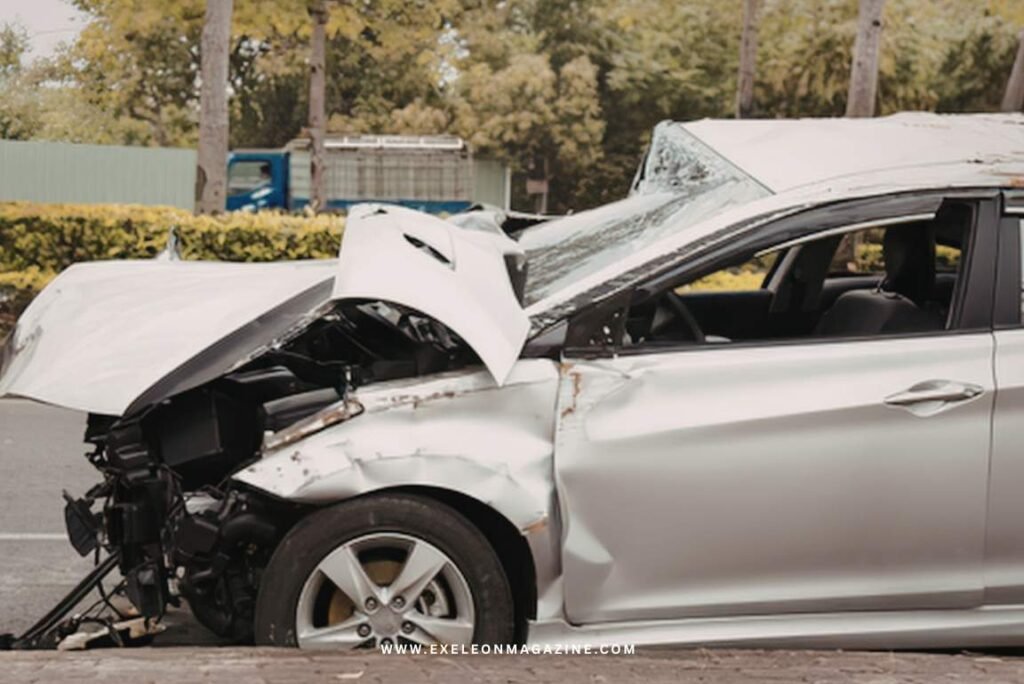
Most Houston entrepreneurs spend time planning for business risk. They buy commercial insurance, set up LLCs, and review contracts before signing. Then one of their employees backs a company truck into another vehicle on Interstate 10, and everything changes in ways they never planned for.
Car accident liability is one of the least-discussed risks in the Houston business owner’s world. It rarely comes up in entrepreneurship circles, business coaching, or leadership magazines. It shows up instead in Harris County District Court. Texas recorded 39,393 commercial vehicle accidents in 2024 according to the Texas Department of Transportation. A significant share of those crashes involved vehicles tied to a business, a fleet, or an employee driving on company time.
This article is for Houston founders, operators, and business owners who want to understand their exposure before a crash becomes a case.
What Vicarious Liability Means for Houston Business Owners
Vicarious liability is the legal principle that holds employers responsible for the actions of employees who cause harm while acting within the scope of their work. Under Texas Civil Practice and Remedies Code, a Houston business owner can be named as a defendant in a personal injury lawsuit caused by their employee, even if the owner was nowhere near the crash.
The scope of this exposure is wider than most entrepreneurs expect. An employee who crashes a company car while driving to a client meeting creates liability for the business. An employee who causes an accident during a delivery run does the same. Even a worker using their own vehicle for a company errand can create business liability in certain circumstances, depending on what the employee was doing and whether the employer directed the activity.
In 2024, Harris County recorded more commercial vehicle crashes than any other county in Texas. Many of those cases named the employer as a party alongside the driver. A Harris County jury that finds an employee at fault frequently extends that finding to the business behind the employee.
From the business owner’s view, the gap between knowing this rule exists and having a legal plan ready for it is where the financial damage happens.
What a Company Vehicle Crash Actually Costs a Houston Business
The visible cost of a car accident involving a company vehicle is the property damage and the insurance claim. The less visible cost is what follows when the injured party hires an attorney and begins building a damages case.
Recoverable damages in a Harris County personal injury case may include medical bills, future treatment costs, lost wages, reduced earning capacity, and pain and suffering. Texas does not cap economic damages in personal injury cases under Texas Civil Practice and Remedies Code Chapter 41. That means a serious injury case involving a company vehicle has no statutory ceiling on what a jury may award for medical and financial losses.
Sutliff and Stout, a Board Certified personal injury firm in Houston, recovered 6,429,788 dollars in a case where the at-fault carrier held only 980,000 dollars in available insurance. The firm identified additional liable parties. For a business owner, being one of those additional liable parties is a real possibility in any crash involving their employee or vehicle.
The business owner who understands this prepares differently. They review their commercial auto policy limits, verify that umbrella coverage exists, and confirm that their company vehicle policy covers employee-operated vehicles and not just owner-operated ones.
Where Houston Entrepreneurs Underestimate Their Insurance Exposure
Three coverage gaps appear repeatedly in Houston business vehicle crash cases.
The first is policy exclusions for personal use. A commercial auto policy may cover the employee during business hours but exclude coverage for accidents that occur when the employee used the vehicle outside of work hours. If the facts of the crash are disputed, the insurer may deny coverage based on the exclusion and leave the business owner exposed.
The second is underinsured limits. Texas sets minimum liability coverage at 30,000 dollars per person and 60,000 dollars per occurrence under Texas Transportation Code. Those limits do not approach the cost of a serious injury case in Harris County District Court. A business that carries only minimum coverage and whose employee causes a crash with catastrophic injuries faces a gap between what the policy pays and what a jury awards.
The third is rideshare and personal vehicle use. Houston entrepreneurs whose employees use personal vehicles for business errands occupy a grey area that their own commercial policy may not cover. Whether the employer is liable in those circumstances depends on the facts of the specific situation and the terms of the commercial policy in place.
| Coverage Gap | What It Means for the Business | How to Address It |
| Personal use exclusions | Insurer may deny a crash that occurred outside work hours | Define authorized vehicle use in writing and confirm policy terms |
| Minimum liability limits | Policy pays out before the full damages are covered | Review limits annually and add umbrella coverage |
| Employee personal vehicle use | Business may bear liability for crashes not covered by commercial policy | Require non-owned auto coverage and document company errand policies |
| Uninsured at-fault drivers | Recovery is limited if the party who hit your employee carries no insurance | Add uninsured motorist coverage to the commercial policy |
What Houston Entrepreneurs Should Do When a Crash Involves Their Business
When a car accident involves a company vehicle or an employee acting on behalf of a Houston business, the first 72 hours shape the legal outcome more than any point that follows.
The business owner should contact their commercial insurance carrier immediately to report the incident. They should preserve all records related to the employee’s authorized use of the vehicle and the nature of the task they were performing at the time. They should not instruct the employee to give a recorded statement to any insurance adjuster before legal counsel has reviewed the situation.
When Sutliff and Stout recovered 6,429,788 dollars in a Harris County wrongful death case, the at-fault carrier held only 980,000 dollars in coverage. The firm traced liability to additional parties, one of which was the employer behind the driver. That outcome is what employer liability looks like in practice inside Harris County District Court. Houston business owners who want to understand their own company exposure before a case reaches that stage can reach the Houston car accident attorney team at Sutliff and Stout for a free review of their situation.
The Texas personal injury statute of limitations under Texas Civil Practice and Remedies Code Section 16.003 gives injured parties two years from the crash date to file a lawsuit. Business owners should not interpret that deadline as two years to prepare. Evidence from the crash corridor disappears within weeks. The Houston Police Department crash report under Texas Transportation Code Section 550.065 is available within 10 business days and should be obtained immediately.
What Proactive Houston Business Owners Do Before a Crash Happens
The entrepreneurs who handle car accident liability well are the ones who treat it as a standard business risk category, not an emergency to manage after the fact.
They review their commercial auto policy each year and confirm the limits reflect the actual financial exposure of the business. They create a written vehicle use policy that defines who is authorized to drive company vehicles, for what purposes, and during which hours. They document employee driving records during onboarding and set a process for periodic reviews. They carry umbrella coverage above the base commercial auto policy to bridge the gap between minimum limits and jury awards in Harris County.
They also establish a relationship with legal counsel before an incident forces the issue. A business that already knows which Houston car accident attorney they would call on day one of a crash moves faster on evidence preservation, insurance notification, and legal hold letters than a business scrambling to find counsel while the adjuster is already on the phone.
Graham E. Sutliff and Hank Stout, founding partners at Sutliff and Stout in Houston, both hold Board Certification in Personal Injury Trial Law from the Texas Board of Legal Specialization. The firm has recovered more than 1 billion dollars for Texas injury victims across 17 years.
What This Means for the Houston Entrepreneur
Car accident liability is a business risk. It belongs in the same category as employment law compliance, contract review, and commercial insurance planning. The difference is that most business owners treat those risks proactively and treat car accident liability reactively.
The entrepreneur who plans for this exposure before a crash happens is in a different position than the one who learns about vicarious liability, coverage gaps, and Harris County jury verdicts for the first time from an opposing attorney’s demand letter. The gap between those two positions is measured in dollars, time, and the stability of the business on the other side of the case.
Houston is the most active commercial vehicle crash county in Texas. The freight, energy, and service industries that make up the Houston business economy put vehicles on Interstate 10, Interstate 45, Loop 610, and the Beltway 8 corridor every hour of every day. A crash involving a company vehicle is not a remote possibility for most Houston business owners. It is a scheduled risk that has not occurred yet.