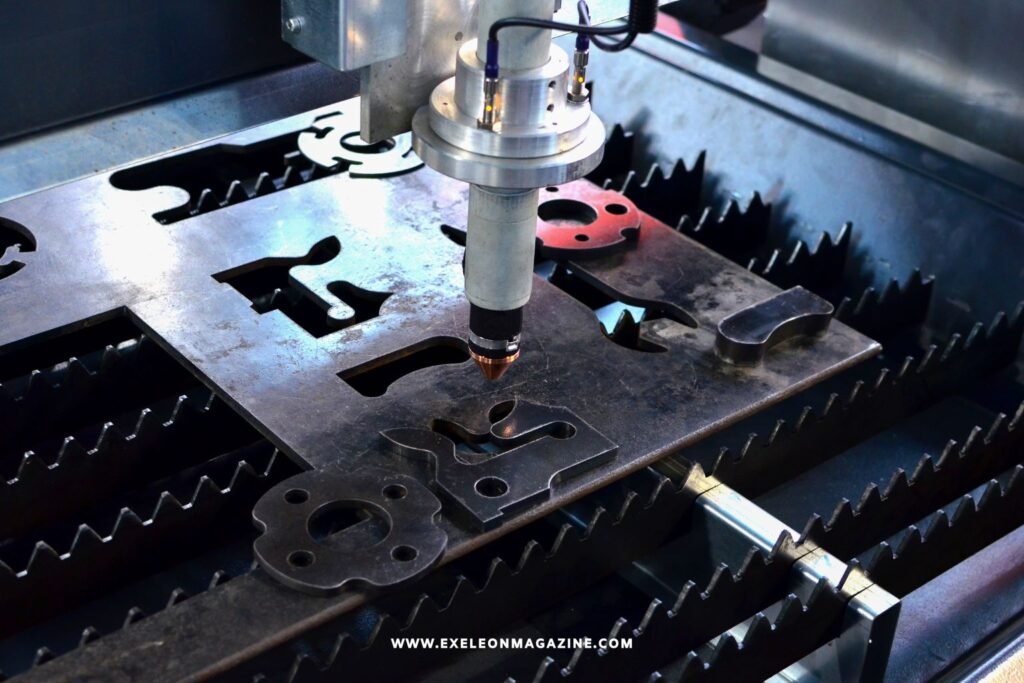
Selecting the right fabrication method shapes everything that follows in a project, from accuracy to budget control. Different processes suit different objectives, and the decision is rarely as simple as choosing the fastest option. For many technical builds, industrial laser cut services offer a dependable blend of precision, efficiency, and consistency across complex specifications.
Knowing the moments when laser cutting truly adds value helps avoid unnecessary costs and ensures the final result meets both functional and aesthetic expectations.
Projects Requiring Extremely Tight Tolerances And Fine Detail
Certain fabrication tasks leave no room for approximation. Components that feature intricate cut-outs, narrow slots or detailed patterns demand a level of accuracy that manual or mechanical cutting often struggles to maintain.
Laser systems rely on a focused beam guided by digital files, allowing each cut to follow the design with impressive consistency. That precision becomes especially important when parts must align perfectly within assemblies.
A minor deviation can ripple through an entire build. When drawings are complex or tolerances are tight, laser cutting tends to deliver a cleaner, more reliable outcome without excessive material distortion. This level of control is difficult to replicate with conventional tooling in practice consistently.
Situations Involving Multiple Materials And Thickness Variations
When a project spans several material types, flexibility becomes a practical concern. Laser equipment can process mild steel, stainless steel and aluminium within a streamlined setup, reducing the need for frequent tooling changes. This adaptability supports mixed-material designs and prototype runs without disrupting workflow. Fabricators appreciate the consistency, since cut quality remains stable even when thickness varies.
Smooth edges and limited burring also reduce secondary finishing work. Less rework means less downtime, and that translates into measurable savings across longer production schedules. It keeps planning straightforward when specifications shift mid-project or client requirements evolve. This often proves invaluable during iterative development phases where adjustments happen frequently in reality.
Deadlines That Demand Efficient And Predictable Turnaround
Tight schedules place pressure on fabrication processes that rely heavily on manual intervention. Once programmed, laser systems can run with remarkable speed while maintaining uniform output across batches. Automated nesting software optimises sheet usage, helping reduce waste and keep material costs in check. Because the cutting process is contactless, there is minimal tool wear compared to traditional methods.
Fewer interruptions mean production flows more smoothly. For commercial projects where delivery timelines are fixed, this reliability can make the difference between delays and consistent project progression. It supports both short custom runs and large volume orders without major process disruption, which is valuable for scaling operations steadily as demand often fluctuates.
When You Need Design Flexibility and Prototyping Support
Projects in development rarely remain static from concept to completion. Engineers and designers frequently revise dimensions, hole placements and overall geometry as testing progresses. With digital file integration, adjustments can be implemented quickly without manufacturing new tooling for each revision. This responsiveness makes laser cutting particularly useful during prototyping stages. It allows teams to test ideas, refine details and move forward without long production delays.
The ability to adapt designs efficiently encourages experimentation while still keeping fabrication costs within a manageable range. That balance between flexibility and control is often crucial when concepts are still evolving, and stakeholder feedback continues shaping the final specifications through multiple design reviews and updates.
When Clean Finishes and Structural Integrity Are Essential
A precise cut does more than improve visual appeal. Smooth edges and narrow kerf widths contribute to better structural integrity, particularly in thinner materials prone to warping. The controlled heat input helps preserve dimensional stability, which is essential for visible architectural elements, signage and engineered components. Reduced need for grinding or rework also shortens post-processing time.
When both appearance and durability carry equal weight, laser cutting offers a polished result straight from the cutting stage, supporting higher quality standards across demanding fabrication projects. This is particularly valuable where the final presentation influences client perception and compliance requirements, as well as long-term performance expectations in critical applications and installations overall.
Final Thoughts
Choosing the right fabrication method ultimately comes down to accuracy, efficiency and project demands. Laser cutting stands out when precision, flexibility and clean finishes are essential. By aligning the process with your design complexity and production goals, you reduce risk, streamline workflows and achieve high-quality results that support long-term performance.