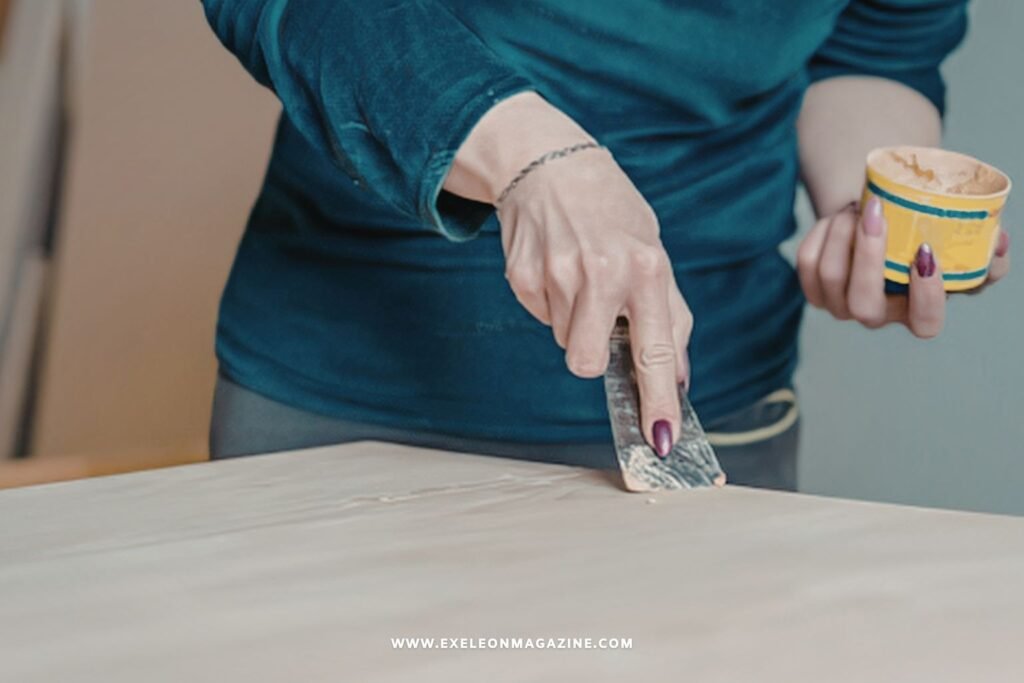
The build is what excites many woodworkers. It is very gratifying to cut joinery, shape boards, flatten slabs, and watch a piece fall together. However, after the project has been constructed, a finishing stage may switch gears altogether. Then it all comes to a crawl. You brush or rub on a finish and wait. And wait more. In some cases, the project is nearly done, but it still cannot be delivered, handled, or moved with confidence.
That is why more makers are taking a serious look at the UV Curing Light. Although a high speed of cure is the first thing that many people pay attention to, the speed is not the only side of the story. A UV curing light can alter the beat of the process of finishing, lessen the chance of guessing, and make the last phase of a project seem more predictable.
What a UV curing light actually does
A UV curing light is designed to work with UV-cured finishes and resins. Instead of depending on open-air drying over a long period, the light activates the finish so it cures rapidly. According to Lite n Done, these lights are built to cure a range of low-energy UV wood finishes and resins, including products like Clean Armor, Vesting LED Hardwax Oil, and various UV crafting resins.
That matters because curing and drying are not always the same experience in the shop. Traditional drying often leaves room for environmental problems. Dust can land on the surface. Temperatures can shift. Humidity can affect results. A dry surface, however, may require further time before it is really ready. UV curing provides a better direct route from the applied finish to the surface of use.
Why speed is only one part of the value
Fast curing gets most of the attention, and for good reason. Lite n Done describes its Clean Armor UV-cured wood finish as curing in just two minutes. That kind of turnaround can save a huge amount of time on furniture, cabinets, tables, and restoration work.
But the deeper benefit is not just that things move faster. It is that finishing becomes easier to plan around.
In many shops, finishing creates a traffic jam. A project takes up space while coats dry. Tools and benches must stay clear. Other work gets pushed back. When curing happens quickly, the bottleneck starts to disappear. A creator does not have to leave the work in between stages and spend hours without it.
This can particularly come in handy with small and medium-sized stores where the amount of space on the floor is minimal. A fast-curing process does not simply save minutes on paper. It can make the entire shop feel more efficient.
A less talked-about benefit: more control before the finish locks in
One of the more interesting features highlighted by Lite n Done is that its UV curing lights are dual-mode. They have both a mode of inspection and a UV cure mode within the same tool.
This can be regarded as an insignificant point, but it leads to something meaningful that cannot always be talked about: finishing is not only about the product application but also about the clear vision.
The inspection mode assists users in ensuring that there are no flaws on the finish prior to the curing process. It means that a woodworker may inspect the coverage that is not even, the spots that have been missed, or the flaws that may be on the surface, and then switch to cure mode. Once the finish is cured, the goal is to be done, not to discover problems afterward.
This built-in step encourages a more thoughtful finishing process. In other words, the tool supports both speed and accuracy. That balance is valuable because fast results are only helpful when the finish also looks right.
Matching the light to the work
Another useful point from Lite n Done is that one size does not fit every shop. The company offers three light sizes, each built for a different kind of work.
- The 12-inch Core Model is intended for detailed work and tighter spaces. That makes sense for cabinet makers, furniture refinishers, and users who need precision more than wide coverage.
- The 18-inch Pro Model increases irradiance and energy density for more demanding daily use. This makes it a practical middle ground for table makers and refinishers who want more power without moving to a full industrial setup.
- The 48-inch Max Model is designed for professionals working on larger projects like live-edge tables or operating dedicated finishing areas. For larger surfaces, wider coverage can improve consistency and reduce the number of passes needed.
This range suggests an important idea: UV curing is not only for massive industrial environments. It can scale to different workflows, from focused bench work to larger production spaces.
Why hobbyists should care too
It is easy to assume that a UV curing system is mainly for full-time professionals. But hobbyists and part-time makers may gain just as much in some situations.
A professional often values speed because time is money. A hobbyist, on the other hand, often values momentum. When a finish requires long waits, it can break the flow of a project. A person working nights or weekends may only have a small window of shop time. If one coat takes too long to cure, progress stops until the next day.
A UV curing light can make those work sessions more productive. Instead of ending the day after applying one coat, a maker may be able to complete far more of the finishing process in a single session. That can make woodworking feel less interrupted and more rewarding.
The finish matters too
Of course, a curing light works as part of a system. The source page connects these lights with modern low-energy UV finishes such as Clean Armor. Lite n Done presents Clean Armor as a protective coating that is crystal clear, durable, and fast-curing and which includes zero VOCs.
That combination is by larger guidelines of change in finishing: a great deal of users are currently requesting speed, long-term viability, and a cleaner working station simultaneously. In older conversations about wood finishing, people often accepted trade-offs. A strong finish might be slow. A convenient finish might be less durable. A clear finish might require more patience. UV-cured systems challenge that pattern by combining quick curing with professional-grade protection.
Final thoughts
The best tools do more than perform a task. They remove friction from the work. That is what makes UV curing lights so interesting. Yes, the cure finishes quickly. However, more than that, they contribute to shorter waiting periods and better workflow, enhanced surface inspection, and finishing as an activity that is more of a final step with a purpose than a delay.
UV curing lights are a viable change among the woodworkers, refiners, and makers who need to have more control over the final production of a project. And as increasing numbers of shops seek to find how to be cleaner, faster, and more consistent, this is one of the tools that should receive far more notice than it generally receives.