Work is being redesigned in real time. Hybrid norms are still settling, AI is reshaping roles faster than job descriptions can keep up, and employees experience, have clearer expectations about flexibility, meaning, and growth. In the middle of all that change, one truth has become harder to ignore: the organisations that win aren’t just the ones with the best strategy on paper—they’re the ones that deliver the best day-to-day experience for the people doing the work.
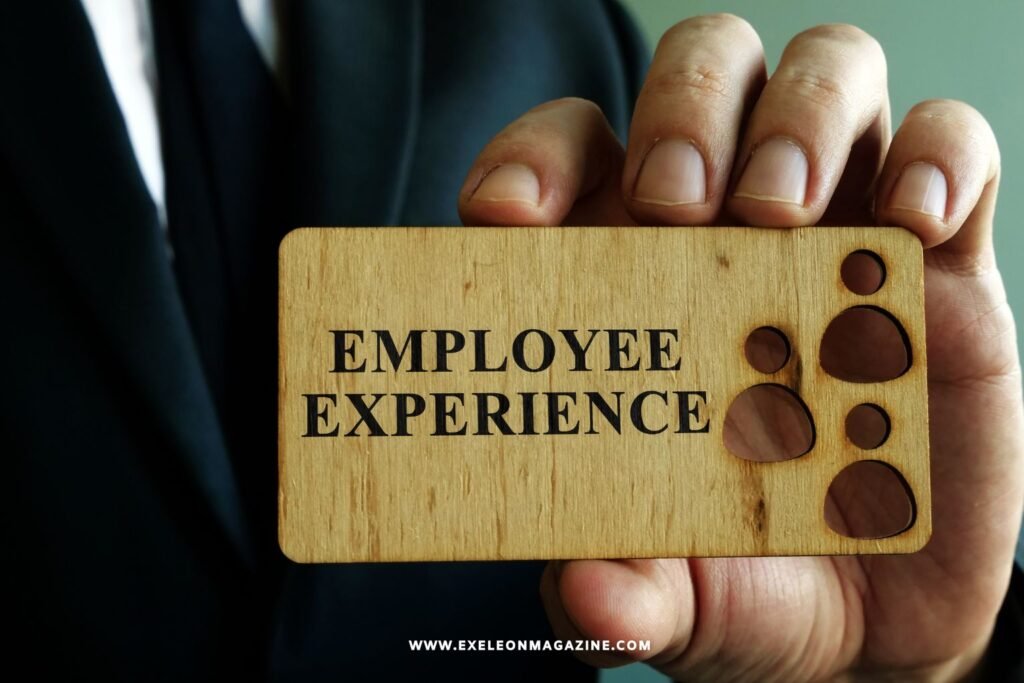
“Employee experience” (EX) can sound like a soft concept until you look at what it actually influences: productivity, retention, customer outcomes, and the organisation’s ability to change without breaking trust. If you want a future-ready workplace, EX isn’t a side project. It’s the operating system.
The shift from “workplace” to “work experience”
For years, organisations treated employee engagement as a survey problem. Scores dipped, action plans appeared, and then… little changed. The future of work is pushing leaders to think differently. Employees don’t experience your organisation as a mission statement. They experience it as meetings, tools, managers, policies, handovers, onboarding, feedback, and career opportunities—or the lack of them.
The new expectations are structural, not cosmetic
People are no longer comparing their job only to a similar job down the road. They’re comparing it to the best experiences they’ve had anywhere: consumer apps that “just work,” services that remember preferences, and teams that respect time. That’s why fixes like a refreshed values poster or another wellbeing webinar rarely move the needle. They don’t change how work feels on a Tuesday afternoon.
In practice, the future of work is asking questions such as:
- Do employees have clarity on what “good” looks like?
- Can they do their job without fighting systems, approvals, and unclear ownership?
- Does the organisation learn and adapt, or does it demand resilience from employees while staying rigid itself?
These aren’t perks. They’re design problems.
Why EX is now a business-critical advantage
It’s tempting to frame EX as “nice to have.” But when skills are scarce and change is constant, experience becomes a retention strategy, a performance strategy, and a risk strategy.
Productivity is increasingly about friction, not effort
Most teams aren’t short on effort; they’re short on flow. Friction shows up as duplicated work, unclear priorities, tool overload, and meeting sprawl. When leaders talk about “doing more with less,” EX is often the only sustainable route—because it focuses on removing obstacles rather than squeezing people.
This is also where EX connects to digital transformation. Rolling out new tech without redesigning the surrounding processes tends to create “shadow work”: manual workarounds, informal rules, and quiet frustration. Great EX doesn’t oppose technology; it makes it usable, learnable, and genuinely helpful.
Retention isn’t about loyalty—it’s about momentum
Employees leave when they feel stuck: no development, no meaningful feedback, no sense their work matters, no belief the organisation will invest in them. That’s especially true for high performers who can move quickly.
If you want to build a modern employee value proposition, you need to understand the moments that shape someone’s decision to stay: onboarding, role transitions, performance conversations, internal mobility, and how managers handle workload and recognition.
Around this point, many organisations bring in outside perspective to avoid solving symptoms instead of root causes. If you’re exploring what a structured EX approach can look like—from diagnosing pain points to redesigning key journeys—there’s useful thinking from specialists in employee experience transformation that frames EX as a practical, measurable discipline rather than a set of initiatives.
What great employee experience looks like in practice
EX improves when it’s treated as a design challenge—grounded in real employee journeys, supported by data, and owned across functions (not delegated to one team with limited influence).
Start with moments that matter (and measure them)
You don’t need to fix everything at once. The strongest EX programmes focus on high-impact journeys and make them demonstrably better. Common starting points include:
- Onboarding (time-to-productivity, early confidence, manager readiness)
- Performance and growth (quality of feedback, clarity of progression, access to learning)
- Change and transformation (how communication, training, and support actually land)
- Internal mobility (visibility of roles, fairness of selection, support for transitions)
Use a mix of listening methods: survey data, operational metrics (e.g., time-to-hire, internal fill rates), qualitative interviews, and “day in the life” mapping. One of the most overlooked metrics is time: how long it takes to get basic things done. Time is where friction hides.
Design for managers, not just employees
Managers are the delivery mechanism for most of the employee experience. Yet they’re often promoted for technical competence and then left to figure out people leadership on the fly—while managing heavier workloads than ever.
Future-ready organisations treat manager experience as a first-order priority. That means:
- Simple, repeatable rituals (1:1s, prioritisation conversations, feedback loops)
- Tools and templates that reduce admin rather than add it
- Clear decision rights so managers aren’t stuck “chasing approvals”
- Training tied to real scenarios, not generic theory
If your manager layer is overwhelmed, your EX will always be inconsistent—no matter how strong your HR strategy is.
Make flexibility a system, not a slogan
Hybrid work isn’t “work from home.” It’s a coordination model. Teams need explicit agreements: what needs to be synchronous, what can be async, how decisions are documented, and how new joiners build relationships. Without that, flexibility becomes inequity—where some people gain access to information and visibility simply by being in the room.
The organisations doing this well treat flexibility like any other operating model: they define principles, create norms, and revisit them as the business changes.
How to put employee experience at the centre—without creating another programme
EX fails when it becomes an extra layer: another committee, another survey, another set of posters. The aim is to embed it into how the organisation runs.
A practical path forward
First, pick a business outcome you care about—retention in key roles, faster delivery, improved customer satisfaction—and trace how employee experience is influencing it. Then choose one or two journeys to redesign, end-to-end, with shared ownership across HR, IT, operations, and leadership.
Finally, build a feedback loop that’s frequent and lightweight. Annual surveys are too slow for the pace of change. Short pulse checks, listening sessions, and operational metrics give you a live view of where friction is rising.
The future of work won’t be won by companies with the loudest employer branding. It will be won by companies where work is thoughtfully designed: clear priorities, supportive managers, usable tools, and growth that feels real. Put employee experience first, and you don’t just create happier employees—you build an organisation that can actually evolve.