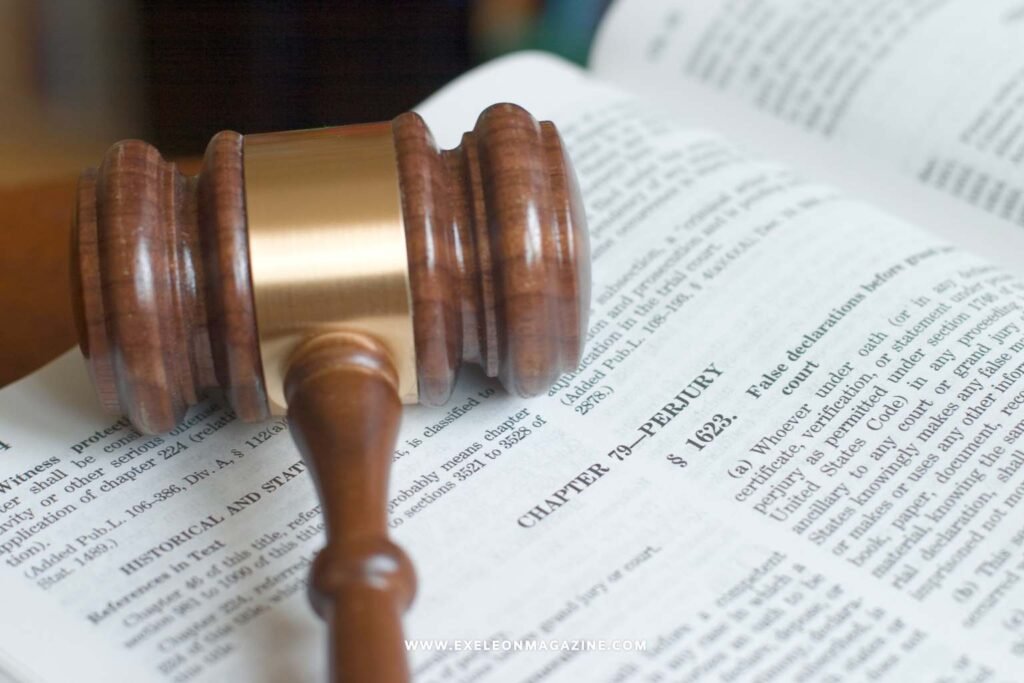
Perjury and false statements both involve providing inaccurate information, but the key difference is where and how the false information is given. Perjury occurs when a person knowingly makes a false statement while under oath in an official proceeding, such as a court hearing or deposition. False statements, on the other hand, involve knowingly providing incorrect information to a government official or agency, even if the person is not under oath.
Understanding the difference between perjury vs. false statements is important because both offenses can lead to serious legal consequences, but they are charged under different circumstances. The elements required to prove each offense, the situations in which they occur, and the potential penalties can vary depending on the case.
In this article, we will see the key differences between perjury and false statements, including their definitions, legal requirements, and potential penalties in detail.
Perjury
Perjury is a criminal offense that occurs when a person intentionally makes a false statement while under oath. The statement must be made during an official proceeding where the person has a duty to tell the truth. Common situations where perjury may occur include court testimony, sworn affidavits, depositions, and certain government hearings.
For a person to be convicted of perjury, prosecutors generally must prove that the individual:
- Made a false statement
- Knew the statement was false at the time it was made
- Made the statement intentionally
- Provided the statement while under oath or affirmation
A simple mistake, confusion, or incorrect memory usually does not qualify as perjury because the false information must be knowingly and deliberately provided.
False Statements
False statements involve knowingly providing false information to a government agency, official, or federal authority. Unlike perjury, the person does not need to be under oath when making the statement.
Examples of false statements may include providing inaccurate information during a government investigation, submitting incorrect details on an official document, or giving false information to federal authorities during an interview.
To prove a false statement offense, prosecutors generally need to show that:
- The person made a false statement
- The person knew the information was false
- The false information was provided to a government agency or official
- The statement was important enough to affect a government decision or investigation
Main Differences Between Perjury and False Statements
Although both offenses involve dishonesty, several factors separate perjury from false statements.
- Occurred While Under Oath or Not
The biggest difference is whether the person was under oath. Perjury occurs when a person makes a false statement while under oath during a legal proceeding. False statements generally do not require an oath and can occur during official communications or interactions with government authorities.
- Where the False Information Is Given
Perjury commonly occurs in courtrooms, depositions, or hearings where testimony is legally required. False statement charges can arise in different official matters, including government forms, investigations, and interviews.
- Type of Legal Proceeding Involved
Perjury is directly connected to judicial or administrative proceedings where truthful testimony is required. It is considered as false statement when someone provides false information to a government agency, even if no court proceeding is involved.
- Intent Required
Both offenses require knowledge and intent. A person usually cannot be charged simply because they provided incorrect information by accident. Prosecutors must show that the individual knew the information was false and intentionally provided it.
Penalties for Perjury and False Statements
Perjury and false statement offenses can result in serious criminal penalties, including fines, probation, and imprisonment. The exact punishment depends on the circumstances of the case and the impact the false information had on a legal proceeding or government matter. Penalties may be more severe if the false statement affects a court case, investigation, or official proceeding.
Beyond criminal penalties, a conviction can have long-term consequences that affect many areas of a person’s life. It can harm a person’s reputation, make it more difficult to find a job, and impact certain professional licenses or certifications. A criminal record related to dishonesty can also affect future legal matters and opportunities.
Key Takeaways
- Perjury involves knowingly making a false statement while under oath during an official proceeding.
- False statements involve knowingly providing false information to a government official or agency, even without an oath.
- Perjury typically occurs in courtrooms, hearings, or depositions, while false statements can occur in investigations, applications, and official communications.
- Both offenses require proof that the person knew the information was false and intentionally provided it.
- Convictions for perjury or false statements can lead to fines, imprisonment, and long-term personal and professional consequences.