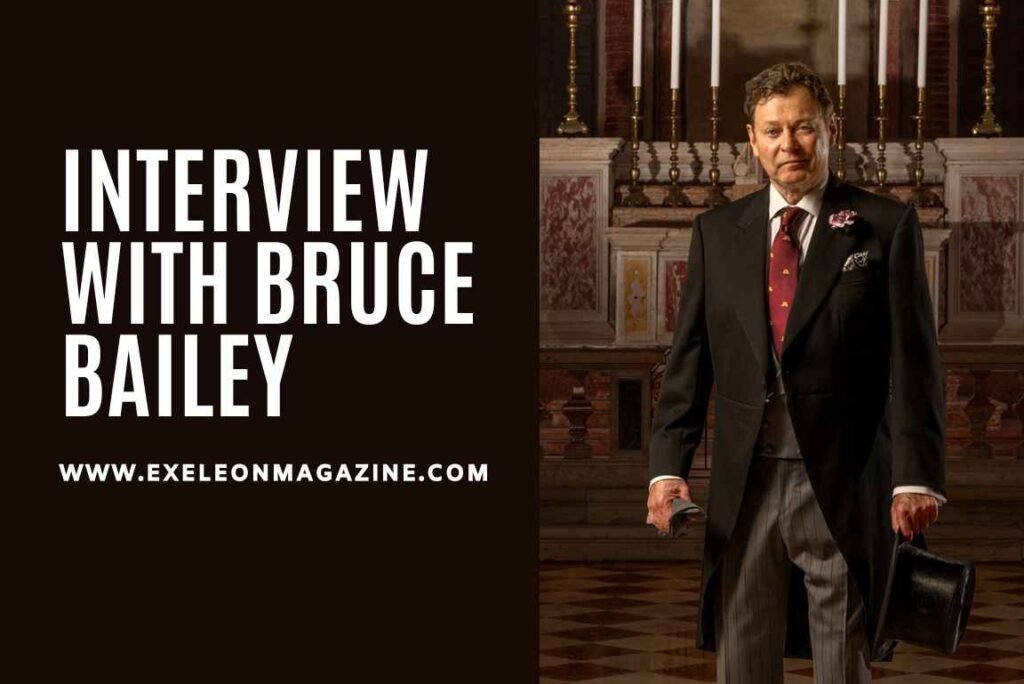
From Toronto to Venice, Bruce Bailey plays a prominent role in shaping how contemporary art is seen, supported, and circulated. Over several decades, he has worked across collecting, curating, and philanthropy, building a body of work connecting private initiatives with public institutions. His collections have been lent to museums in Canada and internationally, while his independent projects have introduced artists to wider audiences at key early stages in their careers.
Bruce Bailey’s initiatives have ranged from organizing exhibitions in Toronto to supporting museum programs and establishing an artist residency in Barcelona. Across all of this, his focus remains on supporting artists and strengthening the institutions that present their work.
Q: What first drew you to collecting contemporary art?
Bruce Bailey: My interest in art began on a family trip to Europe to visit relatives when I was 12 years old. I was taken to the Louvre and was mesmerized by Géricault’s Raft of the Medusa. I knew at that moment that I wanted to live with art. I won a scholarship to the Schulich School of Law at Dalhousie University, which enabled me to start my art collection with two prints, bought at the Nova Scotia College of Art and Design, by two art teachers there, Michael Snow and Eric Fischl. When I started working in law and early-stage investing in finance, I began spending time with artists and visiting their studios and art galleries in Europe, the United States, and Canada.
Q: Through Bruce Bailey Fine Arts Projects, you created a platform for early exhibitions. What motivated that decision?
Bruce Bailey: When I established Bruce Bailey Fine Art Projects in Toronto, it was in response to a practical gap I had observed. A number of artists I was following, including Ryan McGinley and Christian Jankowski, had limited access to spaces where they could present focused exhibitions early in their careers. I began organizing exhibitions that functioned as artists’ first solo presentations. The goal was to create a serious context for their work, support sales that directly benefited the artists, and introduce them to commercial galleries and museum professionals who could expand their visibility. Later, this also extended to Espacio Bruce Bailey in Barcelona, a nonprofit gallery and artist residency that offers artists opportunities to live, work, and exhibit in an international context.
Q: Your collection has been included in museum presentations. How do you approach lending works?
Bruce Bailey: Lending works to institutions such as the Montreal Museum of Fine Arts has always been connected to the belief that artworks take on added meaning within curated exhibitions. This was evident in projects such as Goya/Chapman: Disasters of War (2001) and For Every Atom Belonging to Me As Good Belongs to You (2019–2020) that combined historical material with contemporary practice. I view loans and donations as ways to support research, expand public access, and strengthen institutional collections.
Q: You have been involved with major institutions for many years. What role do you see for collectors in that space?
Bruce Bailey: My experience serving on committees at organizations such as the Montreal Museum of Fine Arts and the Whitney Museum of American Art, and participating in acquisition discussions, has shown me that collectors can contribute to major institutions in meaningful ways. Collectors can offer perspective, provide financial support for acquisitions, and help institutions think strategically about how their collections evolve over time. Seasoned collectors are also often deeply engaged with the contemporary art world and can bring an “eye” and depth of market knowledge that complements curatorial expertise. In my view, acquisition committees serve an important oversight function. While curators are critical to shaping institutional direction, there should be no unchecked curatorial independence in acquisitions. Collectors and committee members can provide an important counterbalance by evaluating proposed works and questioning whether acquisitions are being made for enduring artistic significance rather than temporary trends or institutional pressures.
Q: Your activities extend beyond visual art into other cultural areas. Why is that important to you?
Bruce Bailey: Supporting organizations such as the Canadian Opera Company and Canada’s National Ballet School are part of my view that visual art does not exist in isolation. Through initiatives such as Bruce Bailey’s Canadian Fête Champêtre, which has raised significant funds for institutions including the Montreal Museum of Fine Arts and international partners involved in events such as the Venice Biennale, I have aimed to contribute to a broader cultural ecosystem. In that context, different disciplines can reinforce one another, and fundraising can have a clear and measurable impact on programming and public access.