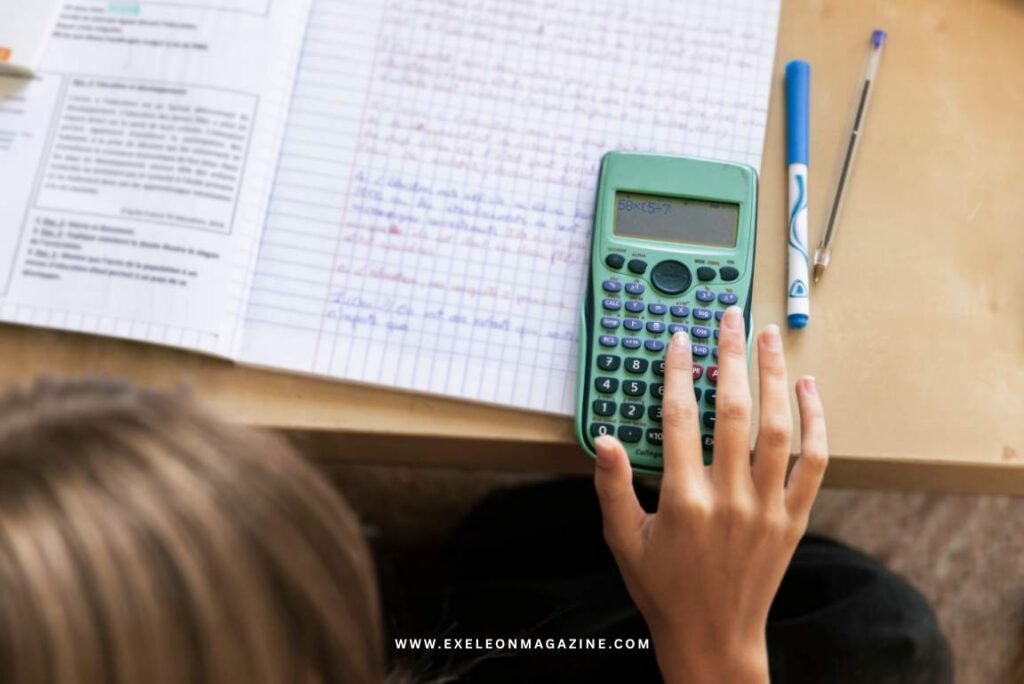
Calculus may be viewed as a rigid framework of procedures; however, once one starts using online resources, he/she will find out otherwise. Using an Integral Calculator not only solves the equation but also influences the user’s thinking process, attitude towards failure, and perception of integration. Gradually, all these transformations add up to bring about significant learning shifts that students are unaware of.
Here are seven hidden transformations that happen during the learning process.
1. From Memorizing to Recognizing Patterns
Most students begin by memorizing formulas with the hope that they can fit all problems.
They learn to observe trends instead of remembering the steps due to continuous use of the Integral Calculator. This shift helps them understand why certain techniques, like substitution or integration by parts, are chosen.
2. From Guessing to Logical Verification
Earlier, students often relied on intuition or partial confidence when solving integrals.
Over time, they start verifying each step by comparing it with outputs from the Integral Calculator. This builds a habit of logical validation instead of blind guessing.
3. From Fear of Mistakes to Analytical Curiosity
At first, mistakes may be frustrating and demoralizing.
Nevertheless, when they encounter a solution in detailed steps, they see them as chances for gaining knowledge rather than obstacles that could hinder their academic progress.
4. From Speed Pressure to Concept Clarity
The majority of people concentrate on completing calculations fast during exams and practice.
However, when using the integral calculator, the process moves away from speed towards understanding of each transition.
5. From Isolated Problems to Connected Thinking
Students often treat each integration problem as separate.
With repeated exposure to structured solutions, they start noticing connections between different types of integrals, such as how substitution relates to algebraic simplification.
6. From Manual Dependency to Strategic Tool Use
Rather than relying entirely on manual solving, students come to understand when to use technology effectively.
The Integral Calculator becomes a strategy that students use for verification, comparison, and learning, not to make learning any easier.
7. From Confusion to Confidence
The most important transition is an emotional one.
Through continued application and verification of their solution processes, students slowly eliminate confusion as they gain confidence in their knowledge of how and why something works.
Conclusion
Integration learning is much more than just solving mathematical equations; it is all about changing the way one looks at problems. The Integral Calculator plays an unseen role in facilitating this change by encouraging students to move away from rote memorization to comprehension.
Ultimately, such learning changes end up altering both the capacity to do mathematics and the ability to solve problems in general.