Your LinkedIn photo is the digital handshake that decides whether someone scrolls past or clicks through. LinkedIn data shows profiles with a professional headshots receive 14 times more views and 36 times more messages. In other words, one image can establish—or erode—trust before you ever say a word.
But getting that image right is more complex than it looks. Traditional photographers still charge a premium, AI generators promise “studio-quality” files for the price of lunch, and some teams rely on a quick iPhone snap. In this series, we’ll unpack the costs, market shifts, and decision shortcuts so you can choose the option that fits your goals and budget.
Why executive headshots still matter
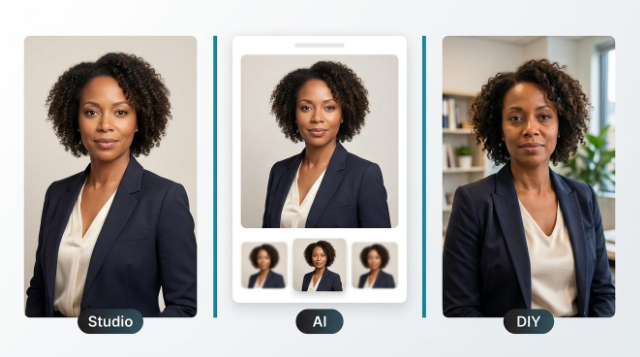
We live on video calls and digital profiles. Long before a prospect shakes your hand, they scroll past your face online. A polished portrait anchors trust instantly; it tells viewers, “I take my role, and your time, seriously.”
Great photography also travels. The same image shows up in pitch decks, conference bios, and internal Slack channels. One consistent photo keeps your brand tight across every audience.
Expectations climb with seniority. Finance and legal leaders routinely budget several hundred dollars per image because reputations in those circles hinge on gravitas. Tech founders may accept a looser look at first, yet even they upgrade once investors appear. Higher stakes mean sharper scrutiny.
An executive headshot is a leadership calling card: clean background, flattering but honest lighting, direct eye contact, and controlled wardrobe. The goal is authority, not glamour. For a deeper dive, see our guide to executive headshot essentials.
Bottom line: a headshot is not a vanity project. It is an asset that can compound trust or drain it. With quality established as non-negotiable, let’s explore the market forces rewriting the price tag.
Market forces reshaping the field
Photography is having its streaming-music moment. Artificial-intelligence tools now spin out convincing portraits in the time it takes to grab coffee. As supply surges, studio day rates are sliding; many photographers report charging 40 percent less than they did two years ago just to stay booked.
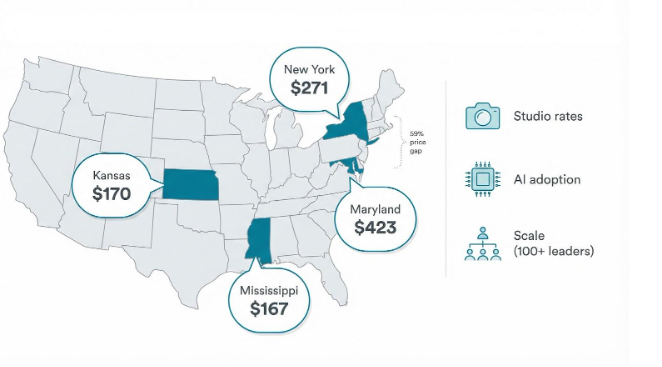
Location still sets the ceiling. A Wall Street executive in Manhattan often pays three or four times what a peer in Kansas City spends. According to InstaHeadshots’ 2025 U.S. Headshot Pricing Report, the average starting price for a traditional headshot is $271 in New York but only $170 in Kansas—a concrete 59 percent gap.
Maryland tops the chart at $423, while Mississippi sits at $167, underscoring how geography can overshadow every other cost factor. Even in pricey ZIP codes, large firms pilot AI to trim budgets across thousands of employee profiles, and early data shows engagement lifts that finance teams notice.
Scale has flipped. Scheduling 100 executives once meant renting a studio, flying in regional leaders, and waiting weeks for retouching. Now a people-ops manager can send an upload link on Monday and deliver a refreshed org chart by Friday. Speed turns headshots from a one-off expense into a living asset updated each time roles shift.
Traditional photographers are adapting fast. Some sell hybrid packages, combining studio lighting with AI retouch to protect margins while meeting clients halfway. Others lean into premium niches like magazine-style environmental portraits that algorithms still struggle to fake.
For buyers, the message is simple: price and turnaround are variables, not constants. They flex with your market, your timeline, and your appetite for experimentation. Know those levers before you spend a dollar on studio time or an AI subscription.
Cost comparison deep-dive: traditional studio
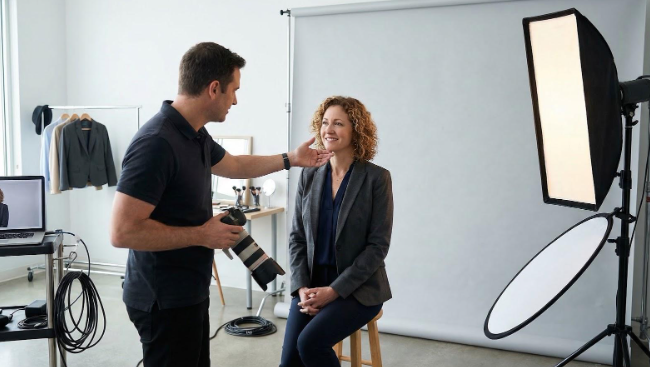
A studio shoot feels familiar: professional lights, a neutral backdrop, and a photographer guiding every tilt of your chin. That hands-on approach delivers consistent, high-fidelity images, perfect for annual reports or a Wall Street Journal feature.
Quality carries a price. Across the United States, professional studios charge $150 to $600 per person, with coastal cities trending higher. Executive specialists in New York or San Francisco often reach $800 per subject thanks to finance-and-law clients who demand flawless output.
Session fees are only the start. Add hair and makeup, wardrobe changes, extra retouched files, usage rights, and travel surcharges, and the invoice can double before the first shutter click. One corporate quote we reviewed listed $100 for basic makeup, $40 per additional image, and a $400 licensing line item; these extras surprise many teams.
Turnaround is slower by design. Photographers cull, color-grade, and retouch every pixel. Plan for a three-to-five-day wait for finals, longer if the studio is handling a large corporate batch. Tight calendars may push launch dates or trigger rush fees.
Why pay? Control. You set the lighting ratio, background hue, and crop. A seasoned photographer adjusts posture, smooths collars, and sparks authentic expressions that AI still struggles to capture. For C-suite bios, investor decks, and global press, that control shows stakeholders you invest in every detail.
With AI options now costing roughly one-tenth as much, studios must justify each premium line item. That scrutiny benefits everyone; it motivates photographers to refine service and assures buyers they are paying for intentional craftsmanship, not habit.
Cost comparison: AI-generated headshots
AI platforms flip the studio model on its head. Instead of booking lights and lenses, you upload a handful of selfies and let machine learning do the rest. Within an hour, you receive dozens or even hundreds of portrait variations that mimic softbox lighting, shallow depth of field, and subtle retouching.
The math flips as well. Ten to fifty dollars buys an entire library, not just one hero image. Industry estimates place the savings at about 90 percent compared with a traditional shoot. For a 20-person leadership team, the bill falls from five figures to a few hundred dollars, freeing budget for video or sales content.
Speed is the second payoff. No calendar tennis, no travel plans, no wait for edits. Marketing can refresh every profile in the time it once took to book a single slot. That agility matters during rebrands, mergers, or surprise press cycles.
Quality has improved quickly. In blind tests, many viewers struggle to spot the difference between AI and camera originals. Imperfections still appear: a duplicate earring, gravity-defying hair, or a background that feels slightly uncanny. The fix is simple: discard the outliers and keep the best. With 100 outputs, you lose nothing.
Consistency at scale is AI’s real edge. Need every employee on a slate-gray backdrop wearing brand colors? The platform locks the look with pixel-level precision, a task that once required studios on multiple continents.
Adoption keeps rising because the value equation is hard to ignore. AI is not a silver bullet, though. If you need editorial storytelling or human coaching to draw out confidence on camera, algorithms can feel sterile. The power lies in knowing when rapid, low-cost precision outranks handcrafted nuance.
Cost comparison: DIY smartphone
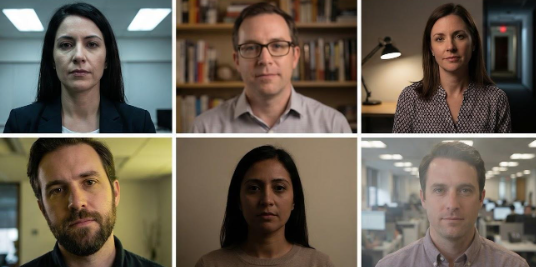
Grab a phone, find a blank wall, tap the shutter, done. On paper, a do-it-yourself shoot feels free. In reality, every “free” project bills you in staff time.
Imagine a marketing associate spending half a day posing ten colleagues, then another hour tweaking exposure and cropping LinkedIn squares. At a blended salary of fifty dollars per hour, that quick favor costs about six hundred dollars.
Quality is the next trade-off. Phone cameras shine outdoors, but office fluorescents flatten skin tones and cast shadows under the eyes. Without softboxes or reflectors, faces look harsh one minute and muddy the next. Backgrounds drift from beige drywall to cluttered bookshelves, breaking visual cohesion.
Consistency also slips. Different teammates hold the phone at slightly different angles. Some forget to clean the lens. Others shoot portrait instead of landscape. Place those images side by side on a website and the brand feels homemade, not enterprise.
DIY works for quick internal bios, Slack avatars, or a placeholder when a new hire starts Monday. Beyond that, hidden labor costs—and the perception cost—grow louder than the shutter click.
Decision framework: choosing the right option
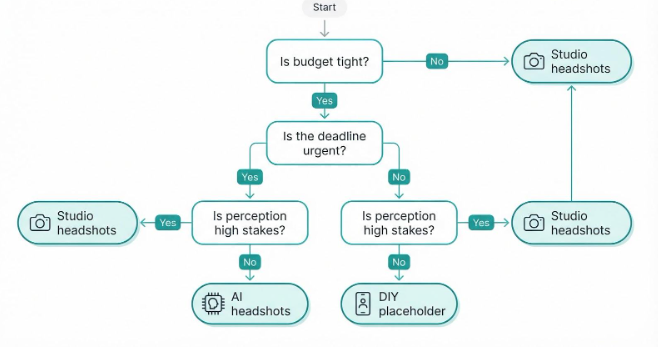
You have three levers to pull: cost, turnaround, and brand impact. Sequence them correctly and the answer becomes clear.
Start with budget. If an extra four hundred dollars per leader feels trivial next to conference fees, book a studio and secure top-tier polish. If that same line item triggers an approval chain, AI delivers rapid savings without hurting credibility.
Next, check the calendar. Need a board deck next week? AI wins on speed. Rolling out a rebrand in six months? A studio schedule fits and allows wardrobe planning and location scouting.
Finally, weigh perception risk. Investor day, media tour, or IPO roadshow? Human-led photography still carries gravitas. Internal directory or a quick LinkedIn refresh? DIY fills the gap until funds open up.
| Cost per person | Delivery time | Effort | Visual control |
| Studio | $$ | 3–5 days | Low |
| AI | $ | 1 hour | Very low |
| DIY | $–$ (staff time) | Same day | High |
Create a simple flowchart that asks three questions in order: “Is budget tight?”, “Is the deadline urgent?”, “Is perception high stakes?” The path guides you to the right bucket every time.
Use this model as a quick gut check before spending. It keeps the conversation grounded in business goals, not personal taste.
Mini case study: 50 leaders, two very different invoices
Picture a midsize SaaS firm preparing a rebrand. Leadership wants fresh photos for a new website, an investor deck, and a PR push—50 executives in total.
Scenario one: studio.
The team hires a respected local studio. At an average of four hundred dollars per person—including makeup, two retouched files, and usage rights—the invoice reaches twenty thousand dollars. Scheduling four shoot days stretches the timeline to six weeks.
Scenario two: AI.
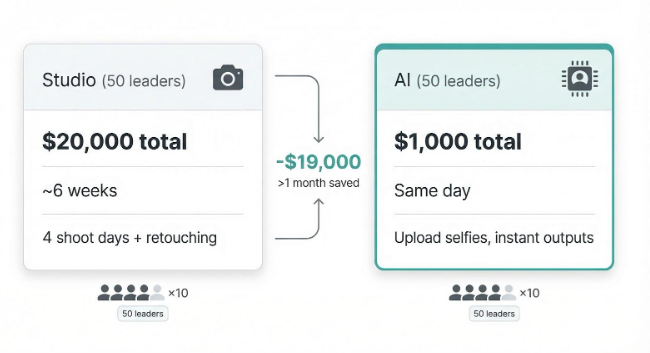
The same 50 leaders upload selfies on Monday morning. An AI platform returns polished portraits by lunch. At twenty dollars per seat, the entire rollout costs one thousand dollars, and marketing swaps images across every channel that afternoon.
Savings: nineteen thousand dollars and more than a month of time.
Neither route is automatically better; each serves a different blend of budget tolerance and brand control. Show numbers like these when you brief stakeholders, and the choice often becomes clear.
Conclusion
Whether you opt for a studio, an AI generator, or a quick smartphone session, align the choice with budget, timeline, and perception risk. When those factors are clear, the path to a trustworthy headshots is as well.