For Modern Materials Handling, DC Velocity, Supply Chain Dive — operations engineers, automation leads, and system integrators
Why Depth Cameras Selection Is an Infrastructure Decision
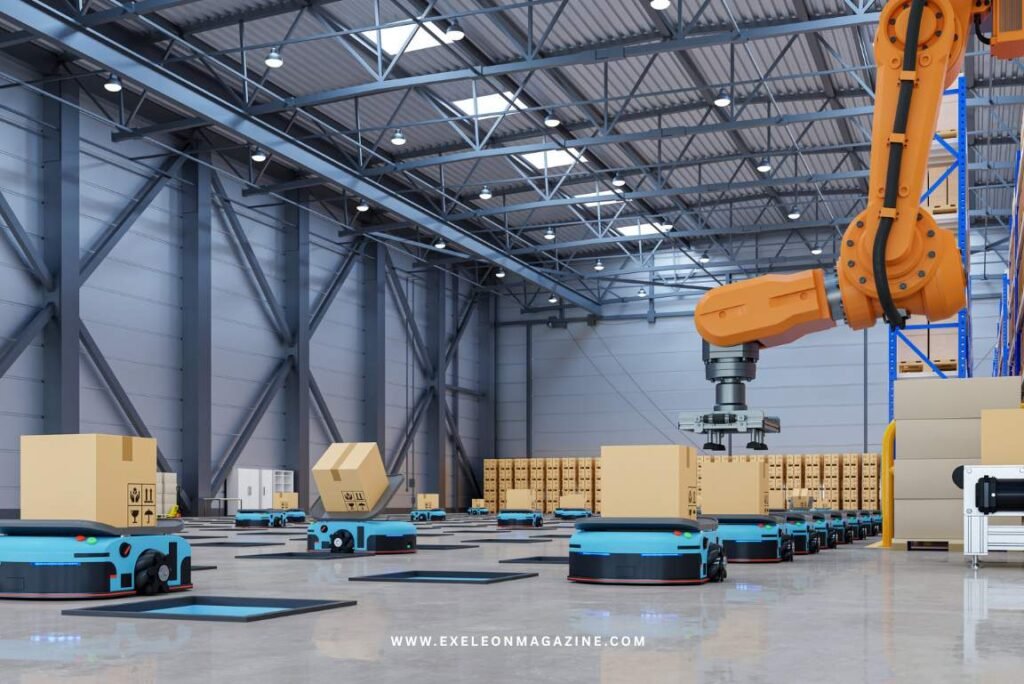
Autonomous mobile robots, goods-to-person systems, and AI-driven fulfillment are production infrastructure in distribution centers handling millions of units per day. The global warehouse automation market is projected to exceed $30 billion by 2026, driven by labor constraints and the relentless pressure to reduce cost-per-order. At the foundation of nearly every autonomous warehouse system is a depth cameras — the sensor that tells the robot where it is, what is in front of it, and whether the aisle is clear.
Choosing the right depth camera is not a component purchase. It is a multi-year commitment that affects fleet reliability, maintenance cost, and the total ROI of the automation investment. The wrong choice shows up as robot downtime during cleaning cycles, false-stop events in tight aisles, or an unplanned hardware transition when a vendor exits the market — each carrying direct cost that erodes the business case that justified the automation investment in the first place. This guide covers the environmental requirements that narrow the field, the technology trade-offs, a fleet deployment example, and a practical selection checklist.
What Warehouse Environments Actually Demand
Dust and Particulate
Fulfillment centers with cardboard dust, cold storage facilities with frost, and manufacturing floors with machining particulate all present contaminants that penetrate unsealed electronics over time. In a 24/7 three-shift operation, an unrated camera accumulates dust on optics and circuit boards within months, degrading depth performance before it fails entirely. Replacement and downtime costs compound quickly across a fleet — a single camera failure that takes a robot offline for four hours has a measurable cost at typical AMR throughput rates. IP65 is the minimum practical rating: the ‘6’ means fully dust-tight — zero ingress under sustained exposure — and the ‘5’ covers water-jet cleaning, which is standard protocol in food processing and cold chain facilities.
Lighting Variability
Warehouse lighting is not uniform. Loading dock areas cycle between bright exterior daylight and dim interior conditions as dock doors open and close. Racking aisles under high-bay LEDs alternate with shadow zones under deep shelving. Cameras relying on passive stereo — which requires ambient visible light — degrade in low-light zones and may fail near dock transitions. Active IR cameras project their own infrared illumination, producing consistent depth output from a dark racking aisle to a bright receiving floor regardless of ambient light. This consistency matters operationally: a camera that degrades in predictable lighting conditions requires route engineering workarounds that reduce fleet efficiency.
Near-Field Coverage
AMRs in busy facilities encounter obstacles at very short range: a dropped box directly ahead, a foot in the path, a pallet corner at floor level. A camera with a 0.5–0.6m minimum range has a physical blind zone where these obstacles are invisible to the navigation system, requiring slower speeds, supplemental sensors, or accepted contact risk — each carrying cost. A 0.10–0.17m minimum range eliminates most of this blind zone without additional hardware, reducing both the sensor payload complexity and the conservative speed margins that blind zones force into navigation parameters.
Depth Sensing Technology Options
Four technologies are in active use in warehouse automation:
| Criterion | Active Stereo | Passive Stereo | iTOF | LiDAR |
| Indoor accuracy (2–8m) | Excellent | Good | Good | Good |
| Dust / particle immunity | Good* | Good* | Good* | Excellent |
| Low-light performance | Excellent | Poor | Excellent | Excellent |
| Near-field coverage (<0.3m) | Good (0.10m) | Moderate | Moderate | Poor |
| Point cloud density | Very High | Very High | High | Low–Medium |
| GPU required | No | Yes (some) | No | No |
| IP-rated options | Yes (IP65) | Limited | Limited | Yes |
| Relative cost | Low–Mid | Mid–High | Mid | High |
* IP-rated variants exist for active stereo (e.g., Gemini 335L at IP65). Standard passive stereo and iTOF cameras are typically unrated — verify specific SKUs.
For indoor AMR navigation, obstacle avoidance, pallet detection, and docking, active stereo best balances accuracy, near-field coverage, cost, and IP-rating availability. Passive stereo (Stereolabs ZED series) excels outdoors but requires a discrete GPU and is rarely available in IP-rated form. LiDAR delivers excellent long-range point clouds but poor near-field coverage at high cost per unit across a fleet. iTOF sensors (Orbbec Femto series) provide close-range precision but top out around 5–6m, limiting utility for large-space navigation.
Application Story: AMR Fleet Deployment
The Challenge
A fulfillment operation running a mixed AMR fleet across 80,000 square feet needed to upgrade its depth sensing after unrated cameras failed during quarterly deep-cleaning cycles. Each failure required a maintenance window, a robot taken offline, and replacement parts from a camera line that had since been discontinued. The environment included cardboard dust from high-speed conveyors, variable lighting across pick-pack-ship zones, and narrow aisles where near-field blind zones caused false-stop events at operating speed.
The Solution
The fleet was upgraded to the Orbbec Gemini 335L. IP65 resolved the cleaning-cycle failure mode — the enclosure is fully dust-tight and survives direct water-jet cleaning without special handling. The 95mm stereo baseline delivers ≤0.8% depth precision at 2m and ≤1.6% at 4m, covering the 1–5m range where pallet detection, docking, and obstacle avoidance accuracy matter most. The 0.17m minimum range eliminated the near-field blind zone that was causing false-stop events. Full specifications are on the depth cameras for warehouse automation product page.
On-device depth processing — the Gemini 335L computes depth in-camera — kept the robot’s onboard compute free for navigation and fleet coordination. No GPU was added to the BOM. Power draw per robot stayed flat. The USB 3.2 interface integrated into the existing wiring harness without modification.
Production Validation
Standard Robots, Multiway Robotics, and SEER Robotics have each deployed the Gemini 335L at fleet scale in operating logistics facilities — not pilot evaluations. The common thread is IP65 protection, 1–5m operating range precision, and near-field coverage that removes the sensor fusion complexity needed to compensate for camera blind zones.
Selection Criteria: Six Things to Evaluate Before You Buy
For teams evaluating the Gemini 335L against their specific environment, the depth cameras for warehouse automation product page provides full specifications, interface variant options (USB, PoE, GMSL2), and documentation.
| Criterion | What to Evaluate |
| IP / environmental rating | IP65 minimum for warehouse use. Dust-tight (6) and water-jet resistant (5) covers hose-down cleaning, airborne particulate, and condensation. Unrated cameras are a maintenance liability in 24/7 operations. |
| Minimum depth range | Must cover the near-field directly in front of the robot base. 0.10–0.20m minimum eliminates the blind zone that causes false-stop events when obstacles are very close to the sensor mount. |
| Precision at operating distance | For AMR aisle navigation at 2–5m, ≤1.5% depth error is the practical minimum. For pallet detection and docking at 0.5–2m, ≤0.8% is preferred. Check published precision specs at specific distances, not just maximum range. |
| Host compute requirement | On-device depth processing keeps the robot compute platform free for navigation, scheduling, and fleet coordination. Cameras requiring a host GPU add cost, power draw, and thermal load to every robot unit in the fleet. |
| Interface and cabling options | USB is adequate for most deployments. PoE simplifies installation on fixed infrastructure (overhead, dock doors). GMSL2 supports longer cable runs for robots with distributed sensor mounts. |
| Vendor support continuity | The Intel RealSense discontinuation is the reference case. Evaluate whether the vendor has active production, published roadmap, and a track record of firmware updates. Depth camera selection is a multi-year decision for a robot fleet. |
Two criteria carry outsized weight for fleet deployments. Host compute: in a 100-robot fleet, removing a discrete GPU requirement eliminates the cost and power draw of 100 GPUs over the fleet lifetime — a six-figure BOM difference at modest GPU pricing. Vendor continuity: the Intel RealSense discontinuation in 2022 left a large installed base without a supported upgrade path. Vendor roadmap stability is standard procurement practice for any multi-year hardware commitment.
Conclusion
Depth camera selection for warehouse automation defines maintenance burden, near-field safety envelope, robot compute architecture, and long-term supply chain risk across your fleet. Evaluating on maximum range or unit cost alone—without IP rating, minimum depth coverage, and vendor stability—produces robots that fail during cleaning, stop in blind zones, or face mid-lifecycle hardware transitions. These are not edge cases; they are the failure modes that consistently erode ROI on automation investments that looked sound on paper.
The Gemini 335L addresses the specific requirements of 24/7 warehouse operation: IP65 for contaminated environments, 95mm baseline precision at the 1–5m AMR operating range, 0.17m minimum range for near-field coverage, on-device processing that keeps robot compute free, and active production with a documented roadmap. For operations teams building a business case, the total cost of ownership calculation should include not just the camera unit price but the maintenance burden, compute overhead, and supply chain risk that different sensor choices carry over a five-year fleet lifecycle. The fleet-scale deployments at Standard Robots, Multiway Robotics, and SEER Robotics validate it in exactly the conditions this guide describes.
Running depth cameras in a warehouse AMR fleet? Share your environment, sensor choice, and maintenance experience in the comments — operational data from live deployments is the most useful input for teams in the evaluation phase.