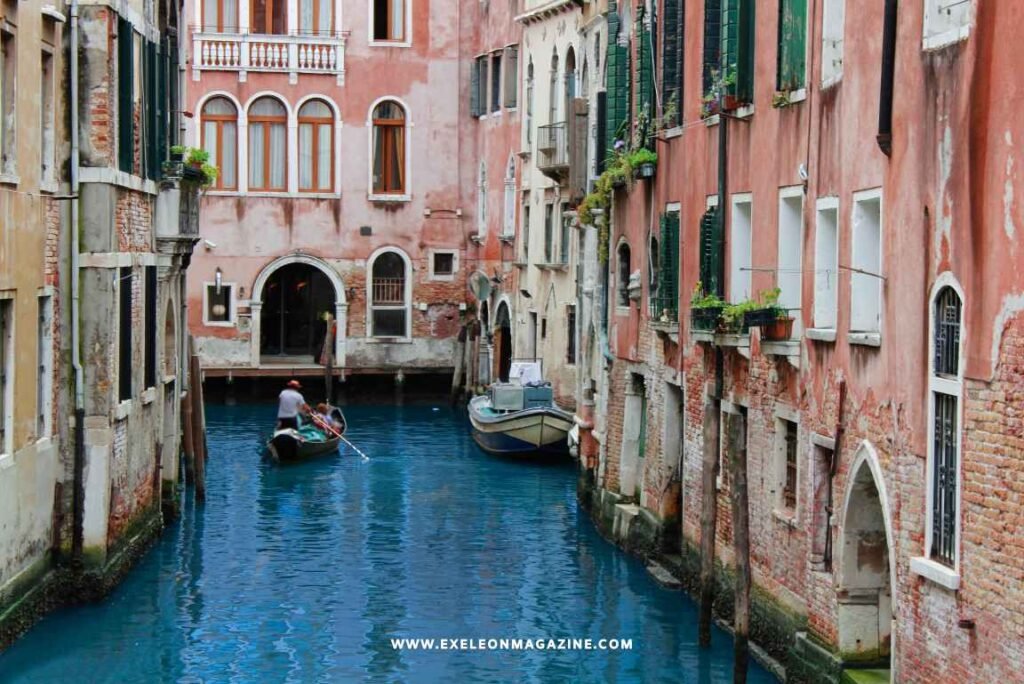
People who walk through Venice quickly notice how much of the city’s past still stands in front of them. Palaces line the Grand Canal, stone bridges cross narrow waterways, and churches display work created during the Renaissance. Residents and visitors move through streets and canals that people have used for generations. Despite this, however, the city feels alive, vibrant, and relevant. Like any good modern business, Venice has never treated itself as something frozen in time. It’s been carefully reinventing itself for centuries. Each generation repairs buildings, adapts spaces, and finds new uses for older structures so the city continues to function in everyday life. Let’s take a look at how this works.
Preservation and change coexist
Residents take the preservation of historic buildings seriously. Craftspeople repair stonework, maintain wooden foundations, and restore decorative details across the city. Most importantly, however, Venetians don’t preserve their architecture in order to stand as silent memorials to the past. Instead, they keep buildings functioning in their original purpose for as long as possible, with adaptations to modernity where needed. For example, you can still get opera tickets to the historical opera houses like Teatro La Fenice, where you’ll see Venetian opera in its original form and setting, with adjustments for modern needs like accessibility and enhanced sound, etc.
Revitalising the arts
Artists, curators, and organisers have reshaped Venice’s cultural life through large international events. One clear example is the Venice Biennale. Organisers launched the exhibition in the nineteenth century and later expanded it to include architecture, film, dance, and contemporary art. Artists from many countries present their work during the Biennale. Curators are careful to change the themes and invite new voices into the exhibition, which keeps the programme connected to current debates in art and culture.
By treating itself as a brand as much as a festival, the Biennale has managed to maintain a strong footing in the city’s calendar and remain a popular tourist attraction throughout the turbulent and changeable nineteenth, twentieth, and twenty-first centuries.
Innovation in preservation
Architects who work in Venice often face the challenge of adapting old buildings for modern use. Universities, galleries, and cultural foundations now occupy many structures that once served very different purposes.
Design teams, therefore, take pains to add modern structural systems, lighting, and interior spaces while protecting the visible character of the buildings. Through this process, architects keep historic structures useful in daily life instead of leaving them empty.
Adapting to modern travel
Local businesses are adjusting on a semi-constant basis to changes in travel patterns. Hotel operators run small guesthouses inside historic buildings, and restaurant owners experiment with new approaches to Venetian cooking while still using regional ingredients and keeping traditional favorites on the menu.
At the same time, budget accommodation and simpler eateries give travellers more options across the city. These changes help Venice accommodate different kinds of visitors without forcing the city into a single style of tourism.
Responding to environmental pressures
Flooding is one of the most serious challenges facing Venice. Seasonal high water affects streets, homes, and public buildings across the lagoon. Engineers and city authorities have spent decades developing systems to reduce the impact of these tides.
Engineers built the MOSE barrier system to control the flow of water entering the lagoon during extreme high tides. The project has faced criticism and delays, but the work shows how engineers and planners continue to search for practical responses to environmental pressure.
Conclusion
Venetians continue to adapt their city through restoration work, cultural events, and large infrastructure projects. Residents, planners, and engineers all take part in that process.
Through those efforts, the city functions as a living place rather than a preserved museum. Each generation adjusts how Venice works while still building on the foundations created by earlier centuries.