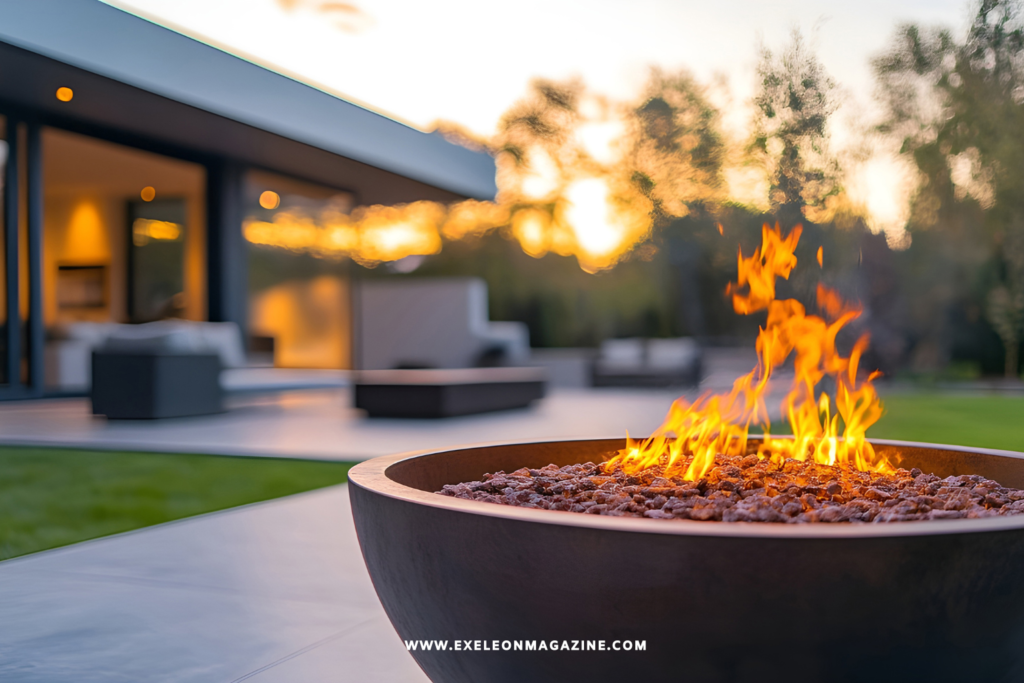
A fire pit can extend your outdoor season, give the yard a natural gathering point, and make evenings and cookouts more comfortable. The best choice starts with safety, site conditions, and local rules; once those are clear, style decisions get easier.
Start with rules and risk, not style
Before you shop, run through five checks. They shape what you can legally use and where you can place it.
- Local fire definition and setbacks. Rules vary by city. In Cary, North Carolina, the Fire Prevention Code defines a recreational fire as 3 feet or less in diameter and 2 feet or less in height, with at least 25 feet from structures or combustibles. Treat that as one example, not a national standard.
- Seasonal burn alerts. Some regions issue no-burn days. South Coast AQMD defines one as a 24-hour ban on wood burning in residential fireplaces, stoves, and outdoor fire pits across the South Coast Air Basin.
- HOA restrictions. Many associations limit or ban wood burning. Check your governing documents before buying.
- Permits for gas. Hard-piped natural gas usually requires permitted work by a licensed contractor.
- Placement surface. A deck is not bare ground. Manufacturers often require extra protection on combustible decks.
If you want ideas before rules, broader outdoor living features can help you picture how a fire feature fits your space.
Pick your fuel type by how you live
Fuel choice affects maintenance, smoke, heat, and legal use. Match it to your routine, not just the look.
Wood
Wood delivers the classic crackle and glow, but it also brings ash cleanup, visible smoke, and no-burn day limits. The EPA notes that PM2.5 in wood smoke can worsen asthma and contribute to heart and lung disease.
Smokeless wood
Double-wall designs use a secondary burn to reduce visible smoke. They still need dry fuel and good airflow, so smokeless does not mean smoke-free.
Propane
Propane units are portable and simple to light. They avoid ash and turn off quickly, which suits smaller yards and casual use.
Natural gas
Hard-piped natural gas is low-maintenance once installed, but it needs permitted gas work and a fixed location.
Ethanol and tabletop
These are mainly for ambience, not heat. In 2026, the CPSC warned against Rozato tabletop alcohol fire pits after uncontrolled pool fires, flame jetting, one death, and injuries. In 2025, Five Below recalled about 66,000 tabletop fire pits for flame-jetting and fire hazards.
Choose a format and size that fits your space
Formats range from bowls and fire tables to linear inserts and built-ins. Each changes how the feature sits and how much clearance it needs.
The recreational fire dimensions used in some codes, around 3 feet by 2 feet, are a useful benchmark for open wood pits. Confirm limits in local code and the product manual.
Plan seating and walking lanes before you buy. Raleigh guidance suggests fixed seats around a pit sit about 4 feet away. Give people clear paths in and out. This same planning lens supports broader outdoor living choices.
Materials that last
Material affects heat tolerance, corrosion resistance, weight, and how the surface ages outdoors.
- Stainless steel: resists corrosion and handles heat well.
- Weathering steel: forms a rust-toned patina over time.
- Cast concrete: heavy and durable, often used for fire tables.
- Masonry liners: common in built-in installations for heat protection.
Any outdoor material will weather, so factor in cleaning, covering, and off-season storage.
Safety and placement checklist
Safe placement is where manuals and local code do the heavy lifting. Use manufacturer numbers as examples, since they vary.
- Keep your distance. The U.S. Fire Administration advises keeping backyard fire pits at least three feet from the house and anything that can burn, supervising children, and using spark screens on wood fires.
- Follow rated clearances. HPC’s installation guide specifies side clearances of 36 inches for units up to 200k BTU and 48 inches for 201k to 400k BTU, with 84 inches overhead.
- Vent enclosures. For built-in gas pits, HPC requires at least two opposing enclosure vents of 18 square inches each, or 36 square inches total.
- Protect decks. HPC warns that wood or composite deck installations require a deck insulation kit and paver stones under the unit.
- Mind wind, cords, and overheads. Keep the flame clear of branches, string lights, furniture edges, and foot traffic.
Verify the exact figures in the product manual and your local fire code.
Budget and install pathway
Your installation route shapes effort and cost. Plug-and-play propane is simplest: connect a tank and light it, usually with no permit for the portable unit itself. Pro-installed natural gas is bigger, typically requiring a permit, licensed contractor, and inspection. DIY built-ins with a liner can give a custom look but demand careful attention to clearances, venting, base material, and local permit cues.
Where to browse styles and accessories
Once your rules, fuel, and site are settled, it helps to compare real formats side by side.
For readers in Australia comparing sizes and styles, one example retailer collection for curated fire bowls, tables, and accessories is fire pits for outdoors. Use it to study formats and features, then map anything you like back to your own local code and site conditions.
The best pit is the one you can use safely
The right fire pit is the one you can use safely and often because it matches your site, local rules, and comfort level. Sort out fuel, placement, and code first, then let style guide the final pick.