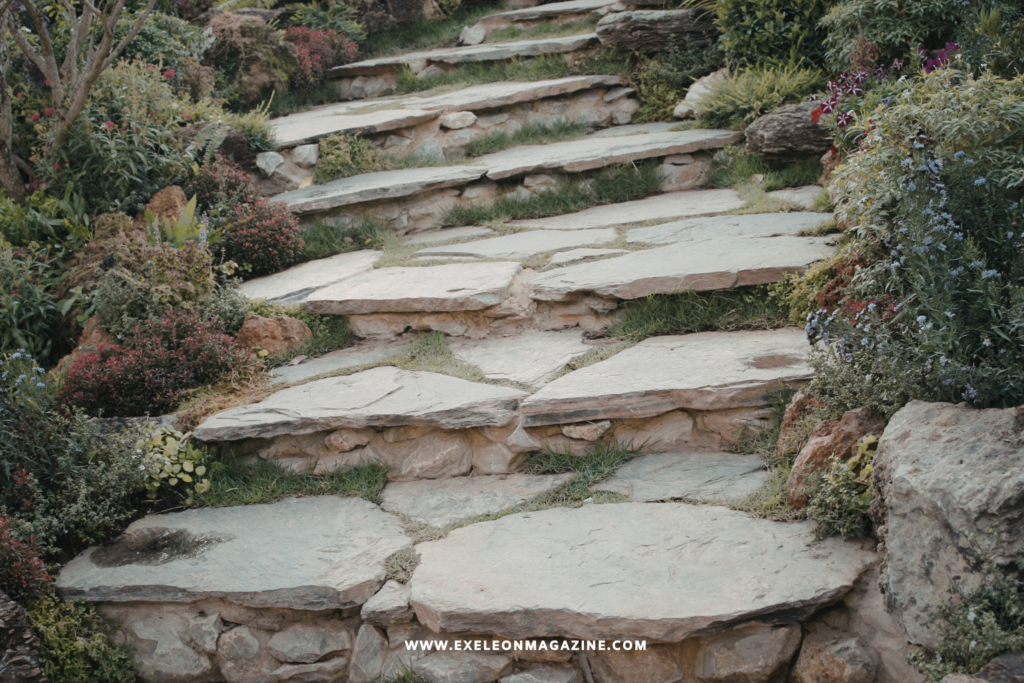
A path does something quietly powerful in a landscape: it tells you where to walk, and in doing so, it tells a story about the space. A straight run of poured concrete says “get from A to B.” A meandering line of natural stone set into a garden says “slow down and look around.” The material and the layout shape how a yard feels just as much as how it functions.
Natural stone is the classic choice for garden paths precisely because it works with a landscape instead of against it, enhancing the beauty and functionality of any outdoor area. But there’s a spectrum here, from casual, organic stepping stones dropped through a planting bed to precisely cut stone treads and edging that give a walkway a crisp, architectural finish. Knowing which approach fits where (and when it’s worth commissioning custom-cut stone) is what separates a path that looks thrown together from one that looks designed.
Why a Stone Path Changes a Garden
Before the how-to, it’s worth appreciating what a good path actually does:
- It creates rhythm. The eye follows a path into a space, which gives even a small garden a sense of journey and depth.
- It protects the landscape. Defined walking routes keep foot traffic off lawn and beds, preventing the muddy, worn tracks that form where people naturally cut through.
- It connects destinations. A path links the patio to the fire pit, the back door to the garden gate, the driveway to the front entry turning separate areas into a coherent whole.
- It sets the tone. Informal, irregular stone reads relaxed and naturalistic; uniform, cut stone reads formal and refined. The same yard can feel completely different depending on which you choose.
Most successful gardens actually use both, matching the style of the path to the mood of each area. Let’s start with the more casual end of the spectrum.
Planning the Route and Width
Before choosing a single stone, think about where the path should actually go and how wide it needs to be. The most natural routes follow the way people already move through a space the faint “desire lines” worn into the grass are a reliable clue to where a path belongs. In most garden settings, gentle curves feel more relaxed and inviting than rigid straight lines, though a formal space may call for a direct, deliberate axis.
Width follows function. A casual route meant for one person at a time can be a single line of stones. A primary walkway where two people walk side by side, or where you’ll regularly push a wheelbarrow or a mower, needs to be wider generally in the neighborhood of three to four feet. Settling the route and width at the very beginning prevents the two classic regrets: a path that feels cramped and grudging, or one that’s oversized and awkward for its surroundings.
Choosing Natural Stone Stepping Stones
For a soft, organic route through a lawn, a planting bed, or a gravel garden, nothing beats stepping stones. Set with gaps of greenery or gravel between them, they create a light, informal path that feels like part of the landscape rather than an intrusion on it.
When you’re selecting natural stone stepping stones, a few characteristics make the difference between a path that’s a pleasure to walk and one that’s a chore:
- Size and footing. Choose stones large enough for a confident, full footfall generally at least 18 inches across, and ideally larger for main routes. Undersized steppers force people to mince along, watching their feet.
- A flat, stable top. Look for stones with a naturally flat upper surface and reasonably even thickness so they sit securely and don’t rock.
- Thickness. Thicker stones (around 2 inches or more) have the mass to stay put and resist cracking underfoot, especially where the ground freezes.
- Texture. A cleft or lightly textured surface offers grip in wet weather; very smooth stone can turn slick.
- Color and character. Pull a variety and see how they look together, wet and dry, in your garden’s light. A blend of related tones usually looks more natural than perfectly matched pieces.
Order a few more stones than your path length strictly requires. Having extra to choose from lets you match shapes and sizes as you go, so each step feels deliberate rather than whatever was left in the pile.
Laying Out and Setting Stepping Stones
The single most important detail in a stepping-stone path is spacing, and the trick is to let the human stride set it, not a tape measure alone. Walk the intended route at a natural, relaxed pace and mark where your feet land. For most people that’s roughly 24 inches center-to-center between stones, but let your own comfortable gait be the guide, and keep it consistent so the path flows.
Once the layout is marked:
- Set each stone in place and cut around it with a spade to trace its outline.
- Excavate the outline a few inches deep enough for a base plus the stone’s thickness.
- Add a base of a couple inches of compacted sand or stone screenings for stability and drainage, especially important in areas that freeze and heave.
- Bed the stone into the base, tapping it down and checking that it sits flat and doesn’t rock.
- Set the height carefully. In a lawn, the stone’s top should sit at or just slightly below the grass line so a mower can pass right over it without hitting the stone. In a bed or gravel, you have more freedom.
Fill the gaps between stones with whatever suits the look: turf, a low ground cover like creeping thyme, gravel, or mulch. Take your time on the first few stones; they set the pattern the rest of the path follows.
Where Stepping Stones End and Custom Work Begins
Informal stepping stones are perfect for gardens and secondary routes. But there are places where you want stone that’s precise, consistent, and architectural: a formal front entry, a level change that needs true steps, a wall that needs capping, or a threshold that has to meet a door cleanly. Irregular natural stone, wonderful as it is, can’t always deliver that kind of exactness.
That’s the point where cut-to-size stonework takes over.
When to Use a Custom Limestone Fabricator
There’s a meaningful difference between buying stone as it comes from the quarry and having it cut and finished to an exact specification. For projects that demand consistent dimensions, clean edges, and a refined, cohesive look, working with a custom limestone fabricator opens up possibilities that off-the-shelf stone simply can’t match.
Custom fabrication tends to earn its place in projects like these:
- Stair treads and steps. Uniform, cut limestone treads give a formal stairway crisp, even risers and a polished, intentional look a world away from stacked natural slabs.
- Wall caps and coping. A cut limestone cap along the top of a seat wall, retaining wall, or planter finishes it cleanly, sheds water, and provides a comfortable edge to sit on. Pool coping is a classic example, where consistent sizing and a rounded edge matter for both looks and safety.
- Pier and pillar caps. Cut caps on entry columns or fence pillars give a project a finished, architectural crown.
- Thresholds and transitions. Where a walkway meets a door or two surfaces meet, a custom-cut piece makes a clean, exact transition.
- Hearths, mantels, and interior pieces. Fabricated limestone shows up indoors too, cut precisely to fit a fireplace or a bench.
- Edge profiles. Fabrication lets you specify finished edges: a bullnose, a chamfer, an eased edge that soften and refine exposed stone.
The value of custom work is control. You specify the dimensions, thickness, finish, and edge detail, and receive stone made to fit your project exactly, with a consistency across pieces that natural, as-quarried stone can’t guarantee. For anything where the pieces need to line up, repeat cleanly, or meet another element precisely, that control is the whole game.
Designing With Custom Stone in Mind
A few tips make custom stonework go smoothly:
- Measure carefully then confirm. Custom pieces are cut to your numbers, so accuracy up front prevents costly remakes. For critical fits, it’s worth double-checking dimensions on site before anything is cut.
- Think about finish and edge early. The edge profile and surface finish dramatically change the character of the finished piece, so decide the look you’re after before fabrication, not after.
- Coordinate stone across the project. If you’re mixing natural stepping stones in the garden with custom-cut treads and caps at the entry, choosing a compatible stone type and color keeps the whole property feeling unified even as the level of formality shifts from one area to the next.
- Plan for weight and handling. Cut limestone treads, caps, and slabs can be heavy. Account for how large pieces will be moved and set before they arrive.
Done thoughtfully, a project can move seamlessly from informal to formal: natural stepping stones drifting through the back garden, tightening into precise cut-limestone steps as the path climbs to a level terrace or the front door. That transition from organic to architectural is one of the most satisfying moves in landscape design.
Caring for Stone Paths and Cut Stonework
Both ends of the spectrum are refreshingly low-maintenance:
- Stepping-stone paths need little more than occasional weeding of the joints, topping up gravel or ground cover, and resetting the odd stone that shifts after a hard winter. Rinse off dirt and organic buildup as needed to keep footing safe.
- Cut limestone benefits from a penetrating sealer to resist staining, especially in high-use areas like steps and pool coping, and should be cleaned with pH-neutral products rather than acidic cleaners that can etch it. Sweep regularly so grit doesn’t grind into finished surfaces.
With minimal attention, a stone path will serve for decades, mellowing and settling into the landscape as the plantings around it fill in.
The Right Stone in the Right Place
A great garden path isn’t about choosing between natural and custom stone it’s about knowing where each belongs. Informal stepping stones bring softness and a sense of discovery to gardens and casual routes. Precisely fabricated limestone brings order and refinement to steps, edges, and formal spaces. Use them where each does its best work, tie them together with a consistent palette, and the result is a landscape that guides you through it beautifully, one well-placed stone at a time.