Packaging engineers have a saying that most consumers never hear but every founder eventually learns the hard way: a great formula deserves a container that doesn’t fight it. A deodorant that softens in a hot warehouse, a serum that oxidizes in clear glass, a lip balm stick that snaps off inside its tube — these aren’t packaging aesthetics failures. They’re engineering failures, and they cost brands money, returns, and trust. Othilapak approaches two of the trickiest categories in personal care and skincare — stick containers and dropper bottles — with exactly that engineering mindset.
The Stick Container: More Than a Tube With a Dial
Othilapak frames its philosophy on this category with refreshing honesty: “a stick container isn’t just a tube with a dial. It needs to match your formula’s hardness, survive your supply chain’s temperature range, pass your retailer’s drop test, and communicate your brand before the cap comes off.” As a Stick Container Manufacturer, that statement functions as the actual design brief behind every product they build.
The category spans far more than deodorant. Sunscreen sticks, solid perfume, lip balm and lip color, highlighters and blush, hair care sticks, men’s grooming products, and even pharmaceutical balms all rely on the same core mechanism — logic that has to be adapted precisely to each formula’s hardness and use case. Across cosmetics, personal care, and pharmaceuticals, the appeal is consistent: portability, hygienic no-touch application, and a generous surface area for branding that a jar or tube simply can’t match.
Material Decisions That Actually Matter
Othilapak makes a point that’s easy to overlook: nearly all stick containers use PP or PE, but that’s a starting point, not a specification. Polypropylene is the industry standard — rigid, chemical-resistant, and compatible with most wax and gel formulations, typically specified at 1.2–1.8mm wall thickness for a 50g format. Drop below 1.0mm, and the body deflects under cap snap-fit force and cracks prematurely. Polyethylene trades a small amount of chemical resistance for meaningfully better cold-temperature performance, making it the practical choice for formulas stored or shipped below 5°C, where PP becomes brittle under mechanical stress.
PCR PP or PE options — available at 30%, 50%, and up to 100% recycled content — support EU PPWR compliance and FTC Green Guide alignment, though Othilapak is transparent that PCR resin shows higher batch-to-batch color variation, which matters most for brands using natural or undyed finishes.
Solving the Complaints Nobody Talks About
What sets this stick container program apart is its direct engagement with the specific failures consumers actually experience — the stuck twist mechanism, the stick that won’t retract, the cap that falls off in a bag, the product that softens in hot weather. Each is addressed with targeted engineering: optimized screw thread geometry, extended lift travel to minimize product waste, reinforced anchor ribs for stick retention, and heat-resistant structural design validated through transportation simulation.
That level of problem-specific engineering is backed by real testing protocols, including 48-hour formula immersion tests at 40°C to confirm compatibility before production begins — not after a field complaint arrives.
Dropper Bottles: Precision for Formulas Where Every Drop Counts
If stick containers are about structural resilience, dropper bottles are about precision. As a Dropper Bottles Manufacturer for Skincare, Serums & Essential Oils, Othilapak’s approach centers on formulas where dosing accuracy directly affects efficacy and cost: facial serums, boosters, brightening treatments, facial oils, essences, and aromatherapy blends. Precise dosage matters enormously for potent actives like vitamin C, retinol, peptides, and acids, where over-dispensing wastes expensive formula and under-dispensing undermines results.
Choosing the Right Material and Shade
Othilapak’s material guidance is refreshingly specific rather than generic. Glass remains the default for high-value formulas sensitive to oxygen, light, and pH shifts, offering chemical inertness that prevents leaching or odor transfer. Plastic dropper bottles make sense when drop resistance, lighter shipping weight, or cost is the primary constraint — particularly for travel sets and e-commerce lines where breakage in transit is a real concern. Aluminum occupies a distinct middle ground, offering near-total light barrier protection and a more “device-like” technical aesthetic, well suited to on-the-go formats.
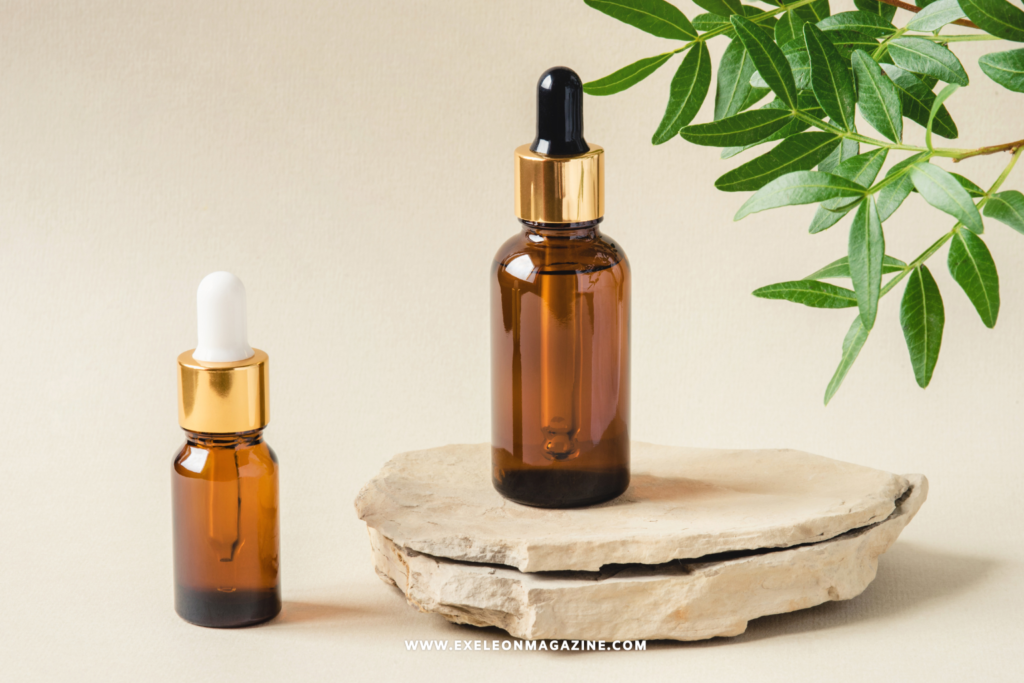
Glass color is treated as a functional decision, not just an aesthetic one. Amber remains the benchmark for UV protection on essential oils and light-sensitive serums; frosted glass diffuses light while adding a tactile, luxury finish; matte black offers maximum visual impact alongside strong shielding for high-performance actives; green glass pairs botanical aesthetics with useful UV filtering; and clear glass, while offering no meaningful UV protection, lets a genuinely stable formula’s color and clarity become the visual hero.
Dispensing Mechanisms Built Around Real Use
Othilapak offers two primary dispensing formats, each solving a different usability problem. Twist-and-press droppers enable one-handed operation with a secure twist-lock system that prevents spills — ideal for travel and thicker formulas. Tilt-tip droppers make it easier to dispense viscous liquids at a comfortable angle while reducing over-dispensing and minimizing skin contact for better hygiene.
Every dropper bottle is validated through four core tests: leak-proof testing, dropper accuracy testing to verify dosage control, compatibility testing between packaging material and formula, and vacuum chamber testing that simulates pressure changes during transport and confirms airtight integrity.
The Common Thread: Engineering Before Aesthetics
What both categories share is a manufacturing philosophy that treats packaging as a functional system first, and a branding surface second — knowing that the two ultimately reinforce each other. A stick container that dispenses smoothly for its entire life, or a dropper bottle that delivers a consistent 0.25–0.5ml every time, builds the kind of quiet trust that no label claim can substitute for.
For brands developing formulas at the more technical end of skincare and personal care — active-rich serums, temperature-sensitive balms, oils that oxidize under the wrong light — that combination of material transparency, rigorous testing, and problem-specific engineering is exactly the kind of manufacturing partnership worth building a product line around.