Getting hair extensions is exciting — but picking the wrong method can leave your natural hair worse off than before. If you’ve been researching your options, you already know the market is packed with choices, techniques, and opinions. A great starting point is browsing a specialist resource like https://wowhairextensions.fr/, where you can see quality extensions and get a clearer picture of what’s available before you book your appointment. The good news? Three methods stand out above the rest for being genuinely gentle on your hair — and that’s exactly what we’re breaking down today.
What Makes a Hair Extension Method Safe for Natural Hair?
Safety in hair extensions isn’t just about avoiding breakage in the short term. It’s the full picture — how the method affects your scalp, your natural strands, and the overall health of your hair over weeks and months of wear.
The key factors to look at are weight distribution, attachment technique, and how much tension is placed on the root. Heavy extensions pulling on a small section of hair will cause stress on the follicle over time, which can lead to traction alopecia — a very real and frustrating form of hair loss caused by prolonged pulling. A good extension method spreads weight evenly and sits close to the root without gripping too tightly.
Heat and chemicals are also worth thinking about carefully. Methods that rely on hot glue, bonding agents, or harsh adhesives can weaken the hair shaft and cause damage that takes months to recover from. The gentlest techniques use mechanical attachment — think small rings or soft tape — rather than anything that chemically alters your hair.
Maintenance matters too. An extension method that requires frequent salon visits for tightening, or that’s difficult to care for at home, increases the risk of matting, tangling, and breakage over time. The safest methods tend to be the ones that work with your lifestyle, not against it.
Tape-In Extensions: A Popular Low-Impact Solution
Tape-in extensions are, for good reason, one of the most widely recommended methods by professional stylists. The technique involves thin wefts of hair — pre-taped on one side — that are sandwiched around small sections of your natural hair, sitting flat against the scalp.
Because the tape lies flat and the weft is wide rather than concentrated at a single point, the weight is spread across a larger surface area. This makes them much kinder to your natural hair than methods that attach to a tiny cluster of strands. The result is a seamless, natural finish that blends beautifully, even with fine hair.
Tape-ins typically last six to eight weeks before they need repositioning as your hair grows out. Removal is straightforward — a specialist uses a bond remover solution that dissolves the adhesive without pulling or stressing the hair. The same wefts can often be reused two to three times, which makes them a cost-effective option as well.
They work particularly well for people with medium to fine hair who want added length or volume without the bulk. If you have very thick or coarse hair, tape-ins can still work beautifully — you may simply need more wefts to achieve a blended result.
Nano Ring Extensions: Secure Application Without Heat or Glue
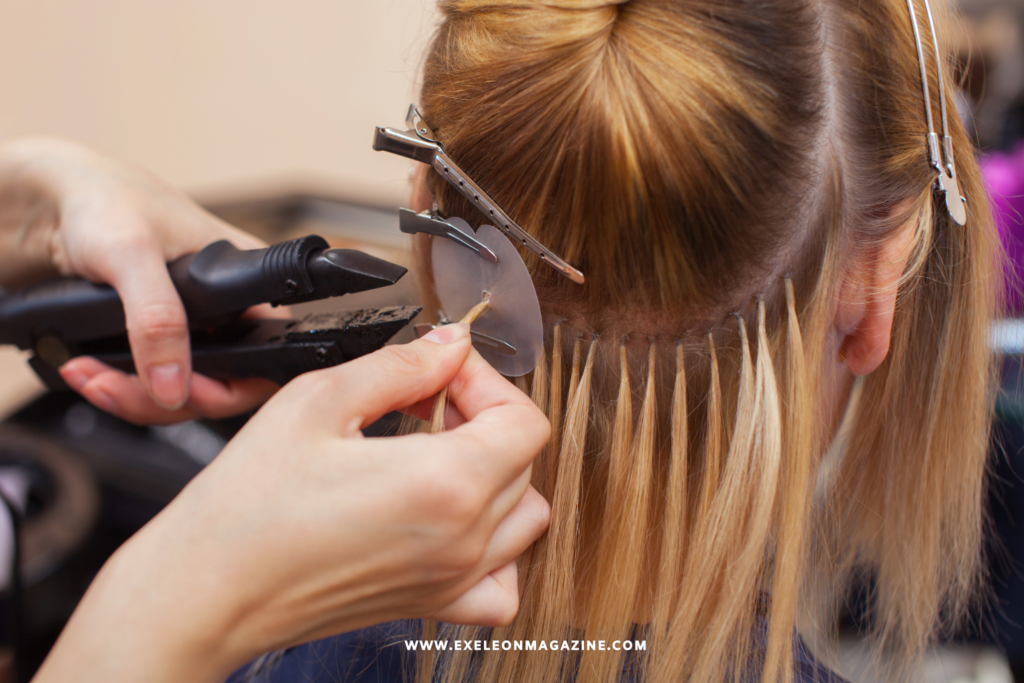
Nano rings are the smallest ring-based extension method available, and they’ve built up a loyal following for one simple reason — they cause minimal disruption to your natural hair. Each extension strand is attached using a tiny metal ring (roughly 90% smaller than a standard micro ring), which is clamped shut using a small tool. No heat, no glue, no chemicals.
Because the rings are so small, they’re virtually undetectable once the extensions are in place. They sit close to the root and move naturally with your hair, which makes them comfortable to wear day to day. People with fine or low-density hair often prefer this method because the attachment points are discreet enough to stay hidden even in updos or ponytails.
Installation does take time — a full head can take three to five hours depending on how many strands are applied — but the payoff is extensions that can last up to four months with the right care. Maintenance appointments every six to eight weeks allow the rings to be moved up as your natural hair grows, keeping everything looking fresh.
You have to remember – nano rings should always be applied by an experienced technician. Rings that are clamped too tightly can put pressure on the hair shaft and cause breakage. Done correctly, though, this method has an excellent track record for preserving hair health.
Hand-Tied Weft Extensions: Lightweight and Natural-Looking Results
Hand-tied wefts are exactly what they sound like — wefts of hair that are sewn by hand rather than machine, creating a thinner, more flexible base. This matters more than you might think. A thinner weft lies flatter against the scalp, which reduces bulk, improves comfort, and makes the extensions far less detectable.
The installation method involves creating small, horizontal braided rows (called anchor points or beaded rows) along the head, and then sewing the wefts onto those rows using a needle and thread. No adhesive, no heat — just skilled needlework.
Because the weight is distributed along an entire row rather than individual attachment points, hand-tied wefts are genuinely comfortable to wear. Many clients describe forgetting they’re even wearing extensions after the first few days. They’re also a great option for people who want significant volume and length, as the wefts can be layered to create a full, natural finish.
The method does require maintenance every six to eight weeks to move the rows up as the hair grows. Skipping appointments isn’t advisable, as grown-out anchor points can create tension on the roots. With regular upkeep, however, hand-tied wefts can last a year or longer — making them one of the most durable options available.
How to Choose the Best Hair Extension Method for Your Hair Type
Here’s the honest truth: there’s no single “best” method that works perfectly for everyone. The safest choice for you depends on your natural hair’s thickness, texture, and condition — as well as your lifestyle and how much time you’re willing to invest in maintenance.
Fine hair tends to do best with tape-ins or nano rings, since both methods avoid excessive weight on delicate strands. If you have thicker or stronger hair and you’re after dramatic volume, hand-tied wefts might be the better fit. If you color your hair regularly or use heat tools often, you’ll want to discuss that with your stylist, as some methods hold up better under those conditions than others.
Above all, the expertise of your stylist makes or breaks the experience. The gentlest method in the world can cause damage if it’s applied incorrectly. Take your time finding a specialist who has real experience with the technique you’re interested in, asks about your hair history, and takes a proper consultation seriously. Your hair deserves that level of care — and the right extensions should feel like a seamless part of you, not a compromise.