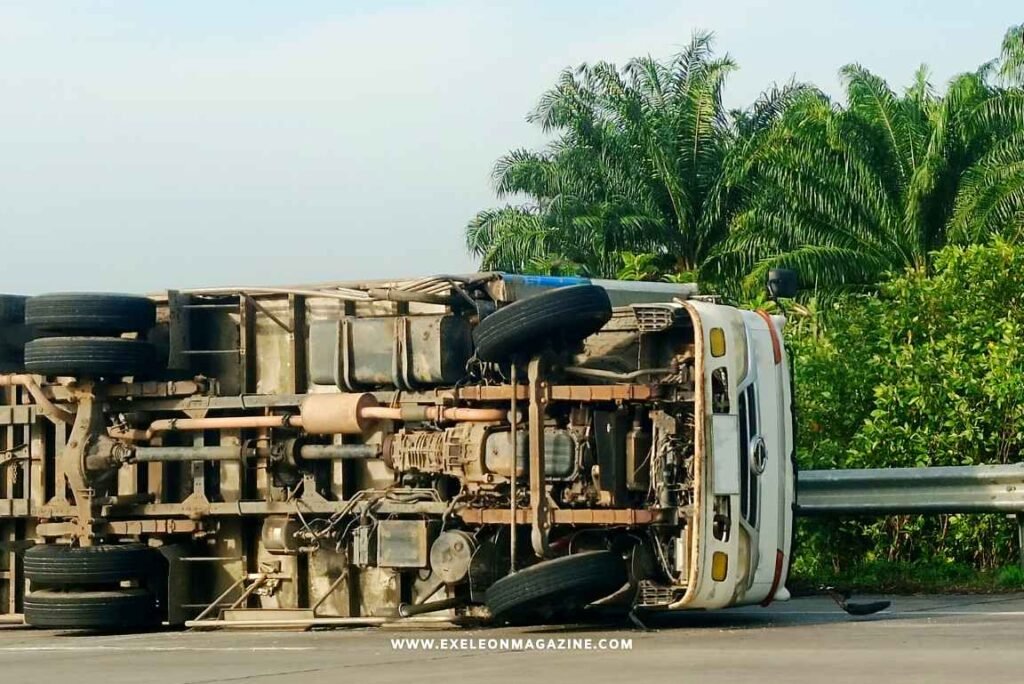
A jackknife truck accident happens when a large truck’s trailer swings outward and forms a sharp angle with the cab, resembling the shape of a folding knife. This loss of alignment between the cab and trailer makes the vehicle nearly impossible to control.
These accidents happen suddenly and often affect multiple lanes of traffic at once. Understanding how jackknife accidents develop and why they are so dangerous helps injured parties and their families make sense of what occurred and what legal options may follow.
The consequences of a jackknife crash are rarely minor. The size and weight of commercial trucks mean that when control is lost, the damage to other vehicles and people nearby is often severe.
How a Jackknife Truck Accident Happens
A jackknife occurs when the trailer pushes the cab from behind, causing the two sections to fold toward each other. This typically happens when the truck brakes too hard or too suddenly.
Other contributing factors include slippery road surfaces, uneven braking between the cab and trailer, and high speeds on curves or downhill stretches. Any condition that causes the rear wheels to lock while the front continues moving can trigger a jackknife.
Common Causes of Jackknife Accidents
Several factors increase the risk of a jackknife event. Some of the most frequent causes include:
- Sudden or excessive braking at high speeds
- Wet, icy, or slippery road surfaces reduce tire traction
- Improper cargo loading is causing uneven weight distribution
- Mechanical failure in the braking system
- Driver error, including speeding, fatigue, or distracted driving
- Sharp turns taken at speeds too high for the road conditions
Each cause may point to a different party bearing legal responsibility for the crash.
Why Jackknife Accidents Are Especially Dangerous
The danger of a jackknife crash goes beyond the truck itself. When a trailer swings outward, it can sweep across multiple lanes, leaving other drivers with no time to react.
The sheer size of a commercial truck means the impact force involved is far greater than in a standard vehicle collision. Smaller cars caught in the path of a jackknifing trailer often sustain catastrophic damage.
Jackknife Accidents vs. Other Truck Accidents
Not all truck accidents carry the same level of risk. A rear-end collision or a sideswipe involves a more predictable point of impact.
A jackknife event is unpredictable and affects a much wider area of the road. The swinging trailer can strike several vehicles at once, making these crashes far more likely to result in mass casualties or multi-vehicle pileups.
Who Can Be Held Liable in a Jackknife Accident Case?
Liability in a jackknife crash depends on what caused the trailer to lose alignment. More than one party may share responsibility depending on the circumstances.
- The truck driver may be liable for speeding, braking errors, or fatigue
- The trucking company may be responsible for poor training or pushing drivers beyond legal hours
- A maintenance contractor may bear liability if brake failure caused the jackknife
- A cargo loading company may be at fault if uneven weight distribution contributed to the loss of control
Establishing fault requires a detailed review of driver logs, maintenance records, and accident scene evidence.
Steps to Take After a Jackknife Truck Accident
- Move to safety if possible and call emergency services immediately.
- Seek medical attention even if you do not feel seriously injured right away.
- Document the scene with photos of all vehicles, road conditions, and visible damage.
- Collect contact details from witnesses before they leave the scene.
- Obtain a copy of the police report as soon as it becomes available.
- Avoid giving recorded statements to any insurance adjuster without legal guidance.
The Long-Term Impact of Jackknife Crash Injuries
Injuries from jackknife accidents are often severe and carry lasting consequences. Spinal injuries, traumatic brain injuries, and multiple fractures are common outcomes in high-impact crashes.
Long-term costs can include ongoing medical treatment, rehabilitation, lost earning capacity, and permanent disability care. These financial burdens make accurate damage assessment critical when pursuing a legal claim.
Key Takeaways
- A jackknife accident occurs when a truck trailer swings outward and folds toward the cab.
- Common causes include hard braking, slippery roads, brake failure, and improper cargo loading.
- The sweeping motion of the trailer can affect multiple lanes and vehicles at once.
- Liability may fall on the driver, trucking company, maintenance provider, or cargo loader.
- Injuries from jackknife crashes are often severe and can result in long-term disability.
- Evidence such as driver logs and maintenance records is critical to proving fault.
- Damages in these cases can include medical costs, lost income, and long-term care expenses.