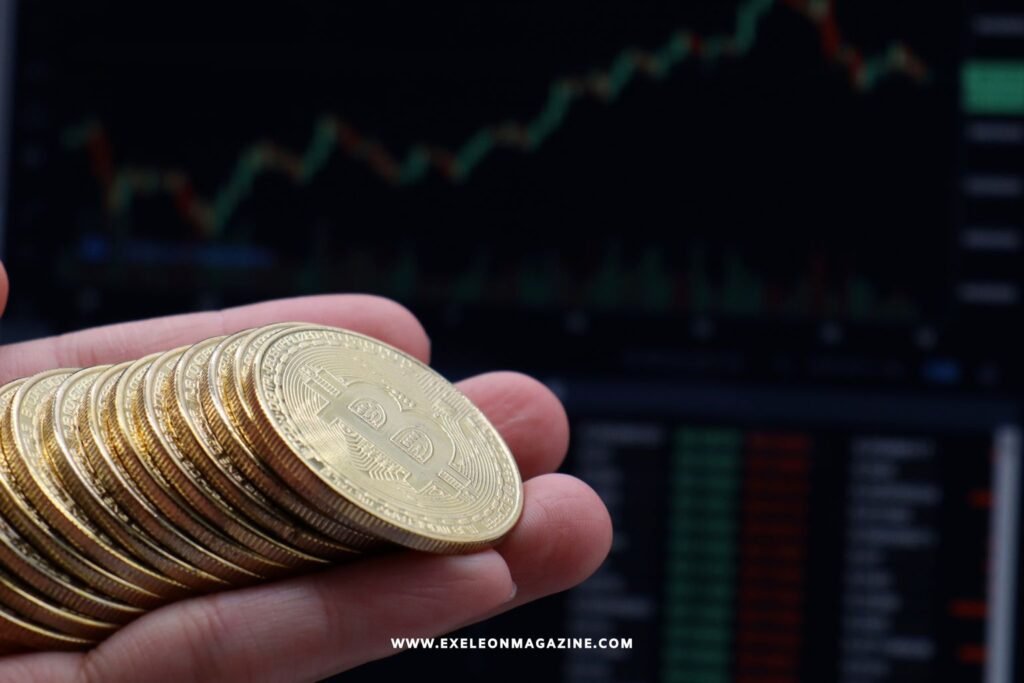
Bitcoin rises once again into the spotlight as macroeconomic shifts reshape the cryptocurrency landscape. The world’s largest digital asset recently climbed to around $70,800, rebounding after a volatile week driven largely by fluctuations in global oil prices and investor sentiment.
The relationship between Bitcoin and traditional markets is becoming increasingly evident. Recent declines in oil prices have eased inflation concerns, creating a more favorable environment for risk assets like cryptocurrencies. When energy costs fall, expectations of tighter monetary policy often soften, encouraging capital to flow back into digital assets. This dynamic appears to have supported Bitcoin’s latest upward movement after it briefly dipped below the $70,000 mark earlier in the week.
Bitcoin’s resilience is also tied to growing institutional interest. In recent months, inflows into spot Bitcoin exchange-traded funds (ETFs) have strengthened the asset’s position as a hedge against geopolitical uncertainty. Even amid global tensions and energy market disruptions, Bitcoin has shown the ability to recover quickly, reinforcing its reputation as “digital gold.”
However, the broader crypto market tells a different story. While Bitcoin rises, other major cryptocurrencies such as Ether and XRP are lagging behind. Ethereum has struggled to maintain momentum near key support levels, trading around the $2,100 range, while XRP continues to show relative weakness after slipping below critical technical thresholds.
This divergence highlights a shift in investor preference. Market participants appear to be concentrating their capital in Bitcoin rather than spreading it across altcoins. The trend suggests that during periods of uncertainty, investors favor assets with stronger institutional backing, higher liquidity, and a longer track record.
Macroeconomic conditions remain a key driver. Rising geopolitical tensions, particularly in energy markets, have previously pushed oil prices higher, contributing to inflation fears and pressuring cryptocurrencies. Conversely, any stabilization or decline in oil prices tends to support Bitcoin’s upside potential.
Looking ahead, Bitcoin’s trajectory will likely depend on a combination of factors including central bank policy, ETF flows, and global economic stability. While short-term volatility is expected, the current trend suggests Bitcoin continues to outperform its peers during uncertain times.
In conclusion, Bitcoin rises not just as a price movement, but as a reflection of its evolving role in global finance. As oil retreats and macro pressures shift, Bitcoin is increasingly positioned as the leading cryptocurrency, while Ether and XRP struggle to keep pace.
Source Link: https://www.coindesk.com/markets/2026/03/20/bitcoin-jumps-to-usd70-800-as-oil-retreats-ether-and-xrp-lag