Three years ago, I made a decision that changed how I run my business. I stopped trying to do everything myself and started building a system where AI tools handled the repetitive work while skilled remote team members applied judgment and context.
The result wasn’t just time savings. It was a fundamental shift in how work gets done – and what I, as a founder, could actually accomplish.
Most business leaders approach productivity as a choice: hire more people or buy more software. But that’s a false dichotomy. The businesses scaling efficiently today aren’t choosing between humans and AI. They’re strategically combining both.
AI Tools: The Problem with AI-Only Approaches
AI tools promise to automate everything. ChatGPT will write your emails. Jasper will create your content. Zapier will connect your workflows. And in theory, you’ll reclaim dozens of hours weekly.
In practice, AI-only approaches hit predictable walls.
AI doesn’t understand context. It can draft five versions of an email, but it can’t tell you which one fits the relationship or the current business situation. It can schedule social posts, but it can’t recognize when a company announcement makes that scheduled content inappropriate.
AI doesn’t catch edge cases. Your automated workflow works perfectly until a client needs an exception, a vendor changes their process, or two systems don’t integrate the way the documentation promised. Then someone needs to step in – and if that someone is you, the automation just created more work.
AI doesn’t learn your business. It processes what you feed it, but it doesn’t develop institutional knowledge. It won’t remember that this client prefers formal communication while that one wants casual, or that certain types of requests need your personal attention while others can be handled independently.
The companies treating AI as a complete solution discover they’ve traded one set of problems for another. Less manual work, but more time managing tools, fixing automation failures, and handling the exceptions AI can’t process.
The Problem with Human-Only Approaches
On the other end, some leaders resist AI entirely and rely purely on hiring more people.
This creates its own bottlenecks. Hiring takes months. Onboarding takes longer. And by the time your new team member is fully productive, your business needs have already shifted.
Remote teams without AI support spend hours on work that could be automated. They compile data manually that software could pull in seconds. They transcribe meetings when AI could handle it instantly. They draft documents from scratch when AI could provide a solid starting point.
When your remote team members spend 40% of their time on work AI could handle, you’re not maximizing their value. You’re paying for manual labor that technology has made unnecessary.
The sweet spot isn’t choosing between AI and humans. It’s combining them strategically.
The Hybrid Model That Actually Works
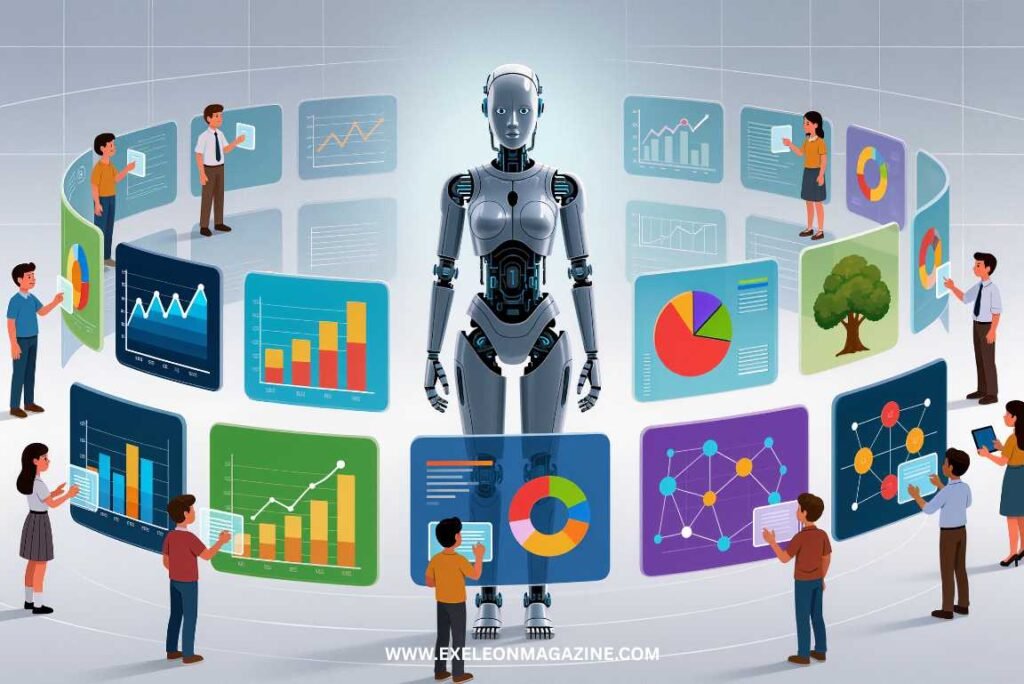
Here’s the framework that transformed productivity in my business: AI handles pattern recognition and repetitive tasks. Humans handle judgment, context, and exceptions. And the two work together seamlessly.
What this looks like in practice:
Your remote assistant uses AI transcription to capture client calls, then highlights the three strategic insights you need to know. You get the critical information in 5 minutes instead of re-listening to a 45-minute conversation.
They use ChatGPT to draft five email options, then select and refine the one that matches your communication style and the relationship context. You review and approve in 30 seconds instead of spending 10 minutes writing from scratch.
They use automation tools to compile your weekly performance data, then synthesize it into a brief highlighting what actually matters – the trends you need to see, not just raw numbers. You make strategic decisions instead of sorting through dashboards.
The AI provides speed and efficiency. The human provides judgment and context. And you get both without managing either directly.
Why Remote Teams Make This Model Work
Remote work isn’t just about location flexibility. It’s about accessing specialized talent that understands how to leverage technology effectively.
When you hire locally, you’re limited to people who live within commuting distance and fit your budget constraints. When you hire remotely, you access a global talent pool of people who’ve built their careers around remote productivity systems.
The best remote team members don’t just complete tasks. They’ve mastered the tools and workflows that make remote work efficient. They know which AI tools to use for which tasks. They understand how to automate repetitive work while maintaining quality. They’re comfortable working asynchronously without constant oversight.
This matters because the human-AI hybrid model requires team members who can operate independently with technology. They need to make judgment calls about when to use AI, when to intervene manually, and when to escalate to you.
A remote executive assistant trained in AI tools can manage your calendar, email, and communications with minimal input. Not because they’re working around the clock, but because they’ve built systems where AI handles the mechanics while they handle the strategy.
The Virtual Assistant Agency Advantage
This is where specialized support makes a difference. Generic remote workers might understand their job function but not the AI tools that could make them more effective. Tech-focused workers might know the tools but lack the business judgment needed for executive support.
Services like virtual assistant agency DonnaPro solve this by specifically training executive assistants in the intersection of AI tools and business operations. Their team members aren’t learning AI on your time – they come trained on how to leverage ChatGPT for communication, automation tools for workflows, and transcription AI for meeting management.
The result is support that operates at the speed of AI with the judgment of an experienced professional. You’re not managing tools or training someone on technology. You’re reviewing prepared options and making final decisions.
This model scales in ways that traditional hiring doesn’t. Need more capacity? Your virtual assistant agency can expand support without you going through hiring, onboarding, and training. Need different expertise? They can shift resources based on your changing needs.
Practical Implementation: Where to Start
The transition to a human-AI hybrid model doesn’t require rebuilding your entire operation. Start with one high-frequency pain point where AI can provide speed but needs human oversight.
Email Management: Your assistant uses AI to draft responses to common inquiries, categorize messages by priority, and flag urgent items. They handle straightforward replies using your voice guidelines while escalating complex issues to you. You spend 20 minutes on email instead of 2 hours.
Content Creation: AI generates first drafts and research summaries. Your remote team member refines the content, ensures brand voice consistency, and adds context AI misses. You review and approve instead of creating from zero.
Data Analysis: Automation pulls performance metrics from multiple platforms. Your assistant synthesizes findings into actionable insights with context about what changed and why. You make data-informed decisions without drowning in dashboards.
Meeting Coordination: AI transcription captures discussions. Your assistant extracts action items, follows up with relevant stakeholders, and keeps projects moving forward. You focus on the conversation, not the administrative follow-through.
The pattern is consistent: AI handles the mechanical work, humans add judgment and context, and you focus on decisions only you can make.
The Cost-Benefit Reality
Let’s address the obvious question: isn’t this expensive? Running AI tools plus paying for remote team support?
Compare the alternatives. Hiring full-time in-house staff costs €35,000-60,000 annually plus office space, equipment, benefits, and management overhead. Many AI tools cost €20-100 monthly. Part-time virtual assistant support typically runs €2,500-€4,000 monthly.
For most businesses, the hybrid model costs 40-60% less than traditional full-time hires while delivering better results. You’re paying for productive output, not hours in an office chair.
More importantly, measure the opportunity cost. Every hour you spend on operational work is an hour not spent on strategy, sales, or business development. If your time is worth €150+ per hour, paying €30-40 per hour for skilled remote support with AI leverage is straightforward economics.
What This Means for Business Leaders
The shift to human-AI hybrid models isn’t coming – it’s already here. Your competitors are already building these systems. The question is whether you’ll adapt quickly enough to maintain competitive advantage.
The businesses winning aren’t those with the most employees or the biggest technology budgets. They’re the ones who figured out how to combine AI efficiency with human judgment, creating operational capacity that scales faster than traditional models.
As companies realize they can access this level of productivity without massive overhead, the expectations shift. Customers expect faster responses. Partners expect more polished communication. Investors expect more efficient operations.
The businesses that built the infrastructure to deliver this – through strategic combinations of AI tools and skilled remote support – maintain their advantage. Those still trying to do everything manually or through AI-only approaches fall behind.
Moving Forward
If you’re still managing your own calendar, drafting every email from scratch, and spending evenings catching up on administrative work, you’re not running your business. You’re being run by it.
The solution isn’t working harder or buying more software. It’s building a system where AI handles repetitive mechanics, skilled remote team members apply judgment and context, and you focus on the decisions that actually drive your business forward.
Whether through a virtual assistant agency, direct remote hires trained in AI tools, or hybrid internal-external models, the pattern is clear: the future of business productivity is human judgment enhanced by AI capability, not humans replaced by AI or humans working without AI.
The companies that understand this distinction – and build operations around it – are the ones that will scale efficiently while their competitors stay trapped in operational chaos.
Your move is deciding how much longer you’ll do work that AI and trained remote support could handle – while your actual strategic opportunities go unaddressed.
About the Author
Filip Pesek is the founder and CEO of DonnaPro, a European virtual assistant agency specializing in AI-enhanced executive support for tech founders. After seven years perfecting delegation systems in his own businesses, Filip founded DonnaPro to provide founders with the strategic support model he wished had existed earlier. His philosophy: “If you don’t have an assistant, you are an assistant.“
Linkedin: https://www.linkedin.com/company/thedonnapro/
CEO Linkedin: https://www.linkedin.com/in/filippesek
Website: donnapro.com
Facebook: https://www.facebook.com/thedonnapro
Instagram: https://www.instagram.com/thedonnapro