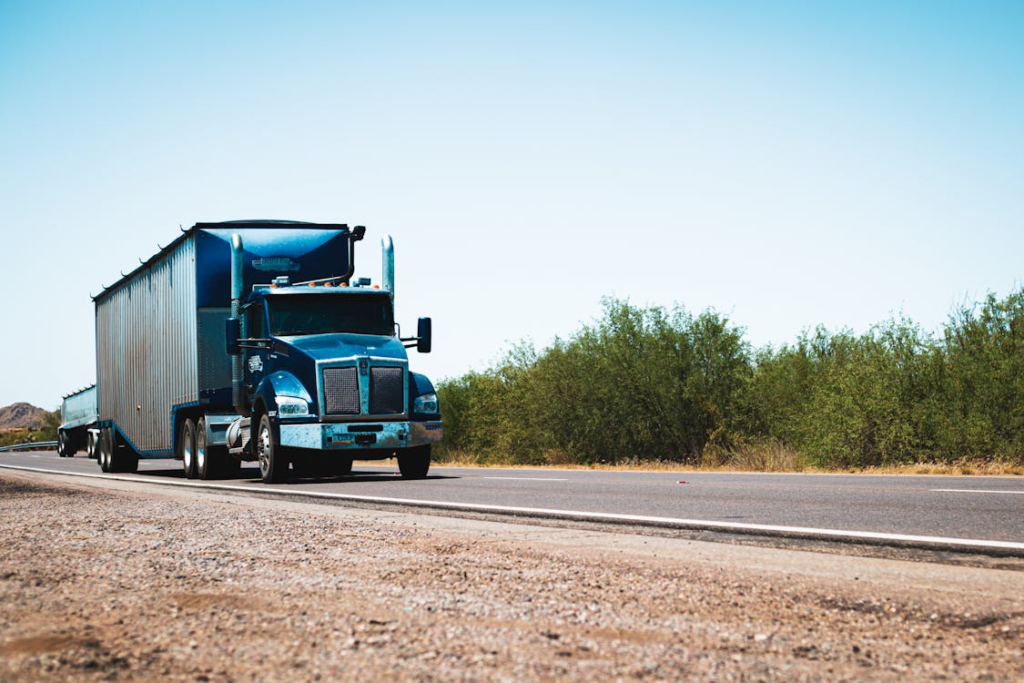
A jackknife accidents usually occurs due to trucks with trailers attached to them. In such accidents, the truck’s trailer suddenly swings outwards to the other lanes, forming an “L” or “V” shape with the cab. In fact, a jackknife accident is one of the most terrifying crashes. The trailer sweeps across multiple lanes in seconds, often with no warning signs. This leaves the other drivers with nowhere to go, leading to catastrophic accidents and serious injuries for victims.
This is why, when driving next to such huge trucks with trailers, we must always ensure that we leave enough distance between us and the truck to help us brake the vehicle before any major collision happens. By understanding the common factors leading to jackknife accidents, drivers can stay alert on the road to prevent such incidents and also help them determine liability after a crash.
What is the exact cause of a jackknife?
The main cause of a jackknife accident is when the trailer pushes forward faster than the cab is able to control. The weight of the trailer causes it to move forward from its position. Such incidents usually happen due to a sudden braking or a loss of traction.
It can also happen due to other reasons, such as driving too fast, carrying uneven cargo, driving in poor weather conditions, or even due to poor maintenance of the truck.
What are the common factors leading to jackknife accidents?
1) Sudden or improper braking
Driving a vehicle like a huge truck with trailers requires proper training and skills. Sometimes, truckers may use hard braking to stop the vehicle. But such hard braking is one of the biggest reasons for jackknife accidents.
Braking too hard causes the wheels to lose traction, making the trailer go sideways and making the truck lose its control.
2) Speeding and aggressive driving
Since trucks are heavy vehicles, they require more space and time to stop. But when speeding, it becomes difficult for the truck driver to control the truck. Especially through heavy traffic, downhill roads, or sharp curves, sudden braking of the truck may be required, causing the truck to jackknife.
3) Bad weather and low-traction roads
Weather conditions can greatly increase the risk of a jackknife accident. Driving through poor weather conditions, such as rain, ice, fog, and snow, not only reduces the visibility of the road but can also reduce the traction of the road. This can cause the truck to skid when braking, which can lead to a jackknife.
4) Improperly loaded cargo
This is one of the factors that is mostly overlooked but plays a major role in the safety of the truck driver and those surrounding the truck. A trailer with overloaded cargo or uneven cargo can easily shift when driving, especially in turns. This makes it difficult to stabilize the trailer, also leading to a jackknife.
5) Poor maintenance
Since trucks are vehicles that travel long distances, their parts can wear out very easily. Worn-out tires, damaged brakes, and other mechanical issues can cause the truck to lose control, reducing the driver’s ability to control the truck. This is why a poorly maintained truck is a risk factor for jackknife accidents.
What injuries can a victim sustain from jackknife accidents?
When a jackknife crash occurs, the weight of the truck and the impact of the crash usually cause severe injuries. A few injuries that victims of a jackknife accident can sustain include:
- Traumatic brain injuries caused by the impact of the accident on the head or violent shaking.
- Spinal cord injuries, such as herniated discs or even paralysis.
- Broken bones
- Injuries to the neck or back.
- Crush injuries or amputations.
- Severe cuts, burns, or even lacerations from broken glass
- Internal bleeding of organs.
In some cases, the injuries may not be immediately visible but can develop at a later stage, such as chronic pain, mobility issues, PTSD, etc. Which is why it is important that you always get medical help after such an incident.
Conclusion
- A jackknife accident is when a truck’s trailer forms an “L” OR “V” shape with its cab.
- One of the major causes is hard or improper braking.
- Poor weather conditions, such as rain, snow, ice, and fog, can cause the truck to lose traction, leading to jackknifes.
- Uneven or improperly loaded cargo causes the truck’s trailer to lose its stability.
- Poor maintenance, such as worn-out wires and parts, is another major reason for jackknife accidents.
- Victims of a jackknife can sustain injuries like TBIs, broken bones, neck and back injuries, internal damage, and even severe burns and lacerations.