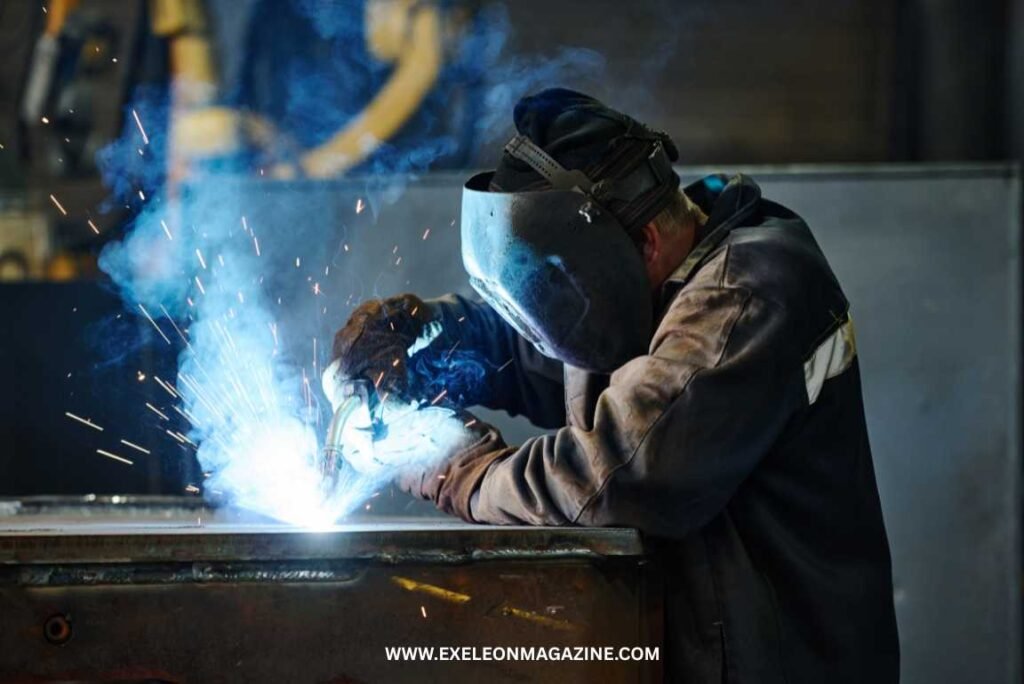
High-power fiber laser welding safety can look calm and controlled, yet it can harm you faster than you can react. The beam may be invisible, reflections can travel in odd directions, and fumes can build up even when the weld looks clean. Most laser welding safety breakdowns trace back to the same pain points: you underestimate Class 4 hazards, your work zone is not truly controlled, so people drift too close, or your protective gear is not matched to the laser wavelength and gets used inconsistently. For a quick starting point, see Denaliweld.
Laser Welding Safety Context and Baseline Requirements
Framing Laser Welding Safety Guidance
Think in layers. Engineering controls should reduce exposure by design, procedures should make safe behavior the default, and PPE should cover the residual risk. A quick test is to ask whether your station still protects you when something predictable happens, like a bystander stepping closer or your attention drifting for a moment.
To standardize training, compare your controls with the laser welding safety notes at Denaliweld. It calls out practical examples, such as emergency-stop access at the tool, helmet protection for 1060-1100 nm fiber lasers, and workstations with door interlocks.
Understanding High-Power Laser Hazards
Assume the hazard is severe until you confirm otherwise. Direct exposure can cause serious injury, and reflections can remain hazardous depending on the materials and geometry. Reflective metals deserve extra caution because they can redirect energy toward unprotected areas. Do not judge risk by brightness, since near-infrared energy can be invisible.
Checking Docs and Compliance
Keep the user manual and laser welding safety instructions at the station and train every operator to use them. Your baseline checks should stay simple: confirm correct installation and grounding, confirm ventilation is running and appropriate for the material, and confirm warning signs, access rules, and emergency stop locations are obvious. If you change materials, relocate the station, or add automation, update your procedure and retrain.
Engineering Controls That Reduce Exposure Risk
Emergency Stop Access and Immediate Shutdown
You should be able to stop the emission immediately without stepping around the workpiece. Your emergency stop must be visible, reachable, and easy to press with gloves on. Make “where is the stop” part of your routine, because in a real event, you will reach for what you practiced.
Interlocks and Automatic Laser Stoppage
Interlocks prevent operation during unsafe access conditions. In enclosed stations, door interlocks can stop emissions when a door is open. In more open layouts, sensor-based stoppage can help when the welding head moves unexpectedly. Control entry with a single access point, clear signage, and a design that excludes casual walk-through traffic.
Physical Barriers and Protected Workstations
Barriers protect you without relying on attention. Panels, laser-rated viewing windows, and properly selected curtains help block line-of-sight exposure routes and reduce risk from hazardous reflections. Choose protection suitable for your wavelength and power, then install it so you do not leave gaps that invite “quick peeks.”
| Control Layer | What You Set Up | What It Helps Prevent |
| Emergency stop | Reachable stop control | Delayed shutdown during abnormal events |
| Interlocks | Door or sensor logic | Emission during unsafe access conditions |
| Barriers | Panels, windows, curtains | Stray exposure routes and reflections |
| Ventilation | Local capture and airflow | Fume buildup near your breathing zone |
Personal Protective Equipment and Health Protection
Eye and Face Protection Matched to Hazards
Confirm your eye and face protection is rated for the laser wavelength range you use, then make sure it works with your helmet or face shield so you do not remove protection to see. Keep lenses clean and replace them when visibility drops. Assume others can be exposed if they can view the process through a doorway, gap, or reflective line of sight.
Respiratory Protection for Smoke and Dust
Laser welding can still create fumes and fine particles. Start with ventilation that captures fume near the source. Add a respirator when ventilation cannot keep exposure low or when your material risks demand it. Fit matters because a poor seal can provide little protection.
PPE Compatibility and Correct-Use Expectations
PPE only helps if you use it correctly throughout the job. Check that your eyewear fits under your helmet, that your gloves allow steady control, and that your respiratory gear does not fog your view. Adjust the setup until correct use feels natural.
Workspace Setup, Access Control, and People Safety
Defining and Securing the Laser Work Zone
Treat your laser zone like a restricted area. Define the boundary, post clear warnings, and control who can enter while the system is active. Keep combustibles and clutter away from the immediate work envelope. If your station is near shared pathways, change the traffic pattern instead of relying on memory.
Installation and Handling of Protective Structures
Curtains, panels, and windows need inspection and upkeep. Look for damage, discoloration, and wear. Install structures with proper overlap and height to block line-of-sight exposure routes, and check for gaps after cleaning or reconfiguration. If your setup includes warning lights or interlocks, test them on a schedule and record the checks.
Automation and Robotics Integration Considerations
Automation can reduce hands-on exposure time, but it raises the bar for guarding and entry control. Treat a robot or cobot cell as a controlled area with defined entry steps, lockout rules, and clear responsibility for resets and restarts. Automation is safer when the cell design prevents casual access during operation.
Operating Procedures, Training, and Incident Response
Pre-Start Checks and In-Process Monitoring
Before each job, confirm the area is clear, that barriers are positioned correctly, that ventilation is running, and that your emergency stop is reachable. Then verify your eye protection matches the system you are about to use. During welding, stop and reassess if you see unusual reflections, unexpected fume behavior, or a change in response.
Emergency Response Practices
Decide in advance what will happen during an incident. Define who hits the stop, who contacts supervision, and what steps you follow before anyone re-enters the area. Practice the response so it is not improvised. If you suspect eye exposure, treat it as urgent and follow your medical protocol.
Training and Support Expectations for Safe Operation
Training should match your machine, your materials, and your workspace layout. Refresh it when you change setups, move equipment, or add new operators. Keep procedures short enough to follow under pressure, and specific enough to answer the questions that come up mid-job.
Conclusion
High-power laser welding safety becomes far safer when you build protection into your workflow. Combine hazard awareness with strong engineering controls, matched PPE, controlled access, and rehearsed response, and you reduce the chance that one mistake becomes an injury. Tighten your work zone first, then make your pre-start check routine non-negotiable. Close by documenting what you changed and why, so the next person runs the station safely. To kick off your review, revisit Denaliweld.