Inside the AI vision behind SMART – and why MachineTranslation.com is redefining translation as critical infrastructure for global business.
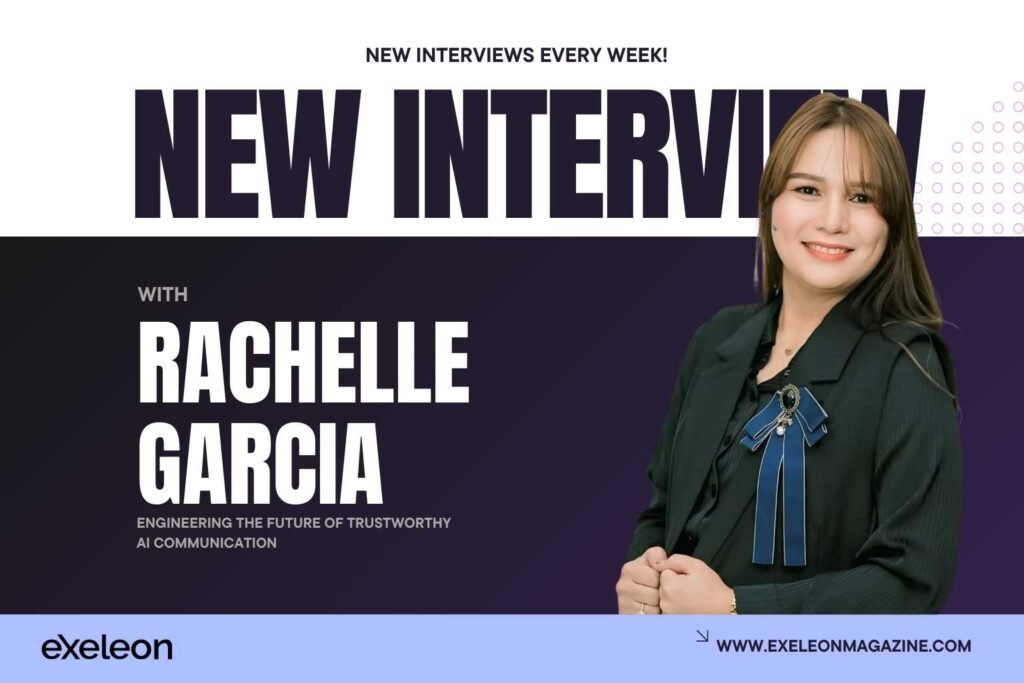
Artificial intelligence powers everything from customer service chatbots to legal document processing. One question keeps business leaders awake at night: Can we actually trust what AI is telling us? For Rachelle Garcia, AI Lead at Tomedes and the visionary architect behind SMART, this question isn’t philosophical; it’s the foundation of her life’s work.
The global language services market is projected to reach $96.77 billion by 2032, growing at a compound annual growth rate of 6.89% (Grand View Research, 2024). Yet despite this explosive growth, the industry faces a critical trust deficit. According to a recent discussion on r/machinetranslation, professionals consistently report encountering AI translation errors that range from embarrassing to potentially catastrophic, with one user noting, “I’ve seen major business deals delayed because nobody trusted the AI output enough to sign off without extensive human review.”
Rachelle Garcia is response to this challenge? Don’t just make AI translation faster, make it fundamentally more trustworthy.
Rachelle Garcia: What Is AI Translation and How Does It Work?
AI translation leverages machine learning algorithms and large language models (LLMs) to convert text from one language to another. Unlike traditional rule-based systems, modern AI translation learns from vast datasets containing billions of translated sentence pairs, enabling it to understand context, idioms, and cultural nuances.
However, individual AI engines each have distinct training data, architectural approaches, and inherent biases. Google Translate might excel at conversational Spanish, while DeepL demonstrates superior accuracy with German legal terminology. This fragmentation creates a dilemma: which AI should you trust for mission-critical content?
Rachelle Garcia identified this exact friction point. “When you’re a procurement manager in Ohio ordering machine parts from a supplier in Osaka, you don’t speak Japanese,” she explains. “You’re essentially betting your company’s supply chain on a single AI system’s interpretation—and you have no way to verify if it’s accurate.”
Why Is AI Translation Important for Global Business?
The numbers tell a compelling story. Cross-border e-commerce sales are expected to reach $7.9 trillion by 2030 (Statista, 2024), while 75% of consumers prefer to buy products in their native language (CSA Research, 2023). Yet translation bottlenecks cost businesses an estimated $50 billion annually in lost opportunities and delayed market entry.
For small and medium-sized enterprises (SMEs), the challenge is particularly acute. Unlike multinational corporations with dedicated localization teams, SMEs typically operate with lean resources. They can’t afford full human translation for every product description, customer email, or compliance document, but they also can’t afford the reputational damage from AI-generated errors.
This is where Garcia’s vision of “translation as critical infrastructure” becomes transformative. Just as businesses rely on cloud computing, payment processing, and cybersecurity as foundational layers, Garcia argues that trustworthy AI translation should be viewed as essential business infrastructure, not merely a cost-cutting tool.
How Accurate Is AI Translation Compared to Human Translation?
The accuracy debate has long polarized the translation industry. A 2024 study published in Nature Communications found that leading AI translation engines achieve 94.3% accuracy on standard benchmark tests, impressive but still leaving room for critical errors.
The real problem isn’t average accuracy, it’s unpredictability. AI systems occasionally “hallucinate,” fabricating information that sounds plausible but is entirely invented. In legal contexts, medical documentation, or financial reporting, even a 2% error rate can have devastating consequences.
Garcia’s innovation with SMART tackles this through consensus verification. By running the same content through multiple independent AI engines simultaneously, including GPT-4, Claude, Gemini, and DeepL, the system identifies sentence-level agreement across models. When seven out of eight AI engines produce identical or nearly identical translations for a given sentence, confidence soars.
Internal evaluations at MachineTranslation.com revealed that this consensus approach reduced visible AI errors and stylistic inconsistencies by 18-22% compared to single-engine outputs. More significantly, professional linguists rated SMART output as “the safest entry point for non-linguist stakeholders” in 90% of blind reviews.
“We’re not trying to replace human expertise,” Garcia clarifies. “We’re building guardrails that make AI translation safe enough for everyday business use, while flagging the segments that genuinely need human attention.”
Can AI Translation Handle Specialized Industries?
This question dominates discussions in sectors like pharmaceuticals, aerospace, and legal services, industries where terminology precision isn’t negotiable, and errors can trigger regulatory violations.
Traditional approaches require extensive post-editing by subject matter experts, creating bottlenecks. A pharmaceutical company translating clinical trial documentation into 30 languages might wait weeks for human reviewers to validate AI output, delaying critical regulatory submissions.
SMART’s consensus model offers a middle path. When multiple AI engines converge on technical terminology, say, translating “pharmacokinetic parameters” from English to Mandarin, the likelihood of fabricated or incorrect terminology plummets. The largest accuracy gains in MachineTranslation.com’s testing came from “fewer hallucinated facts, tighter terminology, and fewer dropped words”, precisely the error types that plague specialized content.
Garcia points to early adopters in education technology and NGO sectors as proving grounds. “These organizations operate globally but lack Fortune 500 budgets,” she notes. “They need translations they can trust for grant proposals, educational materials, and impact reports, content where accuracy directly affects funding and mission success.”
For particularly sensitive materials, MachineTranslation.com pairs SMART with optional Human Verification, creating a hybrid workflow where AI handles the heavy lifting and human experts focus exclusively on high-risk segments. This approach reportedly cuts review time by 60-70% while maintaining human oversight where it matters most.
What Are the Risks of Using AI for Translation?
Garcia doesn’t shy from discussing AI’s limitations; in fact, her entire platform is designed around mitigating them. The primary risks include:
Hallucinations and fabricated content:
Single AI engines sometimes generate plausible-sounding text that doesn’t match the source material. In a Reddit discussion on AI translation reliability, one medical translator recounted an instance where an AI system invented dosage instructions that weren’t present in the original document.
Cultural and contextual misunderstandings:
AI trained primarily on European languages may struggle with honorifics in Korean or contextual formality in Japanese business correspondence.
Privacy and data security:
Many free AI translation tools retain user data for model training, a non-starter for companies handling proprietary contracts or personal information.
MachineTranslation.com addresses these through architectural choices. The platform offers secure mode with automatic anonymization of sensitive fields (like names, dates, and financial figures), temporary share links, and zero long-term content retention. “If you’re translating an NDA or a merger agreement, that content shouldn’t become training data for someone else’s AI,” Garcia emphasizes.
The consensus approach also creates an audit trail. When engines disagree significantly on a particular sentence, SMART flags it for human review rather than guessing. This transforms AI from an opaque black box into a transparent decision-support system.
How Is MachineTranslation.com Different from Google Translate?
While consumer tools like Google Translate democratized basic translation, enterprise needs demand more sophisticated infrastructure. Google Translate processes an estimated 500 million daily translations, but offers limited transparency into how translations are generated or validated.
MachineTranslation.com operates on a fundamentally different model. Rather than forcing users to trust a single proprietary system, it aggregates leading AI engines (GPT-4, Claude 3.5, Gemini, DeepL, and others) and surfaces consensus across them. Think of it as moving from a single expert opinion to a panel of specialists voting on each sentence.
The platform has already served over 1 million users and powered billions of translated words across 270+ languages and 100,000+ language pairs. It preserves complex document formatting, critical for translating technical manuals, financial statements, or legal contracts, where layout carries meaning.
Rachelle Garcia’s vision extends beyond feature comparison, however. “We’re building translation infrastructure the same way AWS built computing infrastructure,” she explains. “You don’t worry about which specific servers are running your application; you trust the system to give you reliable, scalable results. That’s where AI translation needs to go.”
This infrastructure-first approach resonates with Exeleon Magazine’s coverage of digital transformation leaders who are redefining entire industries through architectural innovation rather than incremental product improvements.
What Does the Future Hold for AI Translation Technology?
Rachelle Garcia sees three major shifts on the horizon:
From tools to infrastructure layers:
Just as businesses don’t build their own email servers or payment processors, they’ll increasingly rely on translation infrastructure that’s managed, secured, and continuously improved by specialized providers.
Multimodal translation:
As AI systems grow more sophisticated, translation will expand beyond text to include real-time video dubbing, sign language interpretation, and visual content localization (translating text within images and graphics).
Hyper-personalization:
Future systems will adapt not just to language pairs, but to industry jargon, company-specific terminology, and even individual writing styles—while maintaining the consensus-driven trust layer that SMART pioneers.
The market is already responding. The neural machine translation segment alone is projected to grow at 19.4% CAGR through 2030, driven by demand for real-time, scalable solutions.
Yet Rachelle Garcia remains focused on the human element. “AI should free people to do the work only humans can do, strategic thinking, relationship building, creative problem-solving,” she reflects. “When you’re not spending three hours manually comparing AI outputs or second-guessing every translated sentence, you can focus on actually growing your business internationally.”
The Bottom Line: Trust as a Competitive Advantage
In boardrooms from Silicon Valley to Singapore, the conversation around AI is shifting from “Can we use this?” to “Can we trust this?” Rachelle Garcia’s work with SMART represents more than a technical achievement, it’s a philosophical reframing of what AI translation should be.
By treating translation not as a commodity service but as critical business infrastructure requiring consensus-driven verification, Rachelle Garcia is solving a problem most executives didn’t even realize they could solve. SMEs no longer need to choose between expensive human translation and risky AI gambles. Compliance teams can move faster without compromising accuracy. Global expansion becomes operationally feasible for organizations of any size.
For business leaders navigating an increasingly multilingual marketplace, that distinction isn’t academic, it’s the difference between expansion and paralysis, between calculated risk and blind trust. And in Garcia’s vision of the future, trustworthy AI communication isn’t a luxury reserved for enterprises with massive budgets. It’s infrastructure, accessible to anyone with something worth saying to the world.