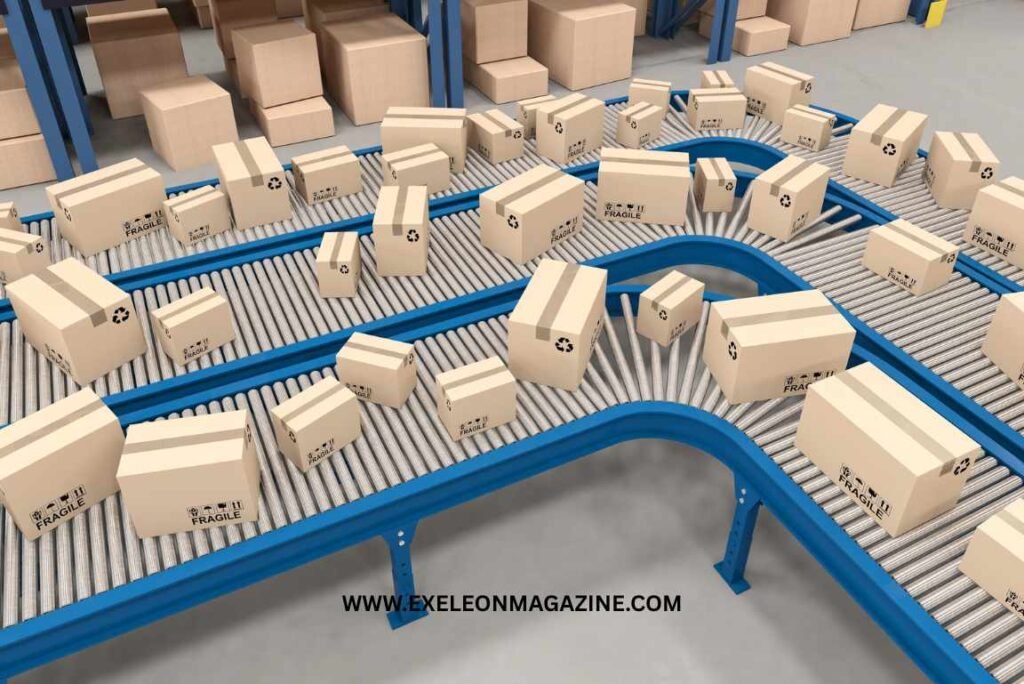
If you’re exploring conveyor solutions for your facility, understanding which products work best with spiral conveyors helps you make smart equipment investments and avoid costly mistakes. What types of products can be handled by spiral conveyors?
Spiral conveyors can handle a wide range of products, including packaged goods, bottles, cans, cartons, totes, and small parts. They’re designed for items typically weighing up to 75 pounds per unit, though some heavy-duty models accommodate loads up to 150 pounds.
Keep reading to discover the specific product characteristics that determine whether a spiral conveyor is the right fit, because choosing the wrong conveyor type for your product can lead to jams, damage, and operational headaches that could have been easily avoided.
Understanding Product Compatibility
The key factor isn’t just what the product is, but rather its physical characteristics. Spiral conveyors work best with products that have a stable base and won’t tip over while traveling up or down the incline. Think about items with a low center of gravity that can maintain their orientation throughout the journey.
Products need to be conveyable—meaning they can sit securely on a belt or slat without sliding or rolling. Irregular shapes or products prone to shifting require special consideration and potentially custom solutions like guide rails or product separators.
Size And Dimension Considerations
Product dimensions play a crucial role in spiral conveyor selection. The width of your product determines the minimum belt width needed, while the length affects how many units can be on the spiral simultaneously. Most spiral conveyors handle products ranging from small bottles to larger cartons up to 36 inches in dimension.
Height matters too, especially for taller products that might become unstable on curves. Products shouldn’t exceed a height-to-width ratio that makes them top-heavy.
Common Product Categories
Food and beverage operations frequently use spiral conveyors for bottled drinks, canned goods, and packaged snacks. The smooth elevation change helps maintain product integrity while maximizing floor space.
Pharmaceutical and consumer goods industries rely on spirals for moving boxed products, cosmetics, and small packaged items between processing levels. E-commerce fulfillment centers use spiral conveyors for transporting poly bags, small parcels, and totes through multi-level sorting operations.
Products That May Require Special Handling
Loose products without packaging generally aren’t suitable for standard spiral conveyors unless contained in bins or trays. The centrifugal force on curves can cause unpackaged bulk materials to shift or spill.
Extremely fragile items like glass containers without secondary packaging may need specialized spirals with gentler acceleration curves and cushioned belting. Products with protruding parts or irregular bottoms might snag on the conveyor surface, requiring custom modifications or alternative methods.
Temperature-Sensitive Products
Many spiral conveyors can accommodate temperature-controlled products, making them valuable in food processing and pharmaceutical applications. Stainless steel spirals work well in coolers and freezers, handling products that need to maintain specific temperature ranges.
Hot products fresh from ovens or processing equipment can also travel on heat-resistant spiral conveyors designed with appropriate materials. The key is matching the conveyor construction to your product’s temperature requirements.
Weight Limitations And Load Distribution
While individual product weight matters, total system load is equally important. This includes calculating how many products will be on the spiral at any given time based on your throughput requirements. Overloading a spiral conveyor leads to motor strain, excessive wear, and potential system failure.
Distribution of weight across the belt surface affects performance. Products should be relatively centered on the conveyor rather than positioned to one side, which creates uneven stress on the system.
How Do You Test Products for Spiral Conveyors Compatibility?
Testing your products before committing to a spiral conveyor installation saves time and money. Most reputable manufacturers maintain testing facilities where they can run your actual products through their equipment under simulated operational conditions.
The testing process involves sending sample products to the manufacturer’s facility along with detailed information about your throughput requirements and special handling needs. Engineers will run your products through various spiral configurations, adjusting speeds, incline angles, and belt types to find the optimal setup.
Pay attention to how products behave on the curves—this is where most problems surface. The manufacturer should provide video documentation of the test runs and performance data showing achievable throughput rates.
If sending physical samples isn’t feasible, some manufacturers offer virtual assessments using simulation software, which can identify obvious compatibility issues.
What Modifications Help Spirals Handle Challenging Products?
When standard spiral conveyors don’t quite meet your product handling needs, several modifications can help. Guide rails are among the most common additions, keeping products centered on the belt as they navigate curves. These rails prevent items from drifting toward the inner or outer edge of the spiral.
Product dividers or lane separators create dedicated pathways on wider belts, allowing you to run multiple streams of products simultaneously. This works particularly well when handling different product sizes on the same system.
Belt surface modifications can dramatically improve performance. Tacky or high-friction materials prevent slippery packages from sliding, while cleated belts create physical barriers that secure products on steeper inclines.
Speed controls and variable frequency drives allow you to fine-tune conveyor operation for sensitive products. Slower speeds with gradual acceleration minimize stress on fragile items.
What Are The Alternatives When Products Don’t Work On Spirals?
Sometimes products simply aren’t compatible with spiral conveyors. Vertical reciprocating conveyors (VRCs) offer a viable alternative, using lift-style systems that carry products straight up or down on platforms. VRCs work well for extremely heavy loads, awkwardly shaped products, or loose materials.
Incline belt conveyors provide another option, taking up more floor space than spirals but handling a broader range of products. The straight path eliminates concerns about centrifugal force, and steeper inclines with cleated belts can move products that would tip on spiral curves.
Bucket elevators excel at moving loose bulk materials vertically. These systems use buckets attached to belts or chains to scoop up and carry materials like grains, powders, or small parts.
How Does Product Packaging Impact Performance?
The way products are packaged often matters more than the product itself. Rigid packaging like corrugated boxes, plastic containers, and shrink-wrapped trays provide stable bases that grip the belt surface and maintain orientation throughout the spiral path.
Flexible packaging presents more challenges. Poly bags and flexible pouches can work if they’re filled sufficiently to maintain their shape. The key is ensuring the package maintains enough rigidity to prevent flopping as it navigates curves.
Glass and metal containers require careful consideration. Bare glass bottles often perform well due to their rigid structure, but they need appropriate belt surfaces. Cans generally excel on spiral conveyors because of their uniform shape and low center of gravity.
The bottom surface of packaging deserves special attention since it’s the primary contact point. Packages with flat, smooth bottoms work best, while those with recessed bottoms or protruding feet may catch on belt edges.
What Role Does Throughput Play in Product Selection?
Throughput requirements significantly influence whether specific products will succeed on spiral conveyors. High-speed operations demand products that can handle rapid acceleration and maintain stability at elevated speeds. Products with marginal stability might work fine at slower speeds but become problematic when you increase throughput.
Product spacing becomes critical at higher throughput levels. Products that require significant separation to prevent tipping might not achieve your desired throughput. You’ll need to balance between running the conveyor faster and maintaining safer speeds while accepting lower output.
Accumulation zones where products slow down can create problems for certain product types. Lightweight packages might get pushed over by products behind them, while heavy items could crush lighter ones.
Contact Manufacturers For Compatibility Assessment
Understanding product compatibility is only valuable when you act on it. Reach out to spiral conveyor manufacturers armed with comprehensive product specifications—exact dimensions, unit weights, packaging configurations, and your target throughput numbers—and request hands-on testing or detailed engineering analysis. Most reputable suppliers welcome these inquiries and can quickly identify potential issues or confirm that your products will perform reliably on their systems. Investing a few hours in this upfront validation prevents the much larger headache of discovering incompatibility after equipment arrives on your dock, protecting both your capital investment and production schedules from unnecessary disruption.